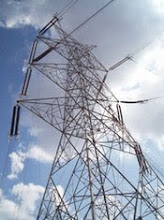
I spoke on the phone today to a consultant doing research into transmission issues. My first statement to him was, "That must be hard info to find." He chuckled and replied, "It's all about the smart grid these days, isn't it?"
Indeed it is. And the smart grid is, let's face it, all about distribution. All those communication technologies, gadgets and gizmos mostly lie at the end of those lines: in substations and in family homes. Relative to the size of our very vast, very large power grid, the smart grid evolution is happening in small little urban pockets, leaving vast stretches of archaic and aging transmission lines to, once again, carry a heavier load---if you'll pardon the pun I just couldn't resist.
Now, there is some smart grid on the transmission side of things, mostly when we discuss linking up large-scale renewables, but the bulk of the smart grid---and the bulk of the technology that adds up to all that smart grid money and marketing---well, that stuff is on the downstream end of electricity.
Transmission has always been the workhorse in the power equation: It does most of the hard labor, goes the farthest distance, doesn't shirk too much of the weight and gets the job done. Of course, until the smart grid came along, distribution was pretty much pulling on the same yoke. But, these days, the smart grid is a sexy cultural buzzword, a virtual power Cinderella, and transmission is still the ugly stepsister---unattractive and mostly forgotten.
Granted, transmission is necessary. You can't have distribution without it. But, that doesn't mean transmission will get the attention or the investment it really deserves. It's basic human nature to be dazzled by the Cindys and not the sisters. When we eat a banana, do we think about the fellow who picked it or the company that shipped it or the stocker that placed it on the store table? When we watch movies, we get dazzled by the stars but never wonder about the computer techs, the animators, the writers or the sound technicians involved. Or, here on our series of PennWell websites, we might enjoy the information and details available but not think about the editors who hunt, gather and post it daily. (Go Jeff Postelwait, our fabulous online editor for POWERGRID International and Electric Light and Power magazines. Here's a shout out to you.)
Perhaps we should all learn to follow the flow backwards a bit better, to think farther up the value chain than we do and give credit to the workhorses that enable all the shiny, sexy bits we're dazzled by. In our industry, this means more mulling of transmission and all it brings us. Let's ponder.
Tuesday, March 16, 2010

Monday, March 8, 2010
DistribuTECH's Right Around the Corner
Running March 23-25, 2010 at the Tampa Convention Center, DistribuTECH covers the smart grid from end to end. As I write this, my schedule for the three-day event is almost full. Thank goodness I finally had the good sense to block off some time for lunches, or exhibitors may find me stealing all their good candy---candy they usually like to sit out for potential clients. But, what's a starving editor to do?
Celebrating 20 years, DistribuTECH knew the grid before it was smart, and it continues to lead the way in information exchange and utility education. I'm rather proud of the "We knew the grid before it was smart" angle, since that was my tagline idea. Beyond the awesome tagline though, from instructional Utility University courses to experts delivering the latest industry details, DistribuTECH is bringing a lot of experience to Florida in March.
DistribuTECH 2010 will officially kick off with an opening keynote session on Tuesday, March 23, 2010 at 8:30 a.m. The keynote will feature Gordon Gillette, president of DistribuTECH host utility Tampa Electric Co., and Dave Barry, Pulitzer Prize-winning columnist. And, the newest edition to the keynote is grid guru Katherine Hamilton.
Katherine Hamilton is president of the GridWise Alliance. She joined GridWise after being the policy advisor for Good Energies, Inc., a private investment company with a current portfolio in clean energy technologies of more than $6 billion. Hamilton was previously co-director of the American Bioenergy Association where, in addition to advocating for clean uses of biomass for power and fuels, she advised the Governor of New Jersey on the biomass components for a state renewable portfolio standard.
After the keynote, the conference itself opens for business with a bevy of learning opportunities. Sessions are broken down into related tracks, including: advanced metering, customer service, demand response, distribution automation, enterprise information and asset management, mobile and geospatial solutions, renewables and the grid, SCADA, substation automation, engineering and the transmission track. (The renewables and the grid track is new this year to DistribuTECH, and we look forward to it become a staple of the DistribuTECH conference line-up.)
Despite all the great options for education, DistribuTECH is not all learning and no play. There are plenty of social opportunities to just sit and visit with colleagues, acquaintances and new friends. An opening reception will be held on the floor on Tuesday, March 23, 2010 from 5:00 to 6:00 p.m. A second exhibit floor reception follows on Wednesday, March 24, 2010. That reception, called "It's 5 O'Clock Somewhere," will run from 5:00 to 6:00 p.m. at the sponsors' booths right before DistribuTECH throws a bash to celebrate its 20th anniversary from 6:00 to 8:00 p.m.
If attendees would like to mix networking with a bit of learning, DistribuTECH offers a number of breakfast roundtables, as well as a breakfast keynote. These roundtable discussions provide an excellent opportunity to network with peers and meet industry experts while taking in a hearty meal. Roundtables with specific industry topics will be moderated by leading professionals in each field. Well, one year a roundtable was hosted by me, but we won't hold that against all the other pros who chat up the breakfast roundtables.
Besides the fabulous conference sessions and networking opportunities at DistribuTECH, attendees also have the change to visit the show's large exhibit floor, which featured over 300 exhibitors in 2009. Plus, one popular part of the show and exhibit floor attendance at DistribuTECH is the car giveaway, which will be continued in 2010. This year, someone will drive away in a new Chevrolet Camaro. Sadly, I am not eligible to win the Camaro, which is awfully sad. I was hoping to live out my old 1980s TV Simon and Simon fantasies. (Remember, the cute one on Simon and Simon drove a couple of Camaros. Am I dating myself here? Probably. Good show, though.)
Back to the important show stuff: DistribuTECH 2009 in San Diego brought a record number of people to the bayside conference center in San Diego with nearly 5,800 attendees and more than 300 exhibiting companies. In 2010, DistribuTECH is expected to break that record with nearly 6,200 professionals expected to grace the halls of the Tampa Convention Center. With such a wide range of conference sessions, exposition and networking opportunities and even the change to win a Camaro (and pretend to be the cute one from Simon and Simon), DistribuTECH 2010 promises to brighten up Tampa with a number of powerful, interesting options for attendees this March.
I hope to see you there.
Celebrating 20 years, DistribuTECH knew the grid before it was smart, and it continues to lead the way in information exchange and utility education. I'm rather proud of the "We knew the grid before it was smart" angle, since that was my tagline idea. Beyond the awesome tagline though, from instructional Utility University courses to experts delivering the latest industry details, DistribuTECH is bringing a lot of experience to Florida in March.
DistribuTECH 2010 will officially kick off with an opening keynote session on Tuesday, March 23, 2010 at 8:30 a.m. The keynote will feature Gordon Gillette, president of DistribuTECH host utility Tampa Electric Co., and Dave Barry, Pulitzer Prize-winning columnist. And, the newest edition to the keynote is grid guru Katherine Hamilton.
Katherine Hamilton is president of the GridWise Alliance. She joined GridWise after being the policy advisor for Good Energies, Inc., a private investment company with a current portfolio in clean energy technologies of more than $6 billion. Hamilton was previously co-director of the American Bioenergy Association where, in addition to advocating for clean uses of biomass for power and fuels, she advised the Governor of New Jersey on the biomass components for a state renewable portfolio standard.
After the keynote, the conference itself opens for business with a bevy of learning opportunities. Sessions are broken down into related tracks, including: advanced metering, customer service, demand response, distribution automation, enterprise information and asset management, mobile and geospatial solutions, renewables and the grid, SCADA, substation automation, engineering and the transmission track. (The renewables and the grid track is new this year to DistribuTECH, and we look forward to it become a staple of the DistribuTECH conference line-up.)
Despite all the great options for education, DistribuTECH is not all learning and no play. There are plenty of social opportunities to just sit and visit with colleagues, acquaintances and new friends. An opening reception will be held on the floor on Tuesday, March 23, 2010 from 5:00 to 6:00 p.m. A second exhibit floor reception follows on Wednesday, March 24, 2010. That reception, called "It's 5 O'Clock Somewhere," will run from 5:00 to 6:00 p.m. at the sponsors' booths right before DistribuTECH throws a bash to celebrate its 20th anniversary from 6:00 to 8:00 p.m.
If attendees would like to mix networking with a bit of learning, DistribuTECH offers a number of breakfast roundtables, as well as a breakfast keynote. These roundtable discussions provide an excellent opportunity to network with peers and meet industry experts while taking in a hearty meal. Roundtables with specific industry topics will be moderated by leading professionals in each field. Well, one year a roundtable was hosted by me, but we won't hold that against all the other pros who chat up the breakfast roundtables.
Besides the fabulous conference sessions and networking opportunities at DistribuTECH, attendees also have the change to visit the show's large exhibit floor, which featured over 300 exhibitors in 2009. Plus, one popular part of the show and exhibit floor attendance at DistribuTECH is the car giveaway, which will be continued in 2010. This year, someone will drive away in a new Chevrolet Camaro. Sadly, I am not eligible to win the Camaro, which is awfully sad. I was hoping to live out my old 1980s TV Simon and Simon fantasies. (Remember, the cute one on Simon and Simon drove a couple of Camaros. Am I dating myself here? Probably. Good show, though.)
Back to the important show stuff: DistribuTECH 2009 in San Diego brought a record number of people to the bayside conference center in San Diego with nearly 5,800 attendees and more than 300 exhibiting companies. In 2010, DistribuTECH is expected to break that record with nearly 6,200 professionals expected to grace the halls of the Tampa Convention Center. With such a wide range of conference sessions, exposition and networking opportunities and even the change to win a Camaro (and pretend to be the cute one from Simon and Simon), DistribuTECH 2010 promises to brighten up Tampa with a number of powerful, interesting options for attendees this March.
I hope to see you there.
Tuesday, March 2, 2010
Smart Grid? Where? What? Huh?
Apparently, we're a clueless bunch of cocoanuts. A recent Harris poll boldly announced that 68 percent of Americans have never even heard of the smart grid.
My first reaction to that statement: "Really?" According to the results: 57 percent of U.S. adults in the survey watch their power consumption and 67 percent say they would reduce their usage if they had visibility to it. But most still have no concept of the smart grid that would help them do that.
Want to know more about the Harris poll? Click here.
When I say we're a clueless bunch, I don't mean the average American in that Harris poll, I mean those of us inside the power industry. We've been talking amongst ourselves, amongst politicians, amongst vendors for years about smart grid. We've dissected it, analyzed it, spent money on it, marketed it, given it lip service, heralded it as the next big thing, and built it a very tall and cushy pedestal. But, how much have we spent, as a group, in time and money, to inform the average consumer about the benefits of a smart grid?
Want more info on the smart grid? Click here.
On the upside of this poll, those familiar with the concept of a smart grid seemed to, mostly, see it as a good thing, although over half believed their cost of power would increase once all the technology is in place.
I can support that with a little story of my own, actually. Since I work in this industry, my family is a lot more aware of industry insider trading: talk about meters, smart grid, etc. So, my mother is always super excited to have something to contribute, rather than just listening. On the phone on Sunday, she did the classic urban legend "friend of a friend of a friend" got a smart meter tale. And, guess what happened? Their bill just, like, doubled. Or tripled. Or quadrupled. Or skyrocketed. It really depends on the version that you hear.
Now, I am sure that some people, when getting a new and shiny meter to replace their older one, will notice a change. And, if that old meter is favoring them, it will not be a positive change in their eyes. However, for most, smart grids and smart meters make it all work better, faster, more efficiently. But, isn't it interesting that we don't hear anything about smart grids and smart meters bringing us savings from the consumer side of things? We do hear that mantra from vendors, of course. But, the stories passed inside to me from my mother and other outside sources is always how expensive this technology will be to the customer.
Perhaps this Harris poll is giving us a shining light, a path to follow. The people we need to most convince about the positives of the smart grid aren't industry insiders, vendors, utilities or renewables advocates. Nope. It's the people who control that light switch at the dead end of this business. About smart grids, it seems, they are still primarily in the dark.
My first reaction to that statement: "Really?" According to the results: 57 percent of U.S. adults in the survey watch their power consumption and 67 percent say they would reduce their usage if they had visibility to it. But most still have no concept of the smart grid that would help them do that.
Want to know more about the Harris poll? Click here.
When I say we're a clueless bunch, I don't mean the average American in that Harris poll, I mean those of us inside the power industry. We've been talking amongst ourselves, amongst politicians, amongst vendors for years about smart grid. We've dissected it, analyzed it, spent money on it, marketed it, given it lip service, heralded it as the next big thing, and built it a very tall and cushy pedestal. But, how much have we spent, as a group, in time and money, to inform the average consumer about the benefits of a smart grid?
Want more info on the smart grid? Click here.
On the upside of this poll, those familiar with the concept of a smart grid seemed to, mostly, see it as a good thing, although over half believed their cost of power would increase once all the technology is in place.
I can support that with a little story of my own, actually. Since I work in this industry, my family is a lot more aware of industry insider trading: talk about meters, smart grid, etc. So, my mother is always super excited to have something to contribute, rather than just listening. On the phone on Sunday, she did the classic urban legend "friend of a friend of a friend" got a smart meter tale. And, guess what happened? Their bill just, like, doubled. Or tripled. Or quadrupled. Or skyrocketed. It really depends on the version that you hear.
Now, I am sure that some people, when getting a new and shiny meter to replace their older one, will notice a change. And, if that old meter is favoring them, it will not be a positive change in their eyes. However, for most, smart grids and smart meters make it all work better, faster, more efficiently. But, isn't it interesting that we don't hear anything about smart grids and smart meters bringing us savings from the consumer side of things? We do hear that mantra from vendors, of course. But, the stories passed inside to me from my mother and other outside sources is always how expensive this technology will be to the customer.
Perhaps this Harris poll is giving us a shining light, a path to follow. The people we need to most convince about the positives of the smart grid aren't industry insiders, vendors, utilities or renewables advocates. Nope. It's the people who control that light switch at the dead end of this business. About smart grids, it seems, they are still primarily in the dark.
Tuesday, February 23, 2010
Are Nukes the Answer?
Nuclear energy polarizes people. There are two camps: Those who actually think of nuclear energy as a form of renewable energy that makes clean fuel fast (most of us would call this group France), and those who think the first camp is spouting evil propaganda for the Man and that nuclear power is a frightening, dirty, nasty tidbit of Cold War leftovers.
Doesn't seem to be a lot of gray area on the nuclear front.
Yesterday, U.S. Secretary of Energy Steven Chu blogged---yes, blogged---on Facebook about the need for a newly announced nuclear power loan guarantee program. He made all the rational arguments for the program: that no one single power source can be the solution, that renewables are not feasible enough to be a large power footprint right now, that nuclear energy does help reduce carbon and, therefore, would positively impact climate change. His arguments were reasonable and practical---just what you'd expect from a scientist who is also the Secretary of Energy.
The outsider comments on his blog entry were not so reasonable, nor so rational. There were a lot of angry diatribes from a lot of angry Facebookers about how to make renewables more feasible instead. Interestingly enough, they wanted the money being guaranteed for nukes to be promised, instead, to renewables. A lot of those discussions claimed that nukes wouldn't be feasible without this government financial assistance (which may be true, but, right now, there's a very solid similar argument for solar and wind, so it seems these guys are shooting themselves in the foot in order to take pot shots at the enemy).
I've always found it fascinating---all the walls built between renewable energy camps and traditional energy camps. The renewable peeps find traditional energy old, outdated and dangerous. The traditional energy peeps fine renewable energy a tad silly, ridiculously expensive and impractical. The hippies versus the squares, to put it all into 1960s war metaphor terminology.
But, there are good arguments on both sides. Renewables have great potential, but there are still issues (storage, intermittence, cost, maintenance, investment). Traditional energy is currently practical, but offers a future with severe imperfections (climate change, global warming, loss of fuel source, reliance on unstable economies for fuel). But, in the end, there is no direct way to dissolve traditional energy and transition entirely into renewables overnight. So, rather than stand on opposite sides of the digital wall and scream at each other, perhaps it's time for a little overlap.
I really think that's all Sec. Chu was driving at: The importance of all sorts of shades of gray in the energy equation. No one says you have to see nukes as the shining light of an energy future. But, perhaps we can see it as a way to transition, a "baby step" toward a different energy economy.
Doesn't seem to be a lot of gray area on the nuclear front.
Yesterday, U.S. Secretary of Energy Steven Chu blogged---yes, blogged---on Facebook about the need for a newly announced nuclear power loan guarantee program. He made all the rational arguments for the program: that no one single power source can be the solution, that renewables are not feasible enough to be a large power footprint right now, that nuclear energy does help reduce carbon and, therefore, would positively impact climate change. His arguments were reasonable and practical---just what you'd expect from a scientist who is also the Secretary of Energy.
The outsider comments on his blog entry were not so reasonable, nor so rational. There were a lot of angry diatribes from a lot of angry Facebookers about how to make renewables more feasible instead. Interestingly enough, they wanted the money being guaranteed for nukes to be promised, instead, to renewables. A lot of those discussions claimed that nukes wouldn't be feasible without this government financial assistance (which may be true, but, right now, there's a very solid similar argument for solar and wind, so it seems these guys are shooting themselves in the foot in order to take pot shots at the enemy).
I've always found it fascinating---all the walls built between renewable energy camps and traditional energy camps. The renewable peeps find traditional energy old, outdated and dangerous. The traditional energy peeps fine renewable energy a tad silly, ridiculously expensive and impractical. The hippies versus the squares, to put it all into 1960s war metaphor terminology.
But, there are good arguments on both sides. Renewables have great potential, but there are still issues (storage, intermittence, cost, maintenance, investment). Traditional energy is currently practical, but offers a future with severe imperfections (climate change, global warming, loss of fuel source, reliance on unstable economies for fuel). But, in the end, there is no direct way to dissolve traditional energy and transition entirely into renewables overnight. So, rather than stand on opposite sides of the digital wall and scream at each other, perhaps it's time for a little overlap.
I really think that's all Sec. Chu was driving at: The importance of all sorts of shades of gray in the energy equation. No one says you have to see nukes as the shining light of an energy future. But, perhaps we can see it as a way to transition, a "baby step" toward a different energy economy.
Wednesday, February 17, 2010
Exelon to "Arrogant Americans": No Gig for You
Fox News is reporting quite the HR snafu from energy powerhouse Exelon. It seems that the company sent out a note via an IT staffing firm requesting a writer with a focus on the nuclear industry and a certain reverence for China. Unfortunately, it wasn't worded quite as nicely as I just put it.
Toward the end of the ad's second paragraph, after discussions about job duties and skills required, is the line "An arrogant American will not work well in this role."
Apparently, that made a few Americans---both arrogant and otherwise, perhaps all a bit sensitive to the label---a tad unhappy.
See, now I know exactly how this happened. Somewhere in this process was someone just as blunt as me. Some perturbed or stress-out manager with a reputation for "plain language" said, quite directly, something about needing a person for the job who is not the typical "arrogant American" who runs over outside cultures (which we have a reputation for, unfortunately) because Chinese culture is very, very different and requires a lot of social delicacy.
And, sadly, this plain language never hit an editor or a stage where they added some fluffy verbiage to say it more PC like "attune to cultural differences and willing to defer to cultural needs." (Probably due to company lay-offs or other cutbacks, that editor/assistant/secretary/HR intern who would read it for such plain language doesn't exist anymore.)
Nope. Taken literally. Put into the ad directly. Funny stuff.
This is a good example of how an editor could save your butt. Isn't it an amusing bit of dramatic irony (giving the job ad an air of great literature) that a good writer was needed to whip up an ad to garner a good writer---the concept of which the staffing firm that penned the query apparently wasn't aware.
But, to help their defense attorney, I'd point out that the ad didn't restrict ALL Americans from the gig---just the arrogant ones. So, they could get off on a technicality, if challenged. They are not discriminating by nationality. They are discriminating by nationality plus personality. And, heck, all employers discriminate by personality. To paraphrase Pulp Fiction, a good personality goes a long way.
Makes you wonder what other plain language ads could pop up in this industry. Wind farms could ask for no former nuclear engineers. Solar proponents might restrict "the typical old school energy executive in love with coal." I'd love to have a biomass producer write "no whiny former CEOs who can't get their hands dirty."
That would make reading the industry want ads much more interesting.
Toward the end of the ad's second paragraph, after discussions about job duties and skills required, is the line "An arrogant American will not work well in this role."
Apparently, that made a few Americans---both arrogant and otherwise, perhaps all a bit sensitive to the label---a tad unhappy.
See, now I know exactly how this happened. Somewhere in this process was someone just as blunt as me. Some perturbed or stress-out manager with a reputation for "plain language" said, quite directly, something about needing a person for the job who is not the typical "arrogant American" who runs over outside cultures (which we have a reputation for, unfortunately) because Chinese culture is very, very different and requires a lot of social delicacy.
And, sadly, this plain language never hit an editor or a stage where they added some fluffy verbiage to say it more PC like "attune to cultural differences and willing to defer to cultural needs." (Probably due to company lay-offs or other cutbacks, that editor/assistant/secretary/HR intern who would read it for such plain language doesn't exist anymore.)
Nope. Taken literally. Put into the ad directly. Funny stuff.
This is a good example of how an editor could save your butt. Isn't it an amusing bit of dramatic irony (giving the job ad an air of great literature) that a good writer was needed to whip up an ad to garner a good writer---the concept of which the staffing firm that penned the query apparently wasn't aware.
But, to help their defense attorney, I'd point out that the ad didn't restrict ALL Americans from the gig---just the arrogant ones. So, they could get off on a technicality, if challenged. They are not discriminating by nationality. They are discriminating by nationality plus personality. And, heck, all employers discriminate by personality. To paraphrase Pulp Fiction, a good personality goes a long way.
Makes you wonder what other plain language ads could pop up in this industry. Wind farms could ask for no former nuclear engineers. Solar proponents might restrict "the typical old school energy executive in love with coal." I'd love to have a biomass producer write "no whiny former CEOs who can't get their hands dirty."
That would make reading the industry want ads much more interesting.
Friday, February 12, 2010
FirstEnergy Bargain Shops, But is it a Sweetheart Deal?
FirstEnergy, that large utility out of Ohio best know for being at the blame end of all the finger pointing during the 2003 blackout in the Northeast, has decided to throw caution to the wind (farm) and make a play for Maryland-based Allegheny Energy for nearly $5 billion----although like Ted Turner buying his first TV station, no actual money will change hands, just stock.
At first glance, it seems like a sweet deal. FirstEnergy gets a bigger footprint and Allegheny stockholders get a price above what's being currently traded for their slice of the pie. Plus, it would form one of the largest power companies in the U.S., and bigger is better, right?
Well, not always. The American public in general---and American investors specifically, it would seem, given the blah reaction of the stock market to this announcement---remember all too well the "we're too big to fail" mantra of banks before the recession. And now, bigger isn't always seen as better; it's just as often seen as a breeding ground for folly, hubris and ego.
Of course, when you're as problem-laden as FirstEnergy and Allegheny in customer reputation and reliability, it may be simply a matter of bad branding. If the power company you already don't like is bought by a power company with the reputation for blackouts and huge million-dollar government fines, it may be that two wrongs don't actually make a right.
And, there are other questions hanging in the air as well. First, how many job losses will this mean in a weakened economy? While CEOs of both companies say that they were not seeking to cut jobs, specifically, with this merger, talk of "efficiency" and "streamlining" is always translated as "layoffs" to a skittish population. That won't be stellar for their individual, or combined, reputations---just another bruise.
Additionally, what about climate change? This is a merger that seems to defy the scientists and politicians pushing for more cap and trade and less use of coal. This will make FirstEnergy a huge coal player, which is a big, big risk given that no one knows, exactly, what will come down the pike in the form of regulations and allowances. And FirstEnergy is putting all their little plastic Easter eggs of gold coin into one black and messy coal basket. Is that a good idea that will pay off or a huge risk that will bite them in the keister in just a few years?
In the end, I expect that FirstEnergy and Allegheny thought the announcement of this deal would re-establish both of them into good utility standing. But, given the economy, their past transgressions and a series of utility mergers that unraveled like cheap carpeting (Exelon and Public Service Enterprise Group, for example), it appears that most people gave this announcement the old stink eye.
At first glance, it seems like a sweet deal. FirstEnergy gets a bigger footprint and Allegheny stockholders get a price above what's being currently traded for their slice of the pie. Plus, it would form one of the largest power companies in the U.S., and bigger is better, right?
Well, not always. The American public in general---and American investors specifically, it would seem, given the blah reaction of the stock market to this announcement---remember all too well the "we're too big to fail" mantra of banks before the recession. And now, bigger isn't always seen as better; it's just as often seen as a breeding ground for folly, hubris and ego.
Of course, when you're as problem-laden as FirstEnergy and Allegheny in customer reputation and reliability, it may be simply a matter of bad branding. If the power company you already don't like is bought by a power company with the reputation for blackouts and huge million-dollar government fines, it may be that two wrongs don't actually make a right.
And, there are other questions hanging in the air as well. First, how many job losses will this mean in a weakened economy? While CEOs of both companies say that they were not seeking to cut jobs, specifically, with this merger, talk of "efficiency" and "streamlining" is always translated as "layoffs" to a skittish population. That won't be stellar for their individual, or combined, reputations---just another bruise.
Additionally, what about climate change? This is a merger that seems to defy the scientists and politicians pushing for more cap and trade and less use of coal. This will make FirstEnergy a huge coal player, which is a big, big risk given that no one knows, exactly, what will come down the pike in the form of regulations and allowances. And FirstEnergy is putting all their little plastic Easter eggs of gold coin into one black and messy coal basket. Is that a good idea that will pay off or a huge risk that will bite them in the keister in just a few years?
In the end, I expect that FirstEnergy and Allegheny thought the announcement of this deal would re-establish both of them into good utility standing. But, given the economy, their past transgressions and a series of utility mergers that unraveled like cheap carpeting (Exelon and Public Service Enterprise Group, for example), it appears that most people gave this announcement the old stink eye.
Wednesday, February 3, 2010
Dude, What's Your Major? The Smart Grid
I never did major in anything particularly cool in college. I have an AA in liberal arts, a BA in English and a graduate degree in poetry writing. No one ever confused my love of Mark Twain's essays and the one-two literary poet punch of Keats and Yeats with anything remotely close to cool. The closest I ever got to a with-it sort of major was time spent with a close friend who was studying film. And, in the 1990s, film studies was the ultimate example of a cool major.
Even film studies might be eclipsed by Cincinnati State's new autumn 2010 offering: a major in smart grid.
Just today the Ohio Board of Regents, which governs the state's school system, gave the thumbs-up to Cincinnati State to offer that unique major as part of the college's power systems engineering technology program.
According to Larry Feist, chairman of the Energy Efficiency and Renewable Energy Major at Cincinnati State, the program is "designed to capitalize on both the short term demand for technicians to install new generations of electric and gas meters and on the longer-range need for specialists who will be able to maintain the new systems and work on the distribution and transmission aspects of the electrical grid." (At least, that's how he was paraphrased in the article about this announcement on the college's website.)
So, they're going to teach people to install smart grid stuff and then teach people to go back and fix those problematic bits of installed smart grid stuff. Fair enough. We're definitely going to need bringers and fixers in the smart grid mix. But, what exactly does this smart grid major require? What classes does a burgeoning, passionate smart grid college student take?
The college's website notes that this major will build on traditional power engineering classes. So, before you get to "What Smart Grid Represents in Modern Metaphysical American Culture" you will have to take those hard courses like physics, algebra, calculus, direct/alternating current labs, examinations of national electric codes and, of course, power system design.
On top of that basic power engineering stuff, Cincinnati State will layer the exciting smart grid classes on instrumentation, control systems and communication. No, there won't really be one on what smart grid stuff represents in American culture—although, to be honest, that would be the one smart grid class that even a poet like me would be interested in.
So, I'm calling the official death of film studies as the "cool" major. It shall be replaced by degrees in the smart grid. Le Roi est mort. Vive le Roi! (The King is dead. Long live the King.)
Yes, I know. Too poetic of an ending. You'll just have to forgive me. Poetry was my major, after all. I went to college before I could get a degree in the practical awesomeness of the smart grid.
Even film studies might be eclipsed by Cincinnati State's new autumn 2010 offering: a major in smart grid.
Just today the Ohio Board of Regents, which governs the state's school system, gave the thumbs-up to Cincinnati State to offer that unique major as part of the college's power systems engineering technology program.
According to Larry Feist, chairman of the Energy Efficiency and Renewable Energy Major at Cincinnati State, the program is "designed to capitalize on both the short term demand for technicians to install new generations of electric and gas meters and on the longer-range need for specialists who will be able to maintain the new systems and work on the distribution and transmission aspects of the electrical grid." (At least, that's how he was paraphrased in the article about this announcement on the college's website.)
So, they're going to teach people to install smart grid stuff and then teach people to go back and fix those problematic bits of installed smart grid stuff. Fair enough. We're definitely going to need bringers and fixers in the smart grid mix. But, what exactly does this smart grid major require? What classes does a burgeoning, passionate smart grid college student take?
The college's website notes that this major will build on traditional power engineering classes. So, before you get to "What Smart Grid Represents in Modern Metaphysical American Culture" you will have to take those hard courses like physics, algebra, calculus, direct/alternating current labs, examinations of national electric codes and, of course, power system design.
On top of that basic power engineering stuff, Cincinnati State will layer the exciting smart grid classes on instrumentation, control systems and communication. No, there won't really be one on what smart grid stuff represents in American culture—although, to be honest, that would be the one smart grid class that even a poet like me would be interested in.
So, I'm calling the official death of film studies as the "cool" major. It shall be replaced by degrees in the smart grid. Le Roi est mort. Vive le Roi! (The King is dead. Long live the King.)
Yes, I know. Too poetic of an ending. You'll just have to forgive me. Poetry was my major, after all. I went to college before I could get a degree in the practical awesomeness of the smart grid.
Subscribe to:
Posts (Atom)