By Teresa Hansen
Editor-in-Chief
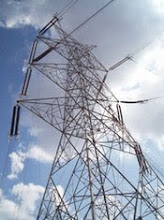
I recently attended a conference in Washington, D.C. called TransForum East. It was organized by PennWell through one of its latest acquisitions, TransmissionHub, a research, analysis and news portal. As the name implies, the conference deals with electricity transmission, but this year the low price of natural gas and how it is affecting the electric power sector was a hot topic.
Kent Knutson, TransmissionHub's director of data strategy and content, said transmission investment in the U.S. is growing. During the first nine months of 2013, nearly $6.7 billion was invested in transmission projects, up considerably from the $5.6 billion spent in all of last year.
Knutson expects continued growth through 2015. Most activity is in 345 kV projects being driven by Texas competitive renewable energy zone (CREZ) and Western Interconnection projects. A fair amount of activity is also occurring in the Midwest and PJM independent system operators and the Northeast Power Coordinating Council territories.
As in other areas of the electric power industry, uncertainty is prevalent in the transmission sector. Changing technologies, cyber and physical security threats, regulations, siting issues and customer expectations are to blame for much of that uncertainty.
Cheap gas becomes a transmission driver
The changing power generation mix, however, is perhaps the biggest culprit. Electricity generated by wind and solar energy is rapidly being added into the mix. Coal plants are being retired because they can't meet EPA regulations. Cheap natural gas is resulting in a build-out of new gas-fired combined-cycle generation to replace retired coal plants and back up intermittent renewable energy.
New transmission is needed to connect renewable energy with load centers, plus load forecasting and balancing technologies must be added to manage this intermittent supply. New gas-fired generation being built in areas with inadequate transmission capacity is also driving new transmission construction. In addition, in some areas, especially the northeast, gas-fired plants are being built in areas with constrained gas pipeline capacity.
Transmission operators are concerned that these plants, which they count on for supply, could fall off the grid if pipeline capacity is used for other demands such as home heating. Because many new gas-fired plants are owned by independent investors and merchant generators, differing opinions and uncertainty exist about who will pay for needed electric transmission infrastructure as well as gas pipeline infrastructure.
Will FERC address uncertainty?
Many look to the Federal Energy Regulatory Commission (FERC) for clarity on these issues. FERC Commissioner Philip Moeller, who spoke at TransForum, acknowledged that transmission owners and operators face many hurdles. Moeller said FERC knows the lack of a federal policy allowing transmission owners to build across state lines is a problem, but he doesn't foresee a federal law changing siting issues for interstate transmission lines in the near term.
He also said that uncertainty surrounding return on equity (ROE) exists. He said FERC has created much of this uncertainty, but his only words of encouragement came when he said ROE is a "live" issue for FERC.
Low- to moderate-priced natural gas, which Moeller said will stick around for some time, will continue to drive gas-fired generation and transmission growth. Better coordination between gas suppliers and electricity generators must be addressed, he said.
Longer-term issues, he said, such as who pays for the gas infrastructure to secure supply to generators, are more vexing. A big part of the solution involves the two industries learning more about how the other one works, he said.
Even with the uncertainty, Moeller said he is "bullish" on transmission and "it's an exciting time" in the transmission industry. "If the issues were easy, someone else would have already solved them. You need to stay active and involved," he said.
Showing posts with label transmission. Show all posts
Showing posts with label transmission. Show all posts
Wednesday, November 6, 2013

Monday, September 9, 2013
Moody's puts Energy Future Holdings on bankruptcy watch
Moody's Investors Service, one of the Big Three credit rating agencies, has given Energy Futures Holdings Corp. until the end of the year before the energy company declares for bankruptcy protection and restructures itself.
In an analysis of its own call, Moody's says this would be one of the top 10 largest non-financial corporate bankruptcies in the U.S. since the 1980s. In terms of debt, it could be one of the biggest of all time, ranking with Enron, WorldCom, General Motors and Chrysler. The holding company reportedly has more than $41 billion in debt.
The electric utility company's assets include a power generation portfolio that consists mostly of nuclear energy and coal-fired power (through Luminant), a power transmission business (through Oncor Electric Delivery) and a retail power provider (through TXU Energy).
The company was bought out in 2007 in what was at the time one of the largest leveraged buy-outs in history when a group of Wall Streeters (including Goldman Sachs, KKR and TPG Capital) paid $45 billion for what was then known as TXU Energy.
The idea was that even though the private equity firms that bought up TXU would be taking on a significant amount of debt, the notoriously unstable price of natural gas would surely soon peak, helping the financiers turn a profit. As we now know, this hoped-for spike did not occur, and instead we saw sustained record-low prices for natural gas. The gamble also anticipated that coal-fired electricity would remain inexpensive and high-profit. Hindsight, as they say, is 20/20.
Energy Future Holdings has been carrying a large amount of debt for some time now, leading analysts to speculate about its future. Moody's downgraded the company's credit rating from Caa1 to B3 in August 2013.
From the end-user's perspective, should the worst happen for EFH, the power will continue to flow because of a survival blueprint already plotted out back in April 2013. One potential bankruptcy restructuring plan would forgive billions in debt owned by Luminant in exchange for a large share of the company. The investors, in this scenario, would get the short end of the stick — an estimated return of 50 percent or less. However, subsidiaries like Oncor and Luminant could be preserved.
You can read more about that debt restructuring plan in this story.
In an analysis of its own call, Moody's says this would be one of the top 10 largest non-financial corporate bankruptcies in the U.S. since the 1980s. In terms of debt, it could be one of the biggest of all time, ranking with Enron, WorldCom, General Motors and Chrysler. The holding company reportedly has more than $41 billion in debt.
The electric utility company's assets include a power generation portfolio that consists mostly of nuclear energy and coal-fired power (through Luminant), a power transmission business (through Oncor Electric Delivery) and a retail power provider (through TXU Energy).
The company was bought out in 2007 in what was at the time one of the largest leveraged buy-outs in history when a group of Wall Streeters (including Goldman Sachs, KKR and TPG Capital) paid $45 billion for what was then known as TXU Energy.
The idea was that even though the private equity firms that bought up TXU would be taking on a significant amount of debt, the notoriously unstable price of natural gas would surely soon peak, helping the financiers turn a profit. As we now know, this hoped-for spike did not occur, and instead we saw sustained record-low prices for natural gas. The gamble also anticipated that coal-fired electricity would remain inexpensive and high-profit. Hindsight, as they say, is 20/20.
Energy Future Holdings has been carrying a large amount of debt for some time now, leading analysts to speculate about its future. Moody's downgraded the company's credit rating from Caa1 to B3 in August 2013.
From the end-user's perspective, should the worst happen for EFH, the power will continue to flow because of a survival blueprint already plotted out back in April 2013. One potential bankruptcy restructuring plan would forgive billions in debt owned by Luminant in exchange for a large share of the company. The investors, in this scenario, would get the short end of the stick — an estimated return of 50 percent or less. However, subsidiaries like Oncor and Luminant could be preserved.
You can read more about that debt restructuring plan in this story.
Friday, August 30, 2013
China thinks big on power generation, delivery
The world's second-biggest economy, China, is setting its sights on a massive expansion of its electric power sector. The country is growing increasingly energy hungry as its already massive manufacturing sector expands — and the smog haze around populated areas grow indisputably denser.
Some power sector expansion scenarios laid out by Bloomberg New Energy Finance could address both power reliability and environmental concerns, however at least one scenario would require 88 GW in new power generation capacity every year from now until 2030.
That would mean a build-out equal to the entire generation capacity of the United Kingdom every single year. Still, if any country can accomplish this, it's probably China.
China, which by the way is already the world's largest single source of carbon dioxide emissions and the most powerful generator of electric power in the world, could add more than 1,500 GW of new power generation in the next two decades, according to Bloomberg's surveys.
In a scenario called "The New Normal," a reasonably progressive yet still conservative estimate of what China might do with its energy sector, this would require an investment just shy of $4 trillion.
At the same time, though, cuts in overall emissions could still be achieved as soon as 2027 through the adoption and integration of more renewable energy capacity and the phase-out of coal-fired power. Large hydropower would constitute more than half of new capacity. China is already home to the world's biggest and most powerful hydropower projects, and even more are being planned.
The New Normal plan also calls for an expansion of China's natural gas-fired fleet that would push down coal-fired generation from 67 percent of China's energy mix to 44 percent by 2030. Coal-fired power would still expand in this scenario by nearly 40 GW per year, it should be noted.
Separate from this planned massive power generation build-out, another way China is thinking big is its anticipated $100 billion investment in ultra high-voltage transmission lines (Read more about that here). The State Grid Corp. of China, which according to some estimates is the world's biggest utility, has either approved or is already building 20 such transmission projects.
These 20 high-voltage lines will form a massive network that will link up the densely populated and heavily industrialized southern and eastern parts of China with the west, where the country's hydropower potential is already better realized than just about anywhere else in the Eastern Hemisphere. China has already built the world's most massive and powerful dams in its eastern provinces, including Three Gorges, which at 22,500 MW generates as much electricity as 15 nuclear power plants.
Linking up the country's east and west with high-voltage power transmission is a smart way for China to make effective use of low- or no-carbon generation. Over the long term, this will help China's overall power portfolio become less polluting. Focusing on a well-built power grid with plenty of storm-hardening countermeasures and redundancies will prevent a scenario like we see in Brazil, which also uses massive dams to power far-flung population centers, but which suffers from regular outages when transmission lines are damaged or cut off.
As I write this, Brazilian authorities are working to restore power to eight states and tens of millions of people because a fire in northeast Brazil damaged transmission lines that link huge hydro assets from cities (See that story here). As China grows, it would do well to keep an eye on Brazil and remember what happens when you build out your cities and power plants, but neglect your transmission infrastructure.
Some power sector expansion scenarios laid out by Bloomberg New Energy Finance could address both power reliability and environmental concerns, however at least one scenario would require 88 GW in new power generation capacity every year from now until 2030.
That would mean a build-out equal to the entire generation capacity of the United Kingdom every single year. Still, if any country can accomplish this, it's probably China.
China, which by the way is already the world's largest single source of carbon dioxide emissions and the most powerful generator of electric power in the world, could add more than 1,500 GW of new power generation in the next two decades, according to Bloomberg's surveys.
In a scenario called "The New Normal," a reasonably progressive yet still conservative estimate of what China might do with its energy sector, this would require an investment just shy of $4 trillion.
At the same time, though, cuts in overall emissions could still be achieved as soon as 2027 through the adoption and integration of more renewable energy capacity and the phase-out of coal-fired power. Large hydropower would constitute more than half of new capacity. China is already home to the world's biggest and most powerful hydropower projects, and even more are being planned.
The New Normal plan also calls for an expansion of China's natural gas-fired fleet that would push down coal-fired generation from 67 percent of China's energy mix to 44 percent by 2030. Coal-fired power would still expand in this scenario by nearly 40 GW per year, it should be noted.
Separate from this planned massive power generation build-out, another way China is thinking big is its anticipated $100 billion investment in ultra high-voltage transmission lines (Read more about that here). The State Grid Corp. of China, which according to some estimates is the world's biggest utility, has either approved or is already building 20 such transmission projects.
These 20 high-voltage lines will form a massive network that will link up the densely populated and heavily industrialized southern and eastern parts of China with the west, where the country's hydropower potential is already better realized than just about anywhere else in the Eastern Hemisphere. China has already built the world's most massive and powerful dams in its eastern provinces, including Three Gorges, which at 22,500 MW generates as much electricity as 15 nuclear power plants.
Linking up the country's east and west with high-voltage power transmission is a smart way for China to make effective use of low- or no-carbon generation. Over the long term, this will help China's overall power portfolio become less polluting. Focusing on a well-built power grid with plenty of storm-hardening countermeasures and redundancies will prevent a scenario like we see in Brazil, which also uses massive dams to power far-flung population centers, but which suffers from regular outages when transmission lines are damaged or cut off.
As I write this, Brazilian authorities are working to restore power to eight states and tens of millions of people because a fire in northeast Brazil damaged transmission lines that link huge hydro assets from cities (See that story here). As China grows, it would do well to keep an eye on Brazil and remember what happens when you build out your cities and power plants, but neglect your transmission infrastructure.
Monday, May 6, 2013
Honoring the inventor behind alternating current
Credit where it's due is a simple and remarkable thing, although unfortunately history has a way of shortchanging people of it. It's hard to think of a better example of this tendency than one Nikola Tesla — the person who, by rights, ought to be considered the father of the electronic age, but more often is remembered as a mad scientist who died penniless and alone.

In recent years, however, there's been a growing acknowledgement of the many contributions made to modern life by this Serbian-American genius. Two "crowdfunding" projects are attempting to honor Tesla with statues and museums from Shoreham, New York (the site of one of Telsa's old laboratories) to Silicon Valley, California, a place whose very existence would be difficult to imagine without Tesla's inventions.
Crowdfunding, by the way, is a way to combine social media with traditional fundraising. One such campaign, begun on Kickstarter by start-up veteran Dorrian Porter, seeks to commemorate Telsa with a bronze statue, a mock-up of which can be seen here. Should enough money be raised by the Kickstarter campaign, the statue would be erected in Palo Alto, California. As of this writing, 34 backers have pledged about $3,800 to build the statue.
Another, perhaps more ambitious, campaign was started by Internet cartoonist and blogger Matthew Inman, whose comic strips on The Oatmeal are frequently shared all over the internet. Inman wants to use another crowdfunding site called Indiegogo to collect funding to transform Tesla's old laboratory called Wardenclyffe into a museum that will educate the public about his contributions to energy transmission and wireless communications. The campaign succeeded in meeting its original $850,000 goal, and has since expanded into a project not just to build a museum, but a Telsa Science Center at Wardenclyffe.
History doesn't always remember the people who made the present possible. Particularly if the people in question didn't devote themselves to making a fortune or at least spreading their name far and wide before passing on. During his life, Tesla was too busy pursuing his ideas to bother with making money or gaining notoriety. Still, companies like General Electric, Westinghouse and others would not exist without his innovations. Commonplace technologies such as the hydroelectric dam or the electric car or the radio, even if Tesla is not remembered for having contributed to them, are nevertheless the products of his brain.
It's true genius is seldom recognized in its own time, but to break out a different cliche: "Better late than never."

In recent years, however, there's been a growing acknowledgement of the many contributions made to modern life by this Serbian-American genius. Two "crowdfunding" projects are attempting to honor Tesla with statues and museums from Shoreham, New York (the site of one of Telsa's old laboratories) to Silicon Valley, California, a place whose very existence would be difficult to imagine without Tesla's inventions.
Crowdfunding, by the way, is a way to combine social media with traditional fundraising. One such campaign, begun on Kickstarter by start-up veteran Dorrian Porter, seeks to commemorate Telsa with a bronze statue, a mock-up of which can be seen here. Should enough money be raised by the Kickstarter campaign, the statue would be erected in Palo Alto, California. As of this writing, 34 backers have pledged about $3,800 to build the statue.
Another, perhaps more ambitious, campaign was started by Internet cartoonist and blogger Matthew Inman, whose comic strips on The Oatmeal are frequently shared all over the internet. Inman wants to use another crowdfunding site called Indiegogo to collect funding to transform Tesla's old laboratory called Wardenclyffe into a museum that will educate the public about his contributions to energy transmission and wireless communications. The campaign succeeded in meeting its original $850,000 goal, and has since expanded into a project not just to build a museum, but a Telsa Science Center at Wardenclyffe.
History doesn't always remember the people who made the present possible. Particularly if the people in question didn't devote themselves to making a fortune or at least spreading their name far and wide before passing on. During his life, Tesla was too busy pursuing his ideas to bother with making money or gaining notoriety. Still, companies like General Electric, Westinghouse and others would not exist without his innovations. Commonplace technologies such as the hydroelectric dam or the electric car or the radio, even if Tesla is not remembered for having contributed to them, are nevertheless the products of his brain.
It's true genius is seldom recognized in its own time, but to break out a different cliche: "Better late than never."
Wednesday, April 10, 2013
What is in Obama's budget for energy?
President Barack Obama's running mate Joe Biden is fond of saying
"show me your budget, and I'll show you where your priorities are."
Media outlets have already begun picking through the wording of the
president's $3.78 trillion 2014 budget to see what is being prioritized
at a time when seemingly every cent of spending results in overheated
press conferences on Capitol Hill and the threat of some catastrophic
government shut-down.
When you look at just one area of the budget, massive at it is, it gets a little easier. So let's see what the budget has to say about energy policy. Here are some highlights:
The budget provides $28.4 billion in discretionary funds for the Department of Energy (DOE) — an 8 percent increase about the 2012 enacted level. This is meant to position the U.S. as a leader in clean energy while boosting energy security.
The budget proposes for $615 million to promote wind, solar, geothermal and hydrokinetic energy.
The document calls for a "Race to the Top" program to promote grid modernization and energy efficiency, which is something Obama mentioned in his most recent State of the Union. The awards would support state-level policies that increase energy productivity and modernize the grid — with the goal of cutting energy waste in half over the next two decades.
Also in the budget is more than $5 billion — 5.7 percent more than 2012 — for energy sector research and development. The need to continue R&D even in difficult economic times is something the present has said repeatedly, so finding it in the budget is perhaps not unexpected.
About $153 million in research and development funding is proposed for grid modernization, cybersecurity and energy control systems. Advances in the technologies and tools for improved clean energy integration onto the grid through an $80 million coordinated effort within the Office of Energy Efficiency and Renewable Energy.
Part of this tranche would include $20 million for a new Electricity Systems Hub, which would explore the interface between transmission and distribution systems in the smart grid context. The budget would support hardware and modeling R&D to improve the integration of renewable energy into the distribution grid, distributed generation, electric vehicles and residential/commercial buildings loads behind the meter.
About $575 million will be invested in alternative vehicle technologies, according to this budget — presumably this goes further than electric vehicles and charging stations, but likely includes both. There is also mention of a $2 billion of proposed mandatory funding for an Energy Security Trust (also mentioned in the State of the Union), intended to transition cars, trucks and other vehicles off of oil (biofuels, hydrogen, natural gas and electricity are specifically mentioned).
The budget provides $735 million for the Office of Nuclear Energy, which includes funding for small modular reactors. There is also $379 million for the Advanced Research Projects Agency — Energy, or ARPA-E, which is the agency that investigates "long game" technologies.
Carbon capture and storage is mentioned in the budget breakdown, with $421 million for the Fossil Energy Research and Development program, including an investment of $266 million in fossil energy R&D primarily dedicated to carbon capture.
The budget eliminates $4 billion yearly in "unnecessary subsidies to the oil, gas and coal industries;" restructuring the plutonium disposition program; cutting low performing programs; and using existing facilities and infrastructure.
In another energy efficiency measure, the budget calls for funding of the president's Better Buildings Initiative, which is meant to help consumers and businesses save money through energy efficiency.
There is $16 million — up from $10 million — in enhanced energy infrastructure security and energy recovery capabilities.
Separate from the DOE funding, the Environmental Protection Agency budget is about $296 million lower than the 2012 level, with the president's budget allocating the EPA $8.2 billion.
When you look at just one area of the budget, massive at it is, it gets a little easier. So let's see what the budget has to say about energy policy. Here are some highlights:
The budget provides $28.4 billion in discretionary funds for the Department of Energy (DOE) — an 8 percent increase about the 2012 enacted level. This is meant to position the U.S. as a leader in clean energy while boosting energy security.
The budget proposes for $615 million to promote wind, solar, geothermal and hydrokinetic energy.
The document calls for a "Race to the Top" program to promote grid modernization and energy efficiency, which is something Obama mentioned in his most recent State of the Union. The awards would support state-level policies that increase energy productivity and modernize the grid — with the goal of cutting energy waste in half over the next two decades.
Also in the budget is more than $5 billion — 5.7 percent more than 2012 — for energy sector research and development. The need to continue R&D even in difficult economic times is something the present has said repeatedly, so finding it in the budget is perhaps not unexpected.
About $153 million in research and development funding is proposed for grid modernization, cybersecurity and energy control systems. Advances in the technologies and tools for improved clean energy integration onto the grid through an $80 million coordinated effort within the Office of Energy Efficiency and Renewable Energy.
Part of this tranche would include $20 million for a new Electricity Systems Hub, which would explore the interface between transmission and distribution systems in the smart grid context. The budget would support hardware and modeling R&D to improve the integration of renewable energy into the distribution grid, distributed generation, electric vehicles and residential/commercial buildings loads behind the meter.
About $575 million will be invested in alternative vehicle technologies, according to this budget — presumably this goes further than electric vehicles and charging stations, but likely includes both. There is also mention of a $2 billion of proposed mandatory funding for an Energy Security Trust (also mentioned in the State of the Union), intended to transition cars, trucks and other vehicles off of oil (biofuels, hydrogen, natural gas and electricity are specifically mentioned).
The budget provides $735 million for the Office of Nuclear Energy, which includes funding for small modular reactors. There is also $379 million for the Advanced Research Projects Agency — Energy, or ARPA-E, which is the agency that investigates "long game" technologies.
Carbon capture and storage is mentioned in the budget breakdown, with $421 million for the Fossil Energy Research and Development program, including an investment of $266 million in fossil energy R&D primarily dedicated to carbon capture.
The budget eliminates $4 billion yearly in "unnecessary subsidies to the oil, gas and coal industries;" restructuring the plutonium disposition program; cutting low performing programs; and using existing facilities and infrastructure.
In another energy efficiency measure, the budget calls for funding of the president's Better Buildings Initiative, which is meant to help consumers and businesses save money through energy efficiency.
There is $16 million — up from $10 million — in enhanced energy infrastructure security and energy recovery capabilities.
Separate from the DOE funding, the Environmental Protection Agency budget is about $296 million lower than the 2012 level, with the president's budget allocating the EPA $8.2 billion.
Monday, December 17, 2012
2013 trends for the power industry
Even if the Mayans are wrong about the world ending, there isn't much left of 2012. So before we all rush off to relatives' houses or office holiday parties, let's take some time to consider the year ahead and what it might hold for the electric utility industry.
I had the opportunity recently to ask a few quick questions to Andre Begosso, managing director of Accenture's Utilities North America strategy practice. Thanks to Andre's expertise, we can flesh out what might happen in the coming weeks and months.
Trend No. 1: The "Dash for Gas" will continue, but don't count coal out
This year, hydraulic fracking and other developments in fossil fuel extraction have tipped the scales in favor of natural gas, thus leading power companies to exploit the record low prices of natural gas-fired generation. Andre said he expects this trend to continue into 2013.
"The price of gas will continue to fluctuate and there is a reason for that," he said. "Price is driven by marginal demand, which in turn is driven mostly by the power generation sector."
Along with the Dash for Gas, another phrase that gained notoriety was the "War on Coal." Energy lobbyists and politicians from coal-producing countries have been among those who claim that the president, the EPA and Congress have it in for coal and are putting the industry at risk deliberately. For his part though, Andre said he doesn't buy this hype.
"The price of gas is the single biggest pressure on the coal sector," he said. "Worse than any regulation or legislation from the government."
Regardless of why coal is feeling the pinch, though, there will always be a need for the baseload power it provides, he said.
"Even in the best case scenarios, we don't have enough gas to completely replace coal," he said. "Not only that, but we have some upcoming technologies currently under development that will allow us to use less coal. Coal will never go away."
Trend No. 2: Utilities get back to their bread and butter
With the American Recovery and Reinvestment Act funding spent and Congress not in a spending mood, I wondered where smart grid pilot programs and smart meter rollouts were going to get their funding. "The ratepayers," predicts Andre.
"In terms of the smart grid, there was a wave of construction, and now people are getting better at applying the technology. We will continue to learn more about how to apply it and how to keep the technology viable," he said.
Some of the more exotic technologies, such as energy storage, that have yet to be firmly proven in the field, utilities will take a rain check on — waiting to see how the technologies evolve over time.
"Utilities will continue to invest in their bread and butter technologies, like AMI. There is no reason for them not to invest in those," he said.
Trend No. 3: Has renewable energy deployment hit a peak?
FERC announced what I thought were some surprising numbers about renewable generation. Biomass, geothermal, solar, wind and hydropower, taken together, accounted for more than 41 percent of new generation put online in the U.S. in 2012.
This is thanks to a variety of factors, Andre said. Government support, in the form of the production tax credit, is one factor, as are state-level renewable portfolio standards.
"A lot of states have a looming 2015 deadline to meet their portfolio standards. Michigan is one of them. So they needed to meet those standards," he said.
In the absence of some major advance in energy storage, Andre said, he expects that renewable energy installation will probably start to slow as its shortcomings become more apparent to utilities and power companies.
"I would not expect these trends to continue because of the tremendous limitation that renewable technologies have. You cannot break the laws of physics or the laws of chemistry. The wind doesn't blow all the time and it never will, and the sun doesn't always shine and it never will," he said.
Trend No. 4: Energy back on the agenda
In my last blog post, I speculated about what it might take to get energy policy back on the agenda. When I asked about this, Andre said energy already is back on the agenda.
"Over the next 3 years, over $220 billion in new infrastructure will be built. But the problem with infrastructure is Rome wasn't built in a day. It takes time," he said.
This new wave of infrastructure upgrades will require a level of patience and understanding on the part of ratepayers that Andre wonders whether the average person is capable of. During Hurricane Sandy, for example, Con Edison had one of the most sophisticated electric grids available — yet it still failed, and people wonder why.
"As much as people hate outages, I don't think they understand them," he said. "If we had to build everything to withstand every possible disaster that could happen, it would never be built. It would be too expensive."
As far as utilities are concerned in this, Andre compares adopting new infrastructure improvements to how consumers usually approach the release of flashy new electronic gizmos.
"Remember when BluRay players were $400? Some people did pay for them, but the average Joe looked at it and said, 'Well, I can still watch movies on my old DVD player.' The infrastructure problem isn't much different from that."
Trend No 5: Growth opportunities will come from new start-ups
Maybe one of the biggest long-term changes the utility industry has ever seen is the reversal of the status quo of energy use. Energy companies are realizing they have a vested interest in getting customers to use less of their product, and this trend in turn is leading to a market for all kinds of consumer gadgets that will help people use less energy.
"The regulatory model of the U.S. was built around capital. The underlying assumption was we'd always have growth and we'd always consume more energy," he said. "What we may see in the future is that assumption might not be true... If you have a good understanding of the way the market works, you will be successful."
Small start-up companies that have a good idea and a way to market it might make a bigger splash in the energy sector with it comes to growth than the older, more established players.
"I just got a new smart thermostat called the Nest, and it's one of the coolest things I've ever bought," he said. "I installed it myself and I'm not a very handy person."
My thanks to Andre Begosso for his help with this post. Andre is a managing director in the Accenture management consulting practice and is focused on the resources operating group. He has more than seventeen years of experience in the utility and energy industries and advises clients in the alternative energy, power generation and oil and gas sectors. Andre has a B.S. in industrial engineering from the university of Sao Paulo, Brazil and an MBA from the Ross School of Business at the University of Michigan.
I had the opportunity recently to ask a few quick questions to Andre Begosso, managing director of Accenture's Utilities North America strategy practice. Thanks to Andre's expertise, we can flesh out what might happen in the coming weeks and months.
Trend No. 1: The "Dash for Gas" will continue, but don't count coal out
This year, hydraulic fracking and other developments in fossil fuel extraction have tipped the scales in favor of natural gas, thus leading power companies to exploit the record low prices of natural gas-fired generation. Andre said he expects this trend to continue into 2013.
"The price of gas will continue to fluctuate and there is a reason for that," he said. "Price is driven by marginal demand, which in turn is driven mostly by the power generation sector."
Along with the Dash for Gas, another phrase that gained notoriety was the "War on Coal." Energy lobbyists and politicians from coal-producing countries have been among those who claim that the president, the EPA and Congress have it in for coal and are putting the industry at risk deliberately. For his part though, Andre said he doesn't buy this hype.
"The price of gas is the single biggest pressure on the coal sector," he said. "Worse than any regulation or legislation from the government."
Regardless of why coal is feeling the pinch, though, there will always be a need for the baseload power it provides, he said.
"Even in the best case scenarios, we don't have enough gas to completely replace coal," he said. "Not only that, but we have some upcoming technologies currently under development that will allow us to use less coal. Coal will never go away."
Trend No. 2: Utilities get back to their bread and butter
With the American Recovery and Reinvestment Act funding spent and Congress not in a spending mood, I wondered where smart grid pilot programs and smart meter rollouts were going to get their funding. "The ratepayers," predicts Andre.
"In terms of the smart grid, there was a wave of construction, and now people are getting better at applying the technology. We will continue to learn more about how to apply it and how to keep the technology viable," he said.
Some of the more exotic technologies, such as energy storage, that have yet to be firmly proven in the field, utilities will take a rain check on — waiting to see how the technologies evolve over time.
"Utilities will continue to invest in their bread and butter technologies, like AMI. There is no reason for them not to invest in those," he said.
Trend No. 3: Has renewable energy deployment hit a peak?
FERC announced what I thought were some surprising numbers about renewable generation. Biomass, geothermal, solar, wind and hydropower, taken together, accounted for more than 41 percent of new generation put online in the U.S. in 2012.
This is thanks to a variety of factors, Andre said. Government support, in the form of the production tax credit, is one factor, as are state-level renewable portfolio standards.
"A lot of states have a looming 2015 deadline to meet their portfolio standards. Michigan is one of them. So they needed to meet those standards," he said.
In the absence of some major advance in energy storage, Andre said, he expects that renewable energy installation will probably start to slow as its shortcomings become more apparent to utilities and power companies.
"I would not expect these trends to continue because of the tremendous limitation that renewable technologies have. You cannot break the laws of physics or the laws of chemistry. The wind doesn't blow all the time and it never will, and the sun doesn't always shine and it never will," he said.
Trend No. 4: Energy back on the agenda
In my last blog post, I speculated about what it might take to get energy policy back on the agenda. When I asked about this, Andre said energy already is back on the agenda.
"Over the next 3 years, over $220 billion in new infrastructure will be built. But the problem with infrastructure is Rome wasn't built in a day. It takes time," he said.
This new wave of infrastructure upgrades will require a level of patience and understanding on the part of ratepayers that Andre wonders whether the average person is capable of. During Hurricane Sandy, for example, Con Edison had one of the most sophisticated electric grids available — yet it still failed, and people wonder why.
"As much as people hate outages, I don't think they understand them," he said. "If we had to build everything to withstand every possible disaster that could happen, it would never be built. It would be too expensive."
As far as utilities are concerned in this, Andre compares adopting new infrastructure improvements to how consumers usually approach the release of flashy new electronic gizmos.
"Remember when BluRay players were $400? Some people did pay for them, but the average Joe looked at it and said, 'Well, I can still watch movies on my old DVD player.' The infrastructure problem isn't much different from that."
Trend No 5: Growth opportunities will come from new start-ups
Maybe one of the biggest long-term changes the utility industry has ever seen is the reversal of the status quo of energy use. Energy companies are realizing they have a vested interest in getting customers to use less of their product, and this trend in turn is leading to a market for all kinds of consumer gadgets that will help people use less energy.
"The regulatory model of the U.S. was built around capital. The underlying assumption was we'd always have growth and we'd always consume more energy," he said. "What we may see in the future is that assumption might not be true... If you have a good understanding of the way the market works, you will be successful."
Small start-up companies that have a good idea and a way to market it might make a bigger splash in the energy sector with it comes to growth than the older, more established players.
"I just got a new smart thermostat called the Nest, and it's one of the coolest things I've ever bought," he said. "I installed it myself and I'm not a very handy person."
My thanks to Andre Begosso for his help with this post. Andre is a managing director in the Accenture management consulting practice and is focused on the resources operating group. He has more than seventeen years of experience in the utility and energy industries and advises clients in the alternative energy, power generation and oil and gas sectors. Andre has a B.S. in industrial engineering from the university of Sao Paulo, Brazil and an MBA from the Ross School of Business at the University of Michigan.
Wednesday, September 5, 2012
Utilities helping utilities
Following Hurricane Isaac life is getting back to normal for most residents all along the Gulf Coast. As with other major storm recovery efforts of years past, power utilities are looking out for each other through mutual assistance practices.
Isaac, which came aground in the U.S. as a Category 2 hurricane, arrived in time for the 7-year anniversary of Hurricane Katrina, the worst hurricane in American history in terms of dollars spent on damage recovery.
Some of these crew members worked 16-hour days to help families without power. To do that, they had to take open-ended commitments of their time and leave their hometowns for days or weeks at a time.
Eric Silagy, president of Florida Power & Light company told NBC's Today Show that these storm recovery crews are like an army on the move. Looking at some of the video, it's easy to see the truth in that comparison.
WLOX.com - The News for South Mississippi
Cleco Corp. managed a 2,400-member storm team to restore power to 95,000 customers. The utility secured workers from Oklahoma, Florida, North Carolina, South Carolina, Alabama, Kentucky, Texas, Tennessee, Arkansas, Georgia, Virginia and Maryland.
Alabama Power sent crews into Mississippi to help with recover efforts there. See video of that deployment here.
AEP's Southwestern Electric Power Co. served in Shreveport, Louisiana, booking hotel rooms for crews to sleep in, organized fleet vehicle fuel stops and planned out other logistics. The utility received help from AEP operating companies from Ohio, Oklahoma, Arkansas, Indiana, Kentucky and Virginia, as well as outside contractors.
Dominion Virginia Power sent 130 workers and contractors, plus bucket trucks. Dominion workers were returning a favor in a way, as crews from Louisiana came to Dominion's Virginia service area to assist with the June 2012 derecho.
Oklahoma Gas & Electric sent 71 employees to southern Louisiana. OG&E, a member of the Southeast Electric Exchange, served in the same area following Hurricane Gustav.
TECO Energy and Progress Energy Florida sent teams from Florida to help storm victims — about 290 workers total. Progress Energy's parent company, Duke Energy, sent 1,000 contractors total to help restore power.
These are just a few examples and this blog post is not meant to be comprehensive. Utilities maintain extensive networks of work crews, and some are participants of multiple assistance programs.
Mutual assistance is pretty cool to watch at work. When there's a big job to do, it's hard to imagine storm recovery going as smoothly any other way. It's especially cool when you hear about a utility returning the favor by assisting crews that once helped them.
Isaac, which came aground in the U.S. as a Category 2 hurricane, arrived in time for the 7-year anniversary of Hurricane Katrina, the worst hurricane in American history in terms of dollars spent on damage recovery.
Some of these crew members worked 16-hour days to help families without power. To do that, they had to take open-ended commitments of their time and leave their hometowns for days or weeks at a time.
Eric Silagy, president of Florida Power & Light company told NBC's Today Show that these storm recovery crews are like an army on the move. Looking at some of the video, it's easy to see the truth in that comparison.
WLOX.com - The News for South Mississippi
Cleco Corp. managed a 2,400-member storm team to restore power to 95,000 customers. The utility secured workers from Oklahoma, Florida, North Carolina, South Carolina, Alabama, Kentucky, Texas, Tennessee, Arkansas, Georgia, Virginia and Maryland.
Alabama Power sent crews into Mississippi to help with recover efforts there. See video of that deployment here.
AEP's Southwestern Electric Power Co. served in Shreveport, Louisiana, booking hotel rooms for crews to sleep in, organized fleet vehicle fuel stops and planned out other logistics. The utility received help from AEP operating companies from Ohio, Oklahoma, Arkansas, Indiana, Kentucky and Virginia, as well as outside contractors.
Dominion Virginia Power sent 130 workers and contractors, plus bucket trucks. Dominion workers were returning a favor in a way, as crews from Louisiana came to Dominion's Virginia service area to assist with the June 2012 derecho.
Oklahoma Gas & Electric sent 71 employees to southern Louisiana. OG&E, a member of the Southeast Electric Exchange, served in the same area following Hurricane Gustav.
TECO Energy and Progress Energy Florida sent teams from Florida to help storm victims — about 290 workers total. Progress Energy's parent company, Duke Energy, sent 1,000 contractors total to help restore power.
These are just a few examples and this blog post is not meant to be comprehensive. Utilities maintain extensive networks of work crews, and some are participants of multiple assistance programs.
Mutual assistance is pretty cool to watch at work. When there's a big job to do, it's hard to imagine storm recovery going as smoothly any other way. It's especially cool when you hear about a utility returning the favor by assisting crews that once helped them.
Thursday, August 2, 2012
Fixing the world's biggest blackout
About 10 percent of the world's population lost power recently as a blackout swept across northern India. As many as 700 million people, or twice the population of the U.S., were affected. Fortunately there have been no reports of deaths connected to the blackout, but the loss of power did result in traffic snarls, stranded train passengers and a group of trapped coal miners.
So what can the world's biggest democracy do to help stave off such wide-sweeping outages in the future? To find out, I spoke with Jason Black, a research leader in grid systems with Battelle's Energy, Environment and Material Sciences Global Business.
Black characterized India's power grid as reasonably good on the transmission side, but a bit dodgy on the distribution side. Furthermore, the country has struggled with power shortages as its current generation mix often can't meet the demands of the population.
"In many sections of the country, they use rolling blackouts regularly," Black said. "But I don't think it's as simple as an excessive load. There are protection schemes in place to deal with that."
In recent years, India has worked to encourage investment in new power generation of just about every type, including distributed renewable generation like solar energy, of which India now has about 1 GW.
"Traditionally they have used coal, and they have some hydro as well. They have made some legislation that was meant to increase their renewable capacity — just as a way to try to correct some of their power shortages," he said.
In addition to bringing more generation online, India's grid operators have attempted to interconnect their grid more thoroughly — an approach not without its dangers.
"[Interconnection is] good from one perspective, because the redundancies can address an interruption in one area. But from another perspective, it can increase the risk of cascading power outages, which it appears this one is."
Though its transmission grid is reasonably well developed, India's rapid development and population growth have left it with a distribution system that often falls short of the task of delivering power to those that need it.
"They have had some ongoing problems with electricity theft, which has become a local political problem and leads to losses, making the pull on the system unpredictable. Cleaning up the distribution system would help them a lot," he said.
For one thing, India's grid could implement underfrequency load shedding as is done in the U.S.
"In the U.S., we operate our system at 60 Hertz. This keeps the power flowing in sync, so generators don't trip offline. Imbalances in demand and supply are what cause these kinds of outages — when the generators can't handle the imbalances. That's one way to get these cascading power outages," he said.
To prevent further outages during the restoration process, India's grid operators need to be careful how they manage the grid in the coming days.
"If you're a steam plant and the system has tripped off to protect itself, your steam cools off. It can take many hours to return to service. Depending on how many of their generators have black start capability, that process can take a while," he said.
As generators start spinning again, grid operators have important choices to make.
"There's a trade off. Do I bring on all my generators, or do I bring on a certain subset of customers that I can get to faster?" he said. "If there isn't enough slack in the system when you start up these plants, it can bring the system offline again."
Furthermore, there might be physical damage to the grid that needs fixing — delaying restoration even more.
"There could be parts of the grid that broke... Some transformers that exploded or some circuit breakers that opened. They have to deal with those things before bringing the grid back online," he said.
Black said this blackout is likely one of the worst in history, in terms of the number of people affected. While Indian officials are still investigating the causes, it bears all the telltale signs of a cascading power outage, like the Northeast blackout of 2003, which began in Ohio, ran through New York and into Canada. But even in a blackout so widespread in North America, only 55 million people were affected. It's almost unthinkable to most of us to imagine 700 million people without power.
But that's pretty much how it always goes with power outages, as people in the utility industry know. People don't think about it at all until the lights go out. Then the next day (hopefully) when they come back on, the finger-wagging starts.
So what can the world's biggest democracy do to help stave off such wide-sweeping outages in the future? To find out, I spoke with Jason Black, a research leader in grid systems with Battelle's Energy, Environment and Material Sciences Global Business.
Black characterized India's power grid as reasonably good on the transmission side, but a bit dodgy on the distribution side. Furthermore, the country has struggled with power shortages as its current generation mix often can't meet the demands of the population.
"In many sections of the country, they use rolling blackouts regularly," Black said. "But I don't think it's as simple as an excessive load. There are protection schemes in place to deal with that."
In recent years, India has worked to encourage investment in new power generation of just about every type, including distributed renewable generation like solar energy, of which India now has about 1 GW.
"Traditionally they have used coal, and they have some hydro as well. They have made some legislation that was meant to increase their renewable capacity — just as a way to try to correct some of their power shortages," he said.
In addition to bringing more generation online, India's grid operators have attempted to interconnect their grid more thoroughly — an approach not without its dangers.
"[Interconnection is] good from one perspective, because the redundancies can address an interruption in one area. But from another perspective, it can increase the risk of cascading power outages, which it appears this one is."
Though its transmission grid is reasonably well developed, India's rapid development and population growth have left it with a distribution system that often falls short of the task of delivering power to those that need it.
"They have had some ongoing problems with electricity theft, which has become a local political problem and leads to losses, making the pull on the system unpredictable. Cleaning up the distribution system would help them a lot," he said.
For one thing, India's grid could implement underfrequency load shedding as is done in the U.S.
"In the U.S., we operate our system at 60 Hertz. This keeps the power flowing in sync, so generators don't trip offline. Imbalances in demand and supply are what cause these kinds of outages — when the generators can't handle the imbalances. That's one way to get these cascading power outages," he said.
To prevent further outages during the restoration process, India's grid operators need to be careful how they manage the grid in the coming days.
"If you're a steam plant and the system has tripped off to protect itself, your steam cools off. It can take many hours to return to service. Depending on how many of their generators have black start capability, that process can take a while," he said.
As generators start spinning again, grid operators have important choices to make.
"There's a trade off. Do I bring on all my generators, or do I bring on a certain subset of customers that I can get to faster?" he said. "If there isn't enough slack in the system when you start up these plants, it can bring the system offline again."
Furthermore, there might be physical damage to the grid that needs fixing — delaying restoration even more.
"There could be parts of the grid that broke... Some transformers that exploded or some circuit breakers that opened. They have to deal with those things before bringing the grid back online," he said.
Black said this blackout is likely one of the worst in history, in terms of the number of people affected. While Indian officials are still investigating the causes, it bears all the telltale signs of a cascading power outage, like the Northeast blackout of 2003, which began in Ohio, ran through New York and into Canada. But even in a blackout so widespread in North America, only 55 million people were affected. It's almost unthinkable to most of us to imagine 700 million people without power.
But that's pretty much how it always goes with power outages, as people in the utility industry know. People don't think about it at all until the lights go out. Then the next day (hopefully) when they come back on, the finger-wagging starts.
Monday, April 16, 2012
Unmanned drones could deploy in the fight against outages
By Jeff Postelwait
Online Editor
Maybe this is just the viewpoint of an American who grew up on "Terminator" movies, but I still find it incredibly weird and interesting that we live in a world where robots patrol the skies. Apparently the Electric Power Research Institute still thinks robots are cool too because they're researching ways for the technology to help out the electric power industry.
Unmanned Aerial Vehicles, or drones, of the same category of the Hellfire-carrying Predator, deployed around the world by the United States Armed Forces, could potentially be used by utilities to check on the status of distribution systems, according to an EPRI study. Instead of sporting Hellfire missiles, though, these units could carry cameras, sensors and global positioning capability.

It's easy to see why an all-seeing eye that can fly to a remote area and report data back to its operators might be of good use to an industry that frequently deals with icy roads, downed trees and other hazards at the very same time when the need for good communications has never been higher.
EPRI decided to take that idea and run with it with a series of tests of different types of UAVs at the New Mexico State University Flight Test Center, which is just a short distance away from the White Sands Missile Range in south-central New Mexico. These aircraft carried high-resolution video cameras and transmitted images of power lines from a useful distance of 7,000 feet in the air.
Footage shot like this could provide timely information to grid operators and their field crews, allowing them to better prioritize their outage restoration efforts and get accurate information sent off to affected customers.
"The tests indicated that unmanned airborne technologies equipped with sensors, cameras and GPS could be deployed quickly, allowing utilities to evaluate large areas more quickly than ground-based crews, then develop a repair strategy and mobilize repair crews more quickly and effectively," according to EPRI.
EPRI is also taking a look at the capabilities of drones for the inspection and assessment of overhead transmission lines. To make sure these findings are more practical for the utilities, EPRI is gathering data on UAV functional requirements, costs, inspection technologies, as well as testing several different types of UAVs.
Other sectors have taken a look at UAVs before, including the oil and gas industry, firefighting departments, meteorologists, forestry services and others. Still, I think that for utilities that have the resources to put these drones in the sky, it could dramatically boost response time — and utilities know that when customers are in the dark, every second counts.
Online Editor
Maybe this is just the viewpoint of an American who grew up on "Terminator" movies, but I still find it incredibly weird and interesting that we live in a world where robots patrol the skies. Apparently the Electric Power Research Institute still thinks robots are cool too because they're researching ways for the technology to help out the electric power industry.
Unmanned Aerial Vehicles, or drones, of the same category of the Hellfire-carrying Predator, deployed around the world by the United States Armed Forces, could potentially be used by utilities to check on the status of distribution systems, according to an EPRI study. Instead of sporting Hellfire missiles, though, these units could carry cameras, sensors and global positioning capability.

It's easy to see why an all-seeing eye that can fly to a remote area and report data back to its operators might be of good use to an industry that frequently deals with icy roads, downed trees and other hazards at the very same time when the need for good communications has never been higher.
EPRI decided to take that idea and run with it with a series of tests of different types of UAVs at the New Mexico State University Flight Test Center, which is just a short distance away from the White Sands Missile Range in south-central New Mexico. These aircraft carried high-resolution video cameras and transmitted images of power lines from a useful distance of 7,000 feet in the air.
Footage shot like this could provide timely information to grid operators and their field crews, allowing them to better prioritize their outage restoration efforts and get accurate information sent off to affected customers.
"The tests indicated that unmanned airborne technologies equipped with sensors, cameras and GPS could be deployed quickly, allowing utilities to evaluate large areas more quickly than ground-based crews, then develop a repair strategy and mobilize repair crews more quickly and effectively," according to EPRI.
EPRI is also taking a look at the capabilities of drones for the inspection and assessment of overhead transmission lines. To make sure these findings are more practical for the utilities, EPRI is gathering data on UAV functional requirements, costs, inspection technologies, as well as testing several different types of UAVs.
Other sectors have taken a look at UAVs before, including the oil and gas industry, firefighting departments, meteorologists, forestry services and others. Still, I think that for utilities that have the resources to put these drones in the sky, it could dramatically boost response time — and utilities know that when customers are in the dark, every second counts.
Monday, March 26, 2012
A utility pole tree?
By Jeff Postelwait
Online Editor
On Spring Break weekend, my family, friends and I went on a 7-mile hike in the Winding Stair Mountain National Recreation Area in Electric Light & Power's home state of Oklahoma. The area, which is home to the Ouachita National Forest, extends into Arkansas. It's the oldest national forest in the southern states and was a setting used in the John Wayne classic "True Grit," as well as the 2010 Coen Brothers remake.
The striking thing about the land for me, being an Oklahoman, was the very tall, very vertical cedar trees. From my first step out of my car, I could hear the wind rushing through the treetops (and not much else). With as many ice storms, violent winds and tornadoes that come through the area, there aren't many tall trees in this part of the world — although we do have some battle-tested utilities and co-ops that can vouch for the intensity of this kind of severe weather.
About a third of the way into the hike, I rounded a corner on the trail that cut near a small creek and saw something worth taking a few pictures of. I'm not the world's most experienced hiker, and I don't know a lot about forests or trees, but I'd never seen a tree quite like this one before.

To me, this tree's trunk looked for all the world like a utility pole. I thought that someone's "Lost Dog" poster might not look too out of place duct-taped to this tree.
The area where the thick, papery bark had fallen away revealed a smooth, shiny surface that was immediately familiar. Yet when I looked skyward, what I saw looked more like the other cedar trees that made up this forest.

After the hike, I had to do a little bit of Googling just to satisfy my curiosity. Even though I work for a company that deals with the transmission and distribution side of the utility industry, I wasn't exactly certain where all those familiar-looking power poles actually came from. A few sources online have said that cedar wood is used by utility pole manufacturers because the wood is more resilient to moisture, weather, warping and temperature changes — clearly qualities that you'd want if you were making utility poles.
So, again, I'm not an expert, but I wanted to share a little scene from my hike that I thought was interesting. Also, there might be someone out there who could comment a little more on where utilities get their poles and what kind of trees are used to make them.
Happy trails!
Online Editor
On Spring Break weekend, my family, friends and I went on a 7-mile hike in the Winding Stair Mountain National Recreation Area in Electric Light & Power's home state of Oklahoma. The area, which is home to the Ouachita National Forest, extends into Arkansas. It's the oldest national forest in the southern states and was a setting used in the John Wayne classic "True Grit," as well as the 2010 Coen Brothers remake.
The striking thing about the land for me, being an Oklahoman, was the very tall, very vertical cedar trees. From my first step out of my car, I could hear the wind rushing through the treetops (and not much else). With as many ice storms, violent winds and tornadoes that come through the area, there aren't many tall trees in this part of the world — although we do have some battle-tested utilities and co-ops that can vouch for the intensity of this kind of severe weather.
About a third of the way into the hike, I rounded a corner on the trail that cut near a small creek and saw something worth taking a few pictures of. I'm not the world's most experienced hiker, and I don't know a lot about forests or trees, but I'd never seen a tree quite like this one before.

To me, this tree's trunk looked for all the world like a utility pole. I thought that someone's "Lost Dog" poster might not look too out of place duct-taped to this tree.
The area where the thick, papery bark had fallen away revealed a smooth, shiny surface that was immediately familiar. Yet when I looked skyward, what I saw looked more like the other cedar trees that made up this forest.

After the hike, I had to do a little bit of Googling just to satisfy my curiosity. Even though I work for a company that deals with the transmission and distribution side of the utility industry, I wasn't exactly certain where all those familiar-looking power poles actually came from. A few sources online have said that cedar wood is used by utility pole manufacturers because the wood is more resilient to moisture, weather, warping and temperature changes — clearly qualities that you'd want if you were making utility poles.
So, again, I'm not an expert, but I wanted to share a little scene from my hike that I thought was interesting. Also, there might be someone out there who could comment a little more on where utilities get their poles and what kind of trees are used to make them.
Happy trails!
Thursday, June 9, 2011
Blaze could lead to blackout in the Southwest
While driving through New Mexico and Arizona just last month, I saw six or seven different wildfires, all being tended by firemen who were usually standing alongside a tar-black highway engulfed in tar-black smoke with a single hose and a small truck. Once in awhile, the traffic would grind to a halt on that tar-black highway as the tar-black smoke blocked all visibility.
When I drove back along the same road a week later, all that was left of those fires were tar-black stains on what is otherwise a golden bit of desert brush.
But, in the Southwestern desert, without rain in plain sight, fire is the top tier of summer weather, and flames have broken out once again---this time into one of the largest blazes in Arizona history, known as the Wallow fire. Wallow has already burned 389,000 acres, mostly of national forest land.
The firemen in this scenario have moved past the single hose to fight the flames and are using fire retardant dropped from the air and entire brigades of fireman from as far away as New York. And, while the fighters are making progress, the fire is getting dangerously close to power transmission lines in the area and may cause blackouts.
"There are concerns about power transmission lines and obviously the fire is still moving and active,” said Karen Takai, a spokesman for the fire incident command to ABC News on Thursday. On Wednesday night, ABC News reported that it covered over 600 square miles.
El Paso Electric Co. is reporting that the fire is about 15 miles from their Springerville-Luna transmission line, though whether that line will be under fire---or above it, as the case may be---is entirely a matter of wind.
Now, wildfires in the Southwest aren’t often the towering, raging visuals we’ve seen in movies. The brush and burn areas are small and short. Flames rarely get taller than a few inches unless they encounter a bigger burnable obstacle like a house or the rare tree. With most transmission lines high, high in the air on big steel supports, transmission lines are unlikely to be drastically impacted by such a low-burning fire. But, given the right wind, the right environmental force, the unlikely can still happen.
So, El Paso Electric is taking no chances. They’ve warned their customers that the fire could hurt their ability to bring in power from Palo Verde, which could lead to rolling blackouts (in a worst case scenario). But, they do have equipment on hand to roll in and fix things as soon as the area is safe.
El Paso Electric owns one 345 kV transmission line and co-owns another 345 kV line that carry power from the Palo Verde Nuclear Generating Station in Arizona to the utility’s Southern New Mexico/West Texas service territory. Combined, the lines carry 633 MW, which is almost 40 percent of the company’s available generation. This fire could impact nearly 372,000 customers.
In the end, no line may be impacted by the fire. We’ll all cross our fingers for that one. There is reason to hope with low winds and superior firefighter power this Thursday morning.
But, El Paso Electric should be commended not just for being prepared with men, equipment and trucks---one expects that with a well-run utility today---but also for being proactive in communication and transparent with its customers and the press. That’s key to keeping panic to a minimum in any dangerous situation.
With these open lines of information, people feel they can trust El Paso Electric to keep an eye on the flames. And building trust is important in any relationship, even in business---perhaps especially in business. Despite the potential detrimental impact to customers in the form of power loss, El Paso Electric will be seen by their customers as a partner ready and able to help if the worst happens.
But, let’s hope the worst doesn’t happen---no tar-black stains on the desert floor under those transmission lines please.
When I drove back along the same road a week later, all that was left of those fires were tar-black stains on what is otherwise a golden bit of desert brush.
But, in the Southwestern desert, without rain in plain sight, fire is the top tier of summer weather, and flames have broken out once again---this time into one of the largest blazes in Arizona history, known as the Wallow fire. Wallow has already burned 389,000 acres, mostly of national forest land.
The firemen in this scenario have moved past the single hose to fight the flames and are using fire retardant dropped from the air and entire brigades of fireman from as far away as New York. And, while the fighters are making progress, the fire is getting dangerously close to power transmission lines in the area and may cause blackouts.
"There are concerns about power transmission lines and obviously the fire is still moving and active,” said Karen Takai, a spokesman for the fire incident command to ABC News on Thursday. On Wednesday night, ABC News reported that it covered over 600 square miles.
El Paso Electric Co. is reporting that the fire is about 15 miles from their Springerville-Luna transmission line, though whether that line will be under fire---or above it, as the case may be---is entirely a matter of wind.
Now, wildfires in the Southwest aren’t often the towering, raging visuals we’ve seen in movies. The brush and burn areas are small and short. Flames rarely get taller than a few inches unless they encounter a bigger burnable obstacle like a house or the rare tree. With most transmission lines high, high in the air on big steel supports, transmission lines are unlikely to be drastically impacted by such a low-burning fire. But, given the right wind, the right environmental force, the unlikely can still happen.
So, El Paso Electric is taking no chances. They’ve warned their customers that the fire could hurt their ability to bring in power from Palo Verde, which could lead to rolling blackouts (in a worst case scenario). But, they do have equipment on hand to roll in and fix things as soon as the area is safe.
El Paso Electric owns one 345 kV transmission line and co-owns another 345 kV line that carry power from the Palo Verde Nuclear Generating Station in Arizona to the utility’s Southern New Mexico/West Texas service territory. Combined, the lines carry 633 MW, which is almost 40 percent of the company’s available generation. This fire could impact nearly 372,000 customers.
In the end, no line may be impacted by the fire. We’ll all cross our fingers for that one. There is reason to hope with low winds and superior firefighter power this Thursday morning.
But, El Paso Electric should be commended not just for being prepared with men, equipment and trucks---one expects that with a well-run utility today---but also for being proactive in communication and transparent with its customers and the press. That’s key to keeping panic to a minimum in any dangerous situation.
With these open lines of information, people feel they can trust El Paso Electric to keep an eye on the flames. And building trust is important in any relationship, even in business---perhaps especially in business. Despite the potential detrimental impact to customers in the form of power loss, El Paso Electric will be seen by their customers as a partner ready and able to help if the worst happens.
But, let’s hope the worst doesn’t happen---no tar-black stains on the desert floor under those transmission lines please.
Tuesday, March 16, 2010
Transmission: The Smart Grid's Ugly Stepsister
I spoke on the phone today to a consultant doing research into transmission issues. My first statement to him was, "That must be hard info to find." He chuckled and replied, "It's all about the smart grid these days, isn't it?"
Indeed it is. And the smart grid is, let's face it, all about distribution. All those communication technologies, gadgets and gizmos mostly lie at the end of those lines: in substations and in family homes. Relative to the size of our very vast, very large power grid, the smart grid evolution is happening in small little urban pockets, leaving vast stretches of archaic and aging transmission lines to, once again, carry a heavier load---if you'll pardon the pun I just couldn't resist.
Now, there is some smart grid on the transmission side of things, mostly when we discuss linking up large-scale renewables, but the bulk of the smart grid---and the bulk of the technology that adds up to all that smart grid money and marketing---well, that stuff is on the downstream end of electricity.
Transmission has always been the workhorse in the power equation: It does most of the hard labor, goes the farthest distance, doesn't shirk too much of the weight and gets the job done. Of course, until the smart grid came along, distribution was pretty much pulling on the same yoke. But, these days, the smart grid is a sexy cultural buzzword, a virtual power Cinderella, and transmission is still the ugly stepsister---unattractive and mostly forgotten.
Granted, transmission is necessary. You can't have distribution without it. But, that doesn't mean transmission will get the attention or the investment it really deserves. It's basic human nature to be dazzled by the Cindys and not the sisters. When we eat a banana, do we think about the fellow who picked it or the company that shipped it or the stocker that placed it on the store table? When we watch movies, we get dazzled by the stars but never wonder about the computer techs, the animators, the writers or the sound technicians involved. Or, here on our series of PennWell websites, we might enjoy the information and details available but not think about the editors who hunt, gather and post it daily. (Go Jeff Postelwait, our fabulous online editor for POWERGRID International and Electric Light and Power magazines. Here's a shout out to you.)
Perhaps we should all learn to follow the flow backwards a bit better, to think farther up the value chain than we do and give credit to the workhorses that enable all the shiny, sexy bits we're dazzled by. In our industry, this means more mulling of transmission and all it brings us. Let's ponder.
Indeed it is. And the smart grid is, let's face it, all about distribution. All those communication technologies, gadgets and gizmos mostly lie at the end of those lines: in substations and in family homes. Relative to the size of our very vast, very large power grid, the smart grid evolution is happening in small little urban pockets, leaving vast stretches of archaic and aging transmission lines to, once again, carry a heavier load---if you'll pardon the pun I just couldn't resist.
Now, there is some smart grid on the transmission side of things, mostly when we discuss linking up large-scale renewables, but the bulk of the smart grid---and the bulk of the technology that adds up to all that smart grid money and marketing---well, that stuff is on the downstream end of electricity.
Transmission has always been the workhorse in the power equation: It does most of the hard labor, goes the farthest distance, doesn't shirk too much of the weight and gets the job done. Of course, until the smart grid came along, distribution was pretty much pulling on the same yoke. But, these days, the smart grid is a sexy cultural buzzword, a virtual power Cinderella, and transmission is still the ugly stepsister---unattractive and mostly forgotten.
Granted, transmission is necessary. You can't have distribution without it. But, that doesn't mean transmission will get the attention or the investment it really deserves. It's basic human nature to be dazzled by the Cindys and not the sisters. When we eat a banana, do we think about the fellow who picked it or the company that shipped it or the stocker that placed it on the store table? When we watch movies, we get dazzled by the stars but never wonder about the computer techs, the animators, the writers or the sound technicians involved. Or, here on our series of PennWell websites, we might enjoy the information and details available but not think about the editors who hunt, gather and post it daily. (Go Jeff Postelwait, our fabulous online editor for POWERGRID International and Electric Light and Power magazines. Here's a shout out to you.)
Perhaps we should all learn to follow the flow backwards a bit better, to think farther up the value chain than we do and give credit to the workhorses that enable all the shiny, sexy bits we're dazzled by. In our industry, this means more mulling of transmission and all it brings us. Let's ponder.
Subscribe to:
Posts (Atom)