When I was small, I used to march around our farmhouse in the winter singing a version of “Baby, It’s Cold Outside,” that old popular jazz tune that was revived multiple times by more artists than I can personally count. I still admit to humming that tune on occasion. Okay, yes, sometimes I still sing it, too, but this summer I’ve done my own adaptation of the chorus to “baby, it’s hot outside.”
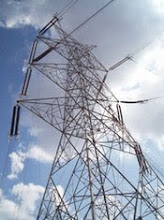
As summer temperatures cook not just the relatively small percentage of sweaty people here in Oklahoma, who are rather used to summer heat, but also folks in places as far north as Minneapolis and Boston, concerns about whether our power infrastructure can keep up with the demand are inevitable. And, with a few minor exceptions, this major heat anomaly hasn’t really caused too much trouble for utilities. But, then again, utilities are planners. It’s the job of planners---you might even say their calling---to be prepared for anomalies.
And some of that planning includes demand response (DR) programs. This week, Con Edison's New York customers used a terawatt hour, or 1 trillion watt hours of electricity, according to the utility. (I love the wording of the press release on this heat wave response. They wrote: "That's a lot of juice. In fact, it's about the amount of electricity Vermont uses in two months.")
Con Edison gave credit to their DR program for curbing what could have been an even more record-breaking response. They assured people that, while a terawatt is a whole lot of power, things could have been worse if they didn’t have customers willing to respond to “calls for conservation,” as the company labeled them.
EnerNOC, Inc., a provider of demand response applications and services, announced that its DemandSMART network was dispatched at record levels this July as well in response to the heat wave---or “heat dome,” as the weather guys have been labeling it.
EnerNOC's network responded to a series of dispatches from grid operators and utility partners, providing about 1,230 MW of DR overall. One of the grid operators that EnerNOC works with, PJM Interconnection, set a new record for peak power use in July at 158,450 MW.
Demand response has been so helpful, it even got press in The New York Times this month. The paper discussed demand response options with North American Electric Reliability Corp.’s (NERC’s) John Moura, manager of reliability assessments. Moura labeled the DR available around the country as “imperative” in weathering the heat.
The Christian Science Monitor also did a piece on the wonders of energy efficiency and demand response in this oppressive heat, and they also quoted NERC, though they chose Mark Lauby, vice president of reliability assessment. (And, along with DR, they cited a weak economy as a factor. The concept is: We didn’t being this race at the starting line, but, instead, a few feet behind the starting line. So, the recession dip has helped demand not get too darn crazy, even with the heat. What they’re basically saying is that things would be a lot worse if the recession hadn’t already cut back on that power demand.)
So, worries about whether we have enough power seem unfounded, even as temperatures continue to break regional glass ceilings and power use sets national records. There are small issues in isolated pockets: Oncor is currently struggling to return power to a Dallas neighborhood for an outage cause by trees and not heat, though heat is exacerbating the problem. Baltimore Gas and Electric is getting complaints about their demand response program from people who think their air conditioning was turned off for too long during the blistering heat. And here in Tulsa, the local news is reporting record setting power use for the city and surrounding area.
Overall, though, we have to all admit that this old, cobbled together, partially updated, partially archaic power system that we have is doing very, very well for the stress we’re putting her under this summer. She keeps working, chugging along despite the desire we all have to sing “baby, it’s hot outside” and turn up the thermostat a couple of degrees.
Thursday, July 28, 2011

Wednesday, July 20, 2011
Post show: Texas linemen conquer in Seguin

The 2011 Texas Lineman's Rodeo in Seguin, Texas was quite the event last weekend.
That humid Saturday in late July, the gray of potential rain gave way to the type of fluffy white clouds normally wallpapered onto a child's bedroom wall.
But, clouds weren't the only items in the sky that day. There were also a lot of linemen hanging from poles, posted inside buckets at the long-line end of work trucks' mobile arms or crawling up to T-poles with clouds nipping at both toes and hard hats.
There was no keeping those boys from the bright Texas sky.
Working from 7 a.m. into the afternoon, the competition was fierce. Winners this year include individuals, cooperatives, munis and IOUs. The first place overall journeyman award went to Ryan Voges, Justin Green and Darin Koehler of New Braunfels Utilities with the division winner for cooperatives going to John Hernanez, Brad Downum and Mark Jebbia with Bandera Electric Cooperative.
Gergory Chelette, Richard Schwartz and John F. Kent brought in the overall journeyman team for investor-owned utilities, while that Voges-Green-Koehler team grabbed the municipal top spot. In the overall journeyman team, senior division, the winners were David McDowell, Danny Moss and Larry Terry with Farmers Electric Cooperative.
All the 2011 rodeo winners are listed on the Texas Lineman's Rodeo website at http://www.tlra.org/.
Additionally, keep an eye out for the September issue of POWERGRID International magazine which will feature more photos from the rodeo in living color, as they used to say.
Tuesday, July 12, 2011
Linemen tough out a blistering rodeo
As you read this, I’ll be in Seguin Texas for the 15th Annual Texas Lineman’s Rodeo. Seguin is a small town about thirty minutes outside of San Antonio along I-10, and I fully expect it will be a hot spot this coming weekend, in both competition and summer temperatures.
The Texas Lineman’s Rodeo is sponsored by the Texas Lineman's Rodeo Association, Inc. (TLRA), which is “a non-profit organization created to offer line workers in the great State of Texas a way to showcase their pride in the profession of high voltage line work.” Comprised mostly of volunteers who offer their time, efforts and organizational skills for free, the TLRA works hard to put on this rodeo every summer. Having been personally corresponding with volunteer Gloria Christmas for about a month now, I have to say that the TLRA is both highly organized and highly friendly. She’s been a real sweetheart in getting information out. (And, in case you’re interested in coming down to Seguin this weekend, she let me know yesterday that some hotel rooms have opened up at the Days Inn in Seguin.)
2010’s rodeo winners included folks from Farmers Electric Cooperative, Hilco Electric Cooperative, Guadalupe Valley Electric Cooperative, CenterPoint Energy, Austin Energy, New Braunfels Utilities, Hamilton Country Electric Cooperative, Mid-South Synergy, Sam Houston Electric Cooperative, Trinity Valley Electric Cooperative, Bluebonnet Electric Cooperative, Bryan Texas Utilities, Perdernales Electric Cooperative, Garland Power & Light, Midwest Electric and Navasota Valley Electric Cooperative. Those winners stretched across a number of categories: journeyman awards, division winners (including a 45-and-older senior division), event awards (like changing a single phase capacitor, doing an amp switch change or a pole climb) and rescue events.
If you’re thinking of joining us in the wild Texas heat for the 15th Texas Lineman’s Rodeo, the activities start Friday night on Nolte Island in Seguin with a t-shirt trade and a fish fry, but all the rodeo action happens on Saturday. That’s when you’ll see those linemen skills put to the test and rewarded for their efforts---with rewards in both awards and barbeque form.
More information on the rodeo can be found on the TLRA website: www.tlra.org
The Texas Lineman’s Rodeo is sponsored by the Texas Lineman's Rodeo Association, Inc. (TLRA), which is “a non-profit organization created to offer line workers in the great State of Texas a way to showcase their pride in the profession of high voltage line work.” Comprised mostly of volunteers who offer their time, efforts and organizational skills for free, the TLRA works hard to put on this rodeo every summer. Having been personally corresponding with volunteer Gloria Christmas for about a month now, I have to say that the TLRA is both highly organized and highly friendly. She’s been a real sweetheart in getting information out. (And, in case you’re interested in coming down to Seguin this weekend, she let me know yesterday that some hotel rooms have opened up at the Days Inn in Seguin.)
2010’s rodeo winners included folks from Farmers Electric Cooperative, Hilco Electric Cooperative, Guadalupe Valley Electric Cooperative, CenterPoint Energy, Austin Energy, New Braunfels Utilities, Hamilton Country Electric Cooperative, Mid-South Synergy, Sam Houston Electric Cooperative, Trinity Valley Electric Cooperative, Bluebonnet Electric Cooperative, Bryan Texas Utilities, Perdernales Electric Cooperative, Garland Power & Light, Midwest Electric and Navasota Valley Electric Cooperative. Those winners stretched across a number of categories: journeyman awards, division winners (including a 45-and-older senior division), event awards (like changing a single phase capacitor, doing an amp switch change or a pole climb) and rescue events.
If you’re thinking of joining us in the wild Texas heat for the 15th Texas Lineman’s Rodeo, the activities start Friday night on Nolte Island in Seguin with a t-shirt trade and a fish fry, but all the rodeo action happens on Saturday. That’s when you’ll see those linemen skills put to the test and rewarded for their efforts---with rewards in both awards and barbeque form.
More information on the rodeo can be found on the TLRA website: www.tlra.org
Thursday, July 7, 2011
Amsterdam gets smarter and smarter, and we get left behind
If you’re an American reader of this blog, chances are good that you don’t live in a smart city. I certainly don’t. Not that Tulsa is peopled by the ignorant, no. This isn’t about individual intelligence or grading our education system. It’s just that our power isn’t exactly the cutting edge smart grid stuff of legend. We’ve been talking about the smart grid since 2007---how it can save us all from a bleak energy future with smarter meters, smarter switchgear, smarter energy delivery, even interconnected and informed (and therefore smarter) consumers.
But, few of us here in the U.S. have seen any real smart grid progress. A small percentage in some well-funded pilot hot spots has seen smart meters being installed. Some have tried out a few pushes in energy management concepts---although both Google and Microsoft’s energy management goals have fallen decidedly short. Both companies have called a halt to their consumer-oriented smart grid visions. But, no real vision of smart cites and collaboration is popping up in these parts. We seem to take one step forward and two steps back with smart grid on U.S. soil.
Still, there are cities in this world that are pushing forward and showing significant progress in the smart grid concept, even moving ahead to incorporate other options and other utilities in an overarching concept of a “smart city.” One of those is Amsterdam.
Last year, I took a personal guided tour of “Climate Street” in Amsterdam. A long row of traditional looking shops along a narrow street, these businesses were all invested in the idea of energy management and smarter consumption. From bars to record stores to chocolate shops, they partnered with the city and the local grid operator Liander to put in smarter equipment and keep an eye on the energy bottom line. And all that collaboration and progress didn’t seem to impact the end product one bit. The beer was still tasty, the bitterballen still toasty and the chocolate still melt-in-the-mouth delicious.
Even though I don’t cover Europe much anymore, I still keep up with Amsterdam’s Smart City initiatives, including Climate Street. Perhaps I’m just fascinated that a culture, a group of business people, a city, residents, and the local grid company, along with a research group, can all get along so well. As an American who still sees our sense of rugged individualism in myself and pretty much everyone else in this country, including utilities and businesses, it’s positively amazing to witness such smooth and steady cooperation.
This week, Amsterdam’s Smart City announced a new partner, KPN. (I admit to being on their e-mail list. As I said, I’m fascinated.) KPN is a fiber optics connection. So, Amsterdam has a new partner that can bring all sorts of smart grid consumer options to the equation, as well as positioning the city for a very collaborative, very interactive, very digitally high tech fiber future. And the announcement must have mentioned the word “cooperation” eight times in four paragraphs.
Perhaps investing in the smart grid, at its core, doesn’t start with the technology or even with cash on the table. Perhaps there’s a real lesson in Amsterdam’s Smart City progress that we can mull over in the U.S.: Can we get further ahead if we set aside “who’s paying” and “who’s benefiting right now” and “how does this make my personal life better immediately” and start thinking a bit more collectively?
Is cooperation the first step to a smarter grid and smarter cities?
But, few of us here in the U.S. have seen any real smart grid progress. A small percentage in some well-funded pilot hot spots has seen smart meters being installed. Some have tried out a few pushes in energy management concepts---although both Google and Microsoft’s energy management goals have fallen decidedly short. Both companies have called a halt to their consumer-oriented smart grid visions. But, no real vision of smart cites and collaboration is popping up in these parts. We seem to take one step forward and two steps back with smart grid on U.S. soil.
Still, there are cities in this world that are pushing forward and showing significant progress in the smart grid concept, even moving ahead to incorporate other options and other utilities in an overarching concept of a “smart city.” One of those is Amsterdam.
Last year, I took a personal guided tour of “Climate Street” in Amsterdam. A long row of traditional looking shops along a narrow street, these businesses were all invested in the idea of energy management and smarter consumption. From bars to record stores to chocolate shops, they partnered with the city and the local grid operator Liander to put in smarter equipment and keep an eye on the energy bottom line. And all that collaboration and progress didn’t seem to impact the end product one bit. The beer was still tasty, the bitterballen still toasty and the chocolate still melt-in-the-mouth delicious.
Even though I don’t cover Europe much anymore, I still keep up with Amsterdam’s Smart City initiatives, including Climate Street. Perhaps I’m just fascinated that a culture, a group of business people, a city, residents, and the local grid company, along with a research group, can all get along so well. As an American who still sees our sense of rugged individualism in myself and pretty much everyone else in this country, including utilities and businesses, it’s positively amazing to witness such smooth and steady cooperation.
This week, Amsterdam’s Smart City announced a new partner, KPN. (I admit to being on their e-mail list. As I said, I’m fascinated.) KPN is a fiber optics connection. So, Amsterdam has a new partner that can bring all sorts of smart grid consumer options to the equation, as well as positioning the city for a very collaborative, very interactive, very digitally high tech fiber future. And the announcement must have mentioned the word “cooperation” eight times in four paragraphs.
Perhaps investing in the smart grid, at its core, doesn’t start with the technology or even with cash on the table. Perhaps there’s a real lesson in Amsterdam’s Smart City progress that we can mull over in the U.S.: Can we get further ahead if we set aside “who’s paying” and “who’s benefiting right now” and “how does this make my personal life better immediately” and start thinking a bit more collectively?
Is cooperation the first step to a smarter grid and smarter cities?
Wednesday, June 29, 2011
Planning focus and public fear
After Fukushima, power plants and vertical utilities---especially nuclear ones---can’t catch a break.
Despite fervent planning and detailed execution, the Fort Calhoun nuclear plant is still caught in the “we’re not them” excuse cycle this week. They get to bail out public perception while they bail out river water.
Disaster planning has long been a staple of utility emergency procedures, but a string of storms, flooding, tornadoes and other bits of weather nastiness have the American public wondering if the industry is doing enough to prevent injuries, deaths and outages. But, can a utility really do more than plan for established scenarios? Should they be expected to anticipate every possible bad decision and each hearty gust of wind?
Returning to Nebraska and Fort Calhoun, the employees there tried diligently to ward off Japanese comparisons by opening their flooded power plant to journalists. CNN reported this week that they were allowed inside access. Plus, the CEO of Fort Calhoun pointed out, through a lengthy quote in the CNN article, that no flood water had breached the reactor, that the reactor itself was covered with borated water as it should be.
Now, the close time-proximity to Fukushima’s disaster, of course, played a large part in how quickly and how carefully Fort Calhoun had to react to public fears. But Calhoun isn’t the only utility under pressure to show their disaster planning hand to the American public today. There was also a series of small town newspaper reports this week on the Tennessee Valley Authority (TVA) and its recovery from the April storms that knocked out power in the South.
Apparently, this series of stories was sparked by one Republican representative from the state of Maryland making a remark that the blackouts from those April storms showed the power grid as vulnerable. In fact, he’s quoted repeatedly in those stories as saying the grid is “very much on edge.”
This prompted a quick response from TVA. The bottom line of all responses was this: You can’t accurately predict or prevent weather damage completely, and no power grid can be made immune to weather. Having poles in the sky makes one at the mercy of the wind. That’s pretty much a fact of our grid structure. But, the key isn’t shoring up beforehand, it’s following up quickly.
In fact, most disaster planning---like TVA’s stellar storm clean-up work---is about response rather than prevention. Perhaps that representative thought that the days some people went without power in the region was an excessive outcome of the storms. But, weather predictions will have to get much more accurate, and we’d have to spend a lot more money on undergrounding miles and miles of line, in order to even begin a prevention program. And, if fear wasn’t the background of that vulnerability statement, the expense of this request would, normally, curb a political response in these times of recession. After all, a prevention program to ward off Mother Nature that would cost the taxpayers billions goes against the anti-spending rallying cry.
Still, even with events that are unpredictable or unthinkable, the American public expects utilities to have not just prevention options but detailed contingency plans. Take the recent lawsuit against Xcel Energy over the unfortunate accidental deaths of five contract workers at their plant in 2007. A fire killed men brought in from a coating company in California to paint a penstock. The fire blocked the only escape route, and, despite attempts at dropping rescue equipment and plans to pull the workers out from above, the men perished.
Xcel said that the responsibility lied with the contractor and the men involved. (Apparently, there was a mistake made onsite with chemical mixing that ignited the fire.) But, federal prosecutors blamed Xcel and took them to court for violating safety regulations.
Xcel was found innocent this week, but a legal ruling doesn’t often change public perception. And the question of whether those men could have been saved by a better disaster plan on the part of Xcel will likely haunt the company and the families of those men---just as the disaster unraveling Fukushima will continue to plague every nuclear plant around the world with as much as a minor case of the hiccups and the idea of stronger infrastructure will follow every storm-related power outage.
Utilities will always be planning for disasters, but the American public will always expect improvements in that planning---adjustments, changes, investments, upgrades. And the two will likely never meet in a central, agreed upon spot. Utilities are thinking from both a community and a business perspective; the public is thinking from an individual protection perspective. And, unfortunately, the end result will likely never make either camp completely happy. But, we keep striving for a balance. That’s about all we can do, really, besides hoping that the weather quiet down a bit and that no one ever makes a mistake again.
But, the planning is all we have any actual control over. Human nature and Mother Nature cannot be adjusted to suit our desires, unfortunately.
Despite fervent planning and detailed execution, the Fort Calhoun nuclear plant is still caught in the “we’re not them” excuse cycle this week. They get to bail out public perception while they bail out river water.
Disaster planning has long been a staple of utility emergency procedures, but a string of storms, flooding, tornadoes and other bits of weather nastiness have the American public wondering if the industry is doing enough to prevent injuries, deaths and outages. But, can a utility really do more than plan for established scenarios? Should they be expected to anticipate every possible bad decision and each hearty gust of wind?
Returning to Nebraska and Fort Calhoun, the employees there tried diligently to ward off Japanese comparisons by opening their flooded power plant to journalists. CNN reported this week that they were allowed inside access. Plus, the CEO of Fort Calhoun pointed out, through a lengthy quote in the CNN article, that no flood water had breached the reactor, that the reactor itself was covered with borated water as it should be.
Now, the close time-proximity to Fukushima’s disaster, of course, played a large part in how quickly and how carefully Fort Calhoun had to react to public fears. But Calhoun isn’t the only utility under pressure to show their disaster planning hand to the American public today. There was also a series of small town newspaper reports this week on the Tennessee Valley Authority (TVA) and its recovery from the April storms that knocked out power in the South.
Apparently, this series of stories was sparked by one Republican representative from the state of Maryland making a remark that the blackouts from those April storms showed the power grid as vulnerable. In fact, he’s quoted repeatedly in those stories as saying the grid is “very much on edge.”
This prompted a quick response from TVA. The bottom line of all responses was this: You can’t accurately predict or prevent weather damage completely, and no power grid can be made immune to weather. Having poles in the sky makes one at the mercy of the wind. That’s pretty much a fact of our grid structure. But, the key isn’t shoring up beforehand, it’s following up quickly.
In fact, most disaster planning---like TVA’s stellar storm clean-up work---is about response rather than prevention. Perhaps that representative thought that the days some people went without power in the region was an excessive outcome of the storms. But, weather predictions will have to get much more accurate, and we’d have to spend a lot more money on undergrounding miles and miles of line, in order to even begin a prevention program. And, if fear wasn’t the background of that vulnerability statement, the expense of this request would, normally, curb a political response in these times of recession. After all, a prevention program to ward off Mother Nature that would cost the taxpayers billions goes against the anti-spending rallying cry.
Still, even with events that are unpredictable or unthinkable, the American public expects utilities to have not just prevention options but detailed contingency plans. Take the recent lawsuit against Xcel Energy over the unfortunate accidental deaths of five contract workers at their plant in 2007. A fire killed men brought in from a coating company in California to paint a penstock. The fire blocked the only escape route, and, despite attempts at dropping rescue equipment and plans to pull the workers out from above, the men perished.
Xcel said that the responsibility lied with the contractor and the men involved. (Apparently, there was a mistake made onsite with chemical mixing that ignited the fire.) But, federal prosecutors blamed Xcel and took them to court for violating safety regulations.
Xcel was found innocent this week, but a legal ruling doesn’t often change public perception. And the question of whether those men could have been saved by a better disaster plan on the part of Xcel will likely haunt the company and the families of those men---just as the disaster unraveling Fukushima will continue to plague every nuclear plant around the world with as much as a minor case of the hiccups and the idea of stronger infrastructure will follow every storm-related power outage.
Utilities will always be planning for disasters, but the American public will always expect improvements in that planning---adjustments, changes, investments, upgrades. And the two will likely never meet in a central, agreed upon spot. Utilities are thinking from both a community and a business perspective; the public is thinking from an individual protection perspective. And, unfortunately, the end result will likely never make either camp completely happy. But, we keep striving for a balance. That’s about all we can do, really, besides hoping that the weather quiet down a bit and that no one ever makes a mistake again.
But, the planning is all we have any actual control over. Human nature and Mother Nature cannot be adjusted to suit our desires, unfortunately.
Wednesday, June 22, 2011
There's a robot invasion coming

I am excited to announce that the Electric Power Research Institute (EPRI) will be bringing two of their industry research robots, Ti and Scotty, to the Utility Products Conf. and Expo (UPCE) in San Antonio next January. (UPCE runs in conjunction with the largest smart grid conference in the U.S., DistribuTECH.)
EPRI's transmission line inspection robot is the one nicknamed “Ti" (see artist's sketch of Ti above). Ti can be permanently installed and cover about 80 miles of line a couple of times each year as it “crawls” along the line identifying numerous issues from grass and trees too close to the right-of-way to just how components along the line are weathering the wilds. He moves along on a shield wire and dodges obstacles like marker balls by using bypasses installed along the line. Ti can automatically unhook itself from the shield wire, transfer to the bypass, navigate around the marker and then return itself to the shield wire.
The prototype of Ti is being tested and refined at the Lenox, Mass. EPRI lab. Right now, he’s equipped with high definition and infrared cameras and can even be rigged up with light detection and ranging (LiDAR) sensors. Ti’s job is to pass along information to the utility about what’s going on along the line, along with specific location information that comes from his handy global positioning system.
Ti will also reach out—electronically, at least—to UPCE attendees and give a visual presentation at the show, complete with data transferred back to EPRI's booth inside the co-located DistribuTECH show floor. Ti will, in fact, be hanging from the ceiling of the combined show floor. So, when you visit the floor, make sure to take a good look up.
American Electric Power will partner with EPRI on a first field implementation of Ti. The utility’s engineers are planning to include Ti and his systems in a 765kV line to be built in 2014.
EPRI's second robot to visit UPCE, Scotty, measures street lighting. Today, high-intensity discharge (HID) lighting, such as high-pressure sodium and metal-halide lamps, prevails when it comes to illuminating streets, parking lots and walkways. But high-power light-emitting diodes (LEDs) promise a brighter future in outdoor illumination. Their capacity to send a more pleasing light in one direction makes them an ideal candidate to replace conventional outdoor lighting. Since 2009, the Electric Power Research Institute (EPRI) has been conducting an LED Energy Efficiency Demonstration. The goal of the project is to discover a better light bulb, one that not only meets the outdoor lighting requirements of consumers but also uses less electricity in doing so. There are a number of reasons for exploring new LED technology for this application, including costs and the low efficiency of HID fixtures.
EPRI is conducting assessments of LED-based street and area lights at over 20 sites within the United States. The assessments require accurate, repeatable and timely measurements of light levels. Existing test methods require hand-held meters and are time-consuming, of limited accuracy and require manual recording of data. EPRI developed a solution for this measurement challenge. That solution is a remote controlled and highly instrumented roving light measurement vehicle known as “Scotty.”
Scotty will demonstrate his lighting measurement skills in a roving display at the outdoor UPCE demonstration area during UPCE 2012 in San Antonio.
To learn more about the combined UPCE/DistribuTECH conference in San Antonio, visit: http://www.utilityproductsexpo.com/ or http://www.distributech.com/.
And keep an eye out for more information---including demonstration times for Ti and Scotty---that will come along as we get closer to the show.
I hope you plan to come join us in witnessing this very positive robot invasion.
Wednesday, June 15, 2011
All the president’s millions
This week, the Obama Administration unveiled new plans for the 21st century grid they envision, along with some millions in potential funding.
Ok, yes, the big news is that we’re not talking billions here. A couple of years ago, those pennies to support grid development stacked to the ceiling and toppled over into the big “B” money pool. But, it is a new, less-spending environment in D.C. these days.
"America cannot build a 21st century economy with a 20th century electricity system. By working with states, industry leaders and the private sector, we can build a clean, smart, national electricity system that will create jobs, reduce energy use and expand renewable energy production," said U.S. Energy Secretary Steven Chu at this smart grid plan unveiling.
Sweet. So, we’re going to build a whole new system that helps us be energy efficient and get in those solar panels and wind turbines. Awesome. So, what’s our budget? Trillions? Billions? We're talkin' a whole new set of off-the-beaten-path grid tires here, so to speak.
Nope. We get $250 million in loans for smart-grid technology deployment as part of the U.S. Department of Agriculture’s Rural Utility Service. They want to upgrade rural America. Well, that’s nice, but the grid does range outside of rural America. It goes urban. It goes through the desert. It hits tundra and sneaks around landmarks. And, 80% of the American population live outside those rural areas. Most of us live in urban areas. What about us?
Now, we still have those old billions in stimulus funds granted a few years ago, but this new push for the smart grid from the Administration doesn’t really bring any new cash to the table besides those loans to help establish smarter tech in areas on the outskirts. Now, that’s understandable. Most utilities will be working in urban areas to start the smart grid transformation process. So, yes, the rural areas will likely get the short end of the smart grid stick.
Still, it is a rather sad sign of the times that all this talk about the smart grid isn’t bringing much cash with it, just lots of discussions about “public-private partnerships,” which is often code for “someone else needs to fund this.”
According to the White House, these new efforts are building “upon the historic $4.5 billion in grid modernization investments provided for in the Recovery Act—matched by contributions of more than $5.5 billion from the private sector—to modernize America’s aging energy infrastructure and provide cleaner and more reliable power.”
The new efforts include a lot of consumer issues and paperwork.
First, there’s the mention of the Gridwise Alliance’s new spin-off, Grid 21, which is all about getting the consumer into the talks about smart grid---helping quell fears, educating them about tools and savings. Second, the president promises that the Department of Energy promises to look at how to get those consumers better data and info. He might even have crossed his heart on this one.
Basically, the plan is this: They want to tell the kiddies all about energy savings through student programs and have them bring that information home so you can be lectured by your children about power consumption the same way you’re currently lectured about how to properly use the DVR and your iPhone. I have to hand it to them, though, kids are the perfect combinations of know-it-alls and annoying to get this job done. Those parents will assimilate, eventually, if just to make the mini lectures stop.
Also on the agenda: Everyone gets to talk about smart grid stuff at www.smartgrid.gov. There will be sharing---and maybe even some caring. It will be like an industry twelve-step program, but without gulping down cold coffee in a room filled with chain smokers. Everyone will learn stuff about themselves and others and programs and consumers. And, if it weren’t all online, it might end in hugs.
My favorite idea here might the “ Renewable Energy Rapid Response Team.” I had in my head this bevy of Black Hawk helicopters swooping into a site, dropping ropes down into a field where commandos would sneak in with solar panels strapped to their burly backs and a solar farm would be set up in seconds. Then, they’d be out like the wind, leaving the community to wonder what happened as they sipped their morning coffee and enjoyed their new partial freedom from fossil fuels. But, alas, this is not true. The team is basically a group of peeps to speed up paperwork---the geek squad, of sorts. They promise to ensure that the feds all talk to each other and review stuff promptly. I like the vision of my response team much better.
Those ideas, and a report, are pretty much what happened between speeches during this White House smart grid shindig.
“A 21st century grid is essential to America’s ability to lead the world in clean energy and win the future,” said John P. Holdren, President Obama’s science and technology advisor and director of the White House Office of Science and Technology Policy during this week’s hubbub. “By unlocking the potential of innovation in the electric grid, we are allowing consumers and businesses to use energy more efficiently even as we help utilities provide cleaner energy and more reliable service.”
While I understand the limitations that the Administration is under these days from all sides of the political fence, rural loans for the greener pastures of America and red tape clipping alone will not unlock the potential of that 21st century grid we all want. What the grid really needs is another outlay of cold, hard cash.
But, the government purse is now zipped tight, with a hand over the clasp to ward off prying fingers. But, at least we can all still talk about things and share. We’ve got that going for us.
Ok, yes, the big news is that we’re not talking billions here. A couple of years ago, those pennies to support grid development stacked to the ceiling and toppled over into the big “B” money pool. But, it is a new, less-spending environment in D.C. these days.
"America cannot build a 21st century economy with a 20th century electricity system. By working with states, industry leaders and the private sector, we can build a clean, smart, national electricity system that will create jobs, reduce energy use and expand renewable energy production," said U.S. Energy Secretary Steven Chu at this smart grid plan unveiling.
Sweet. So, we’re going to build a whole new system that helps us be energy efficient and get in those solar panels and wind turbines. Awesome. So, what’s our budget? Trillions? Billions? We're talkin' a whole new set of off-the-beaten-path grid tires here, so to speak.
Nope. We get $250 million in loans for smart-grid technology deployment as part of the U.S. Department of Agriculture’s Rural Utility Service. They want to upgrade rural America. Well, that’s nice, but the grid does range outside of rural America. It goes urban. It goes through the desert. It hits tundra and sneaks around landmarks. And, 80% of the American population live outside those rural areas. Most of us live in urban areas. What about us?
Now, we still have those old billions in stimulus funds granted a few years ago, but this new push for the smart grid from the Administration doesn’t really bring any new cash to the table besides those loans to help establish smarter tech in areas on the outskirts. Now, that’s understandable. Most utilities will be working in urban areas to start the smart grid transformation process. So, yes, the rural areas will likely get the short end of the smart grid stick.
Still, it is a rather sad sign of the times that all this talk about the smart grid isn’t bringing much cash with it, just lots of discussions about “public-private partnerships,” which is often code for “someone else needs to fund this.”
According to the White House, these new efforts are building “upon the historic $4.5 billion in grid modernization investments provided for in the Recovery Act—matched by contributions of more than $5.5 billion from the private sector—to modernize America’s aging energy infrastructure and provide cleaner and more reliable power.”
The new efforts include a lot of consumer issues and paperwork.
First, there’s the mention of the Gridwise Alliance’s new spin-off, Grid 21, which is all about getting the consumer into the talks about smart grid---helping quell fears, educating them about tools and savings. Second, the president promises that the Department of Energy promises to look at how to get those consumers better data and info. He might even have crossed his heart on this one.
Basically, the plan is this: They want to tell the kiddies all about energy savings through student programs and have them bring that information home so you can be lectured by your children about power consumption the same way you’re currently lectured about how to properly use the DVR and your iPhone. I have to hand it to them, though, kids are the perfect combinations of know-it-alls and annoying to get this job done. Those parents will assimilate, eventually, if just to make the mini lectures stop.
Also on the agenda: Everyone gets to talk about smart grid stuff at www.smartgrid.gov. There will be sharing---and maybe even some caring. It will be like an industry twelve-step program, but without gulping down cold coffee in a room filled with chain smokers. Everyone will learn stuff about themselves and others and programs and consumers. And, if it weren’t all online, it might end in hugs.
My favorite idea here might the “ Renewable Energy Rapid Response Team.” I had in my head this bevy of Black Hawk helicopters swooping into a site, dropping ropes down into a field where commandos would sneak in with solar panels strapped to their burly backs and a solar farm would be set up in seconds. Then, they’d be out like the wind, leaving the community to wonder what happened as they sipped their morning coffee and enjoyed their new partial freedom from fossil fuels. But, alas, this is not true. The team is basically a group of peeps to speed up paperwork---the geek squad, of sorts. They promise to ensure that the feds all talk to each other and review stuff promptly. I like the vision of my response team much better.
Those ideas, and a report, are pretty much what happened between speeches during this White House smart grid shindig.
“A 21st century grid is essential to America’s ability to lead the world in clean energy and win the future,” said John P. Holdren, President Obama’s science and technology advisor and director of the White House Office of Science and Technology Policy during this week’s hubbub. “By unlocking the potential of innovation in the electric grid, we are allowing consumers and businesses to use energy more efficiently even as we help utilities provide cleaner energy and more reliable service.”
While I understand the limitations that the Administration is under these days from all sides of the political fence, rural loans for the greener pastures of America and red tape clipping alone will not unlock the potential of that 21st century grid we all want. What the grid really needs is another outlay of cold, hard cash.
But, the government purse is now zipped tight, with a hand over the clasp to ward off prying fingers. But, at least we can all still talk about things and share. We’ve got that going for us.
Subscribe to:
Posts (Atom)