Ted Turner’s at it again. No, he didn’t buy another set of cable stations or a new bevy of bison; he’s out to solar the Wild West.
Turner and Southern Company announced today that their Cimarron Solar Facility in New Mexico is up and zipping out enough voltage to power 9,000 homes. The Turner Renewable Energy, Southern Company cooperative effort picked up the project from First Solar last March.
"We are very excited to see this project completed and producing clean solar energy to power homes and businesses in New Mexico," Turner was quoted as quipping about the project. "Large-scale solar generation is among the fastest growing energy sources in the world, and we're pleased that we can be a part of that growth."
Turner is known for doing his own thing at his own pace; so, his leap from TV to rancher to solar scholar isn’t all that out of his normal range. However, what’s surprising is the number of old school cowboys (both real and imaginary) that have joined him on the renewable energy side of things.
Let’s be honest. Cowboys don’t really have an image of progressiveness. Old trucks, old dogs and old horses are more their style. But, renewables---especially solar---may be a dark horse in this cowboy race.
Let’s take the ultimate TV cowboy from the 1980s, good ol’ boy J.R. Ewing, who stopped time (it seemed) until their writers of “Dallas” finally revealed who shot him. The actor who played J.R., Larry Hagman, popped up last summer hocking SolarWorld, a German photovoltaic module maker. The commercials played off the cowboy/oil days of old and offered a new and shiny energy alternative in solar.
And Hagman himself does have a 94-kilowatt solar system on his estate in Southern California. He also sits on the board of a nonprofit group that helps build solar systems in places of hardship and poverty worldwide.
Hagman isn’t the only oil-based cowboy (albeit an imaginary one) to embrace renewables. In real life, Oklahoma oilman (and self-proclaimed Oklahoma State University cowboy) T. Boone Pickens has introduced “The Pickens Plan” which is a long-term energy plan to get off of oil by using a whole lot of wind and natural gas transportation. Of course, this was a great idea for him since he was all set to invest a ton in a Texas wind farm that, unfortunately, never got off the ground, leaving him with a lot of wind turbines to spread around.
But, the interesting connection between these three cowboys remains that investment in renewables. As Pickens saw a huge market in consolidating oil companies in the 1980s, it appears he may see another ground floor opening with renewables this time around.
And a couple of other cowboys seem to see that on the horizon as well. Wind farms and solar arrays do speak to the loner spirit of the cowboy---being far away but still managing a few creature comforts. And, perhaps it also speaks to the push cowboys often have to forage into new territory and new frames of mind. It may be that old cowboys will ride to the rescue of this new world (at least in the form of renewable energy) after all, leaving me to wonder: Are renewables the next “oil boom,” so to speak?
Monday, January 24, 2011

Thursday, January 13, 2011
On outages and clear Oklahoma skies
Another blizzard has hit the Northeast. Atlanta is frozen solid. There’s snow in 49 of the 50 states, according to CNN, even here in Tulsa. But, today, we have a clear, bright blue Oklahoma sky reflected in that remaining white.
There’s a lot of real estate in the sky in Oklahoma. The blue horizon seems to go up and out forever, an endless ceiling with no glass barrier in sight. On days like today, it’s almost impossible to believe that the bright blue ends somewhere, that eventually the dark of space will interfere and stop that tinted ascent.
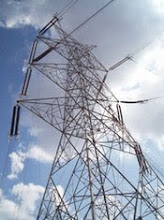
We don’t put a lot of skyscrapers into the real estate of an Oklahoma sky, but we do put quite a bit of one thing---electricity. Towers and poles dominate the landscape here. They trace along highways and roads, turn left or right to follow the bits of civilization and urban sprawl. They go up and out the way Manhattan builds office buildings.
It makes for cheaper energy. It makes for quicker hook-ups if you decide to build out in the middle of an Oklahoma nowhere to enjoy that deep blue overhead real estate.
But, sometimes, it can be problematic.
Sometimes the real estate above our heads in Oklahoma isn’t that bright blue we’re used to. Sometimes it’s black or gray or even green. Green’s the worst. That means tornado. But black can also bring strong winds, sometimes hurricane force. And gray can mean a whole lot of ice---all items that can destroy the biggest builds of our Oklahoma sky, that power structure.
When the worst ice storm in state history hit here in 2007, the parts of Tulsa with lots of power real estate in the sky were crippled. Poles were down everywhere. Transformers exploded. It was chaos---except in those newer spots with underground equipment. They had a few spotty power outages but, all in all, maintained a good front.
After that storm, I thought, “Perhaps we should stop building our power structures into the bright blue of the Oklahoma sky.”
However, there is a problem with moving all these bits and pieces underground: cost. It’s expensive. And, locally, for a utility caught in a recession and already hurting from a series of bad winters (including that historic ice storm), it’s not something easily done.
I know our utility is anxious to return to upkeep and undergrounding, but I also realize their dilemma with cost and cutbacks. And, while the average customer might love the reliability and safety from ice and wind that underground power provides, they are not willing to pay out of pocket for it. Again, this is as equally understandable as the utility’s bottom line concerns. So, no fair pointing fingers at each other with this argument.
For the moment, the real estate in that Oklahoma sky remains the most practical power option. I’ll just keep an eye out for the blue to change to black or gray and hope that our infrastructure in the air can be spared---at least until the utility can spring for undergrounding things again (or customers are willing to pay for it). Until then, power will remain in the air, and there’s just not much we can do about it from our spot on terra firma below.
There’s a lot of real estate in the sky in Oklahoma. The blue horizon seems to go up and out forever, an endless ceiling with no glass barrier in sight. On days like today, it’s almost impossible to believe that the bright blue ends somewhere, that eventually the dark of space will interfere and stop that tinted ascent.
We don’t put a lot of skyscrapers into the real estate of an Oklahoma sky, but we do put quite a bit of one thing---electricity. Towers and poles dominate the landscape here. They trace along highways and roads, turn left or right to follow the bits of civilization and urban sprawl. They go up and out the way Manhattan builds office buildings.
It makes for cheaper energy. It makes for quicker hook-ups if you decide to build out in the middle of an Oklahoma nowhere to enjoy that deep blue overhead real estate.
But, sometimes, it can be problematic.
Sometimes the real estate above our heads in Oklahoma isn’t that bright blue we’re used to. Sometimes it’s black or gray or even green. Green’s the worst. That means tornado. But black can also bring strong winds, sometimes hurricane force. And gray can mean a whole lot of ice---all items that can destroy the biggest builds of our Oklahoma sky, that power structure.
When the worst ice storm in state history hit here in 2007, the parts of Tulsa with lots of power real estate in the sky were crippled. Poles were down everywhere. Transformers exploded. It was chaos---except in those newer spots with underground equipment. They had a few spotty power outages but, all in all, maintained a good front.
After that storm, I thought, “Perhaps we should stop building our power structures into the bright blue of the Oklahoma sky.”
However, there is a problem with moving all these bits and pieces underground: cost. It’s expensive. And, locally, for a utility caught in a recession and already hurting from a series of bad winters (including that historic ice storm), it’s not something easily done.
I know our utility is anxious to return to upkeep and undergrounding, but I also realize their dilemma with cost and cutbacks. And, while the average customer might love the reliability and safety from ice and wind that underground power provides, they are not willing to pay out of pocket for it. Again, this is as equally understandable as the utility’s bottom line concerns. So, no fair pointing fingers at each other with this argument.
For the moment, the real estate in that Oklahoma sky remains the most practical power option. I’ll just keep an eye out for the blue to change to black or gray and hope that our infrastructure in the air can be spared---at least until the utility can spring for undergrounding things again (or customers are willing to pay for it). Until then, power will remain in the air, and there’s just not much we can do about it from our spot on terra firma below.
Monday, January 3, 2011
The Governator exits stage left
He angered his own party quite a bit. He was a definite handful---a big, brash personality difficult to compete with. He was a source of both pride and frustration for Californians---sometimes at the very same time. And, today, he is the Governator no more.
This Monday, January 3, 2011 marks Arnold Schwarzenegger's “hasta la vista” goodbye to politics in the Golden State. He is no longer a governor. He’ll just have to return to his lowly previous career as matinee god.
Thems the breaks.
Schwarzenegger blew into office a little less than 8 years ago when pretty much the entire state hated then Gov. Gray Davis and headlines like “Pacific Gas and Electric to Gov. Davis: We’re Busted” were regular bits of ink in the trade presses. Deregulation had taken the state---and the state utilities---to the cleaners, and Davis was left holding the bag, whether or not he was actually at fault.
Schwarzenegger swept in like the action hero he often portrays---trying to save the day for the state and for the state of energy.
At the time of Arnie’s big rescue, I worked for Electric Light and Power magazine and wrote a piece on Schwarzenegger’s energy plans. You can read that one HERE if you’d like to take a trip in the Way Back Machine. At that time, the only thing we were arguing about concerning Schwarzenegger was whether to use "governator" or "gubernator" as his nickname. (Governator won out, though I still prefer gubernator.)
Long story short: Arnie was going to fix it all.
"I will restore stability to our energy system and stimulate private investment in electricity generation and transmission," the governor's campaign website stated at the time. And he had a multi-point plan for doing so that included:
- reforming the 13 state agencies with sway over the markets.
- creating a regulatory structure based on "other states and the FERC standard market design" while eliminating incentives for "gaming" the regulatory system.
- investing in natural gas and transmission capacity.
- encouraging conservation.
- creating reserve requirements for generators.
- addressing "overpriced legacy power purchase agreements."
How much of that he actually did or was really necessary depends on whom you ask. No one really talks about power purchase agreements anymore, the regulatory structure in the state hasn’t truly changed all that much, but there has been movement in both transmission capacity and conservation. And he combated global warming like no Republican in history, in or out of the Golden State. In fact, last month, he was named 2010 Green Governor of the Year by the Beautiful Earth Group and Opportunity Green.
When accepting the award, Governor Schwarzenegger said, "California is showing the world that you can protect the environment and grow the economy at the same time. We are creating a new economic foundation for the 21st Century built on clean fuel, clean energy and clean cars that is turning California into the green capital of the nation and the world, and I couldn't be more proud of these accomplishments.”
Despite the California greening, the BBC reported today that Shcwarzenegger’s “political star has faded” since he came into the scene with approvals hovering in the 20 percentile range (rather close to Davis’ when he was in such hot water in 2003). But, whether you think the Schawarzenegger was a driving force for energy change or was stagnated by other issues no longer matters, really, except in terms of his legacy. Today, he hands over the state driver’s seat to Democrat Jerry Brown, a former governor who first served from 1975 to 1983.
While it is likely that Brown will continue down Arnie’s greening power path (the environment and clean energy jobs were a part of his eight-point campaign platform), one thing’s for certain, though: The official reign of the Governator is over.
No word on whether Brown will have as fabulous a nickname as Arnie. Granted, in Brown's first round as governor, he was called "Governor Moonbeam" by one journalist for his liberal policies. Somehow, that just doesn't compare. In the nickname arena, the Governator may always remain supreme.
Wednesday, December 22, 2010
The electric joys of Christmas
What if, on the first day of Christmas, your true love gave to you the joy of uninterruptable power service? Wouldn’t that be the greatest gift ever? A Christmas miracle?
Granted, uninterruptable power service isn’t possible. I know that. Although, to be fair, utilities do a darn good job of making an outage a truly rare thing. They can’t really control Mother Nature, but they give it the good ol’ college try. I can say, actually, that I haven’t had any noticeable outages this year---maybe a flicker during a storm. But, everything came right back on quickly, including during the long ice storm in February where I spent a good hour whacking giant icicles off my house with a shovel. (It looked like my front porch had a scary mouth full of pointy monster teeth.)
Sadly, though, uninterruptable power wasn’t always the case at my abode.
As I finished wrapping my piles of Christmas presents this year, I was reminded of a time about three years ago, a day when I was running early on Christmas purchases and had just started wrapping when the lights went out. Darkness. Complete. I tried to remember where I stuck the flashlight. Then, there was a flicker of power hope. The TV recovered, then the lights. Then it was off again. Total. I did remember where the flashlight was, finally.
And the power was off for nine days.
A freak ice storm had taken down half of the city. Limbs were everywhere. I spent that night listening to sirens, to limbs fall and to the crackle of transformer explosions. And that night I hoped for a Christmas miracle. It was down near 20 degrees. I was buried under blankets with my clothes (including shoes) still on clinging to the last bits of battery in both my flashlight and cell phone.
And, all I wanted for Christmas was power. Not those awesome Hello Kitty slippers. Not some delicious summer sausage from Hickory Farms. Just power.
I got that wish, finally. In fact, I got it in a rather Scrooge moment. I’d been without power for nine days. After the flashlight went out and I realized the cell phone was near that point as well, I called my father who came and did what daddies do. He rescued me. (His house had power.) I returned to my place over the following weekend and had just gotten good and thoroughly chilled again when I noticed that my neighbors across the street had power.
In fact, they had so much power that they strung Christmas lights into the front yard to show it off. Or, perhaps, to show off their Christmas spirit. But, I wasn’t feeling the Christmas spirit at that moment. I was feeling irked. Their act of Christmas spirit was irksome.
And, I stood in the doorway, wrapped in blankets, contemplating a loud, primal “bah-humbug” and flinging myself across the street to rip down every last shiny strand like a madwoman.
Then, behind me in the dark, I heard the refrigerator kick on. It took a second for me to figure out the significance. When I did, I ran around the house turning on everything that required power: the lights, the televisions, the heater. I was giddy with the power of power. It was, for me, a Christmas miracle. (I even did a little dance. Don’t tell anyone.) There is no gift like the joys of modern life, the comfort of heat and light and those tiny people inside the TV.
So, as I finish wrapping these gifts three years later, I am still thankful of my greatest gift of all: a (mostly) uninterruptable flow of power.
To AEP-PSO: Thank you for a good year of good service. You’ve given me exactly what I want for Christmas.
Granted, uninterruptable power service isn’t possible. I know that. Although, to be fair, utilities do a darn good job of making an outage a truly rare thing. They can’t really control Mother Nature, but they give it the good ol’ college try. I can say, actually, that I haven’t had any noticeable outages this year---maybe a flicker during a storm. But, everything came right back on quickly, including during the long ice storm in February where I spent a good hour whacking giant icicles off my house with a shovel. (It looked like my front porch had a scary mouth full of pointy monster teeth.)
Sadly, though, uninterruptable power wasn’t always the case at my abode.
As I finished wrapping my piles of Christmas presents this year, I was reminded of a time about three years ago, a day when I was running early on Christmas purchases and had just started wrapping when the lights went out. Darkness. Complete. I tried to remember where I stuck the flashlight. Then, there was a flicker of power hope. The TV recovered, then the lights. Then it was off again. Total. I did remember where the flashlight was, finally.
And the power was off for nine days.
A freak ice storm had taken down half of the city. Limbs were everywhere. I spent that night listening to sirens, to limbs fall and to the crackle of transformer explosions. And that night I hoped for a Christmas miracle. It was down near 20 degrees. I was buried under blankets with my clothes (including shoes) still on clinging to the last bits of battery in both my flashlight and cell phone.
And, all I wanted for Christmas was power. Not those awesome Hello Kitty slippers. Not some delicious summer sausage from Hickory Farms. Just power.
I got that wish, finally. In fact, I got it in a rather Scrooge moment. I’d been without power for nine days. After the flashlight went out and I realized the cell phone was near that point as well, I called my father who came and did what daddies do. He rescued me. (His house had power.) I returned to my place over the following weekend and had just gotten good and thoroughly chilled again when I noticed that my neighbors across the street had power.
In fact, they had so much power that they strung Christmas lights into the front yard to show it off. Or, perhaps, to show off their Christmas spirit. But, I wasn’t feeling the Christmas spirit at that moment. I was feeling irked. Their act of Christmas spirit was irksome.
And, I stood in the doorway, wrapped in blankets, contemplating a loud, primal “bah-humbug” and flinging myself across the street to rip down every last shiny strand like a madwoman.
Then, behind me in the dark, I heard the refrigerator kick on. It took a second for me to figure out the significance. When I did, I ran around the house turning on everything that required power: the lights, the televisions, the heater. I was giddy with the power of power. It was, for me, a Christmas miracle. (I even did a little dance. Don’t tell anyone.) There is no gift like the joys of modern life, the comfort of heat and light and those tiny people inside the TV.
So, as I finish wrapping these gifts three years later, I am still thankful of my greatest gift of all: a (mostly) uninterruptable flow of power.
To AEP-PSO: Thank you for a good year of good service. You’ve given me exactly what I want for Christmas.
Thursday, December 16, 2010
The zombie apocalypse power primer part 2: Would renewables have made for a happier apocalypse?
An office friend---doesn’t seem right to call him a mere coworker---and I are both addicted to the AMC zombie series “The Walking Dead.” The finale of the (sadly very short) season aired a couple of weeks ago. Our hearty band of survivors made a break for the Atlanta Centers for Disease Control and, once there, came upon another annoying apocalypse: The power was going out, even in an important spot like the CDC.
Sure, the CDC had back-up power when the first wave of zombies got tangled in distribution lines or gnawed through rural poles looking for tasty woodpeckers and took out part of the local grid. Like all major infrastructure points, they had generators. Big ones. But, two months into this new world, the generators were running out of fuel. There were no back-up options. All the back-up options (those generators) were too temporary to sustain the place for the apparently long-winded zombie overrun.
Even if there were more fuel for the generators, eventually, since fuel was no longer being made, even the last ones would sputter down and shut off. One of the characters comments that the power grid isn’t meant to run without fossil fuels. In fact, he laments, “Fossil fuels? How stupid were we?”
Actually, not that stupid.
Granted, the designers of the power grid didn’t think ahead to impending zombie horde takeover and how that would impact the system, but, sadly, even if today’s grid were run on wind energy, at some point a character in that story would have to comment, “Wind energy? How stupid were we?”
Because, it’s not about the fuel; it’s about the path.
The fact remains that the problem with our grid (were there to be a disastrous apocalypse of pretty much any type) is the system. It’s interconnected. It’s complicated. It’s tied from big generators (whether they are coal, natural gas, nukes or large wind farms) to end-users in a long stream of transmission lines, substations, ties, distribution lines, step-down transformers and meters---all of which are vulnerable and require oversight. Even if the fuel at the beginning of this chain were of a green variety, the way to plan ahead for power to aide a small band of survivors is not to change the fuel, it’s to also change the system. And that can’t really be done.
If you need to plan for small pockets of power to run individually, you have to island yourself, you have to isolate (either an area or a home) and figure out how to be your own system from fuel to use---the whole power cycle. You’d have to have renewables connected to your house (solar panels, wind turbines) and be able to use the flow directly. (And, of course, you’d have to have those renewables manufactured and installed pre-zombies, I’d imagine.)
In reality (and not on cable tv), it’s not practical to plan for the apocalypse. Instead, we plan for the most efficient system for the time (and for short outages when they happen). And, at the time the power grid was established, it was the most practical, pragmatic system. It got put together in bits and pieces, interconnected where it could be and improved willy-nilly. It grew rather naturally. And it evolved into a behemoth that, yes, would not be manageable after a zombie apocalypse.
But, now we have this system and, fortunately or unfortunately, it will be easier to work with it to accomplish small changes (like a shift from fossils to renewables on the fuel input end of things) rather than scrap it for expensive individual islanding---even if that might help us in a possible REM “end of the world as we know it” scenario.
Even if we did island our house or our neighborhood with renewables, the only one you might be able to reproduce once the original equipment manufacturers (OEMS) are all dead and buried is a rough wind turbine or hydro wheel (if you're an engineer). It won’t be possible to replace that solar panel eventually broken in the zombie outbreak of 2024. And, so, we’d be stuck in the same boat as the characters in “The Walking Dead” finale---only we might be lamenting the lack of OEMS instead of our reliance on fossil fuels.
After all, we can’t put planning for a far-off “maybe” ahead of what works best at the moment. The zombies may come, but we in the power industry won’t be planning ahead for that specifically. Sorry hearty band of future survivors.
Sure, the CDC had back-up power when the first wave of zombies got tangled in distribution lines or gnawed through rural poles looking for tasty woodpeckers and took out part of the local grid. Like all major infrastructure points, they had generators. Big ones. But, two months into this new world, the generators were running out of fuel. There were no back-up options. All the back-up options (those generators) were too temporary to sustain the place for the apparently long-winded zombie overrun.
Even if there were more fuel for the generators, eventually, since fuel was no longer being made, even the last ones would sputter down and shut off. One of the characters comments that the power grid isn’t meant to run without fossil fuels. In fact, he laments, “Fossil fuels? How stupid were we?”
Actually, not that stupid.
Granted, the designers of the power grid didn’t think ahead to impending zombie horde takeover and how that would impact the system, but, sadly, even if today’s grid were run on wind energy, at some point a character in that story would have to comment, “Wind energy? How stupid were we?”
Because, it’s not about the fuel; it’s about the path.
The fact remains that the problem with our grid (were there to be a disastrous apocalypse of pretty much any type) is the system. It’s interconnected. It’s complicated. It’s tied from big generators (whether they are coal, natural gas, nukes or large wind farms) to end-users in a long stream of transmission lines, substations, ties, distribution lines, step-down transformers and meters---all of which are vulnerable and require oversight. Even if the fuel at the beginning of this chain were of a green variety, the way to plan ahead for power to aide a small band of survivors is not to change the fuel, it’s to also change the system. And that can’t really be done.
If you need to plan for small pockets of power to run individually, you have to island yourself, you have to isolate (either an area or a home) and figure out how to be your own system from fuel to use---the whole power cycle. You’d have to have renewables connected to your house (solar panels, wind turbines) and be able to use the flow directly. (And, of course, you’d have to have those renewables manufactured and installed pre-zombies, I’d imagine.)
In reality (and not on cable tv), it’s not practical to plan for the apocalypse. Instead, we plan for the most efficient system for the time (and for short outages when they happen). And, at the time the power grid was established, it was the most practical, pragmatic system. It got put together in bits and pieces, interconnected where it could be and improved willy-nilly. It grew rather naturally. And it evolved into a behemoth that, yes, would not be manageable after a zombie apocalypse.
But, now we have this system and, fortunately or unfortunately, it will be easier to work with it to accomplish small changes (like a shift from fossils to renewables on the fuel input end of things) rather than scrap it for expensive individual islanding---even if that might help us in a possible REM “end of the world as we know it” scenario.
Even if we did island our house or our neighborhood with renewables, the only one you might be able to reproduce once the original equipment manufacturers (OEMS) are all dead and buried is a rough wind turbine or hydro wheel (if you're an engineer). It won’t be possible to replace that solar panel eventually broken in the zombie outbreak of 2024. And, so, we’d be stuck in the same boat as the characters in “The Walking Dead” finale---only we might be lamenting the lack of OEMS instead of our reliance on fossil fuels.
After all, we can’t put planning for a far-off “maybe” ahead of what works best at the moment. The zombies may come, but we in the power industry won’t be planning ahead for that specifically. Sorry hearty band of future survivors.
Wednesday, December 8, 2010
Secretary Chu, Sputnik moments, growing up a little, and memories of the Fonz
In late November, Secretary Chu addressed the National Press Club and told Americans that we are immersed in a “Sputnik moment.”
What does that mean? Quite simply, Chu’s saying that we are chasing China and other nations in the area of clean technology and that this chase should clue us in that we need to buckle down and regain our technology foothold. It’s a wake up or shut up moment.
But, I don’t agree that we are in a fight-or-flight spot, a do-or-die situation. Instead, it feels more like a “jump the shark” moment to me.
To explain Chu’s scientific Sputnik reference let’s go back a generation to 1957 when Russia sent the sleeping giant of America a big ol’ wake up or shut up moment by launching the first Earth-orbiting, manmade satellite. U.S. citizens who saw America as the tech powerhouse in those post-war glory days were forced to alter those visions when it became obvious to the entire world that the Russians were ahead in this game. It was hard to ignore the shiny metal sphere circling the world. So, Sputnik 1’s launch created the space race and solidified the USSR as our biggest Cold War opponent. We took that as a call to a figurative tech war, and we met that call.
Now, Chu is telling us China’s our newest opponent, that it and other leaps-ahead clean and green industrial countries will be on the opposite side of what might be termed a “green war.”
“When it comes to innovation, Americans don't take a back seat to anyone---and we certainly won't start now," said Secretary Chu to the National Press Club. "From wind power to nuclear reactors to high speed rail, China and other countries are moving aggressively to capture the lead. Given that challenge, and given the enormous economic opportunities in clean energy, it's time for America to do what we do best: innovate. As President Obama has said, we should not, cannot, and will not play for second place."
I think Secretary Chu was being conservative when he told us we’re in a “Sputnik moment.” In the area of energy, Chu specifically pointed out China’s leaps in high voltage transmission, advanced coal tech, nuclear power and renewables. In his Sputnik moment world, we just need to try a little harder, and we’ll be back on top again.
Looking at all those clean tech issues and other countries’ (like numerous EU member states) pilot projects and funding, personally, I think, in the areas of green tech, we’re getting closer to a “jump the shark” moment.
To explain my “jump the shark” reference, think about the Fonz and all those good memories you had watching that classic TV favorite Happy Days. It was great family entertainment and often thoughtful and well written. But, all good things wind down if they don’t innovate and change. And, rather than innovating and changing, the Fonz (and Happy Days) chose a storyline where Henry Winkler’s leather-jacketed character (still in his leather jacket but also sporting board shorts) climbed onto water skis and literally jumped a shark to prove his manliness.
I’m not sure it really proved the Fonz’s manliness, if that was ever in question, but it did prove to many viewers that Happy Days really had nothing left to offer in terms of storylines and was headed downhill. And so “jumping the shark” became a familiar Hollywood idiom for TV shows that have lasted past their prime.
Has the concept of an American tech powerhouse also “jumped the shark”? Have we lasted past our “we’re number 1” prime? For years, countries that we have traditionally seen as “behind” in tech areas have assessed their situation, made changes and suddenly taken leaps ahead of us in niche areas. (Think of India’s large-and-in-charge acceptance of IEC 61850 as one example specific to our industry.)
I understand Chu’s desire to push the American button of competitiveness to re-energize the tech community, but I think it’s misguided and off the mark. There’s a lot of good work being done across the U.S. in clean tech areas. I doubt that what’s lacking here is really the technology itself or the thought leadership. It could, more specifically, be regulatory issues---lack of economic incentives, an inability to get states to work together on larger goals, issues with private and public access, the red tape.
So, standing up and declaring that we’re having a “Sputnik moment” to inspire us to get behind the development of better technology is an odd concept when that technology is already at hand (if not here, than in Germany or even, yes, China). Let’s accept that we’ve “jumped the shark” on being the number one worldwide techhead forever and ever and think more about the best way to move forward. Let’s think about collaboration and cooperation and less about, well, in a nutshell, proving our American “manliness” in the technology arena.
Let’s accept that we've jumped the shark, that we're no long numero uno. Even the Fonz’s Henry Winkler moved on eventually, expanding into production and directing his own shows, growing up a little and worrying less about that leather-jacketed image.
And let’s not start a green war where we work to come out on top again and line up opponents to knock down (or jump over or leap past) in an effort to make us shinier and newer with a $6 million makeover. Instead, can we all say, “You know what, winning isn’t the issue. And, we don’t need to ignite another 50-year international juggernaut.”
Instead, can we be adults about this and give China a quick phone call? Can we sit down for coffee with President Hu Jintao and ask the big questions, “How are those high voltage projects going? What advice would you have for us to implement similar changes?”
In other words, can we move this more global team forward together rather than re-establishing competitive lines set to mimic the problematic arc of the American-Russian space race?
It’s OK to have jumped the shark. It’s OK to be out-Sputniked by China. It’s OK to leave old animosities and fears and ethnocentric bubbles behind in the dust with our Cold War history and, instead, move forward to a clean tech future that’s more inclusive.
And, as every good American parent tells his child, it’s really OK to ask for help and a little advice when you need it.
What does that mean? Quite simply, Chu’s saying that we are chasing China and other nations in the area of clean technology and that this chase should clue us in that we need to buckle down and regain our technology foothold. It’s a wake up or shut up moment.
But, I don’t agree that we are in a fight-or-flight spot, a do-or-die situation. Instead, it feels more like a “jump the shark” moment to me.
To explain Chu’s scientific Sputnik reference let’s go back a generation to 1957 when Russia sent the sleeping giant of America a big ol’ wake up or shut up moment by launching the first Earth-orbiting, manmade satellite. U.S. citizens who saw America as the tech powerhouse in those post-war glory days were forced to alter those visions when it became obvious to the entire world that the Russians were ahead in this game. It was hard to ignore the shiny metal sphere circling the world. So, Sputnik 1’s launch created the space race and solidified the USSR as our biggest Cold War opponent. We took that as a call to a figurative tech war, and we met that call.
Now, Chu is telling us China’s our newest opponent, that it and other leaps-ahead clean and green industrial countries will be on the opposite side of what might be termed a “green war.”
“When it comes to innovation, Americans don't take a back seat to anyone---and we certainly won't start now," said Secretary Chu to the National Press Club. "From wind power to nuclear reactors to high speed rail, China and other countries are moving aggressively to capture the lead. Given that challenge, and given the enormous economic opportunities in clean energy, it's time for America to do what we do best: innovate. As President Obama has said, we should not, cannot, and will not play for second place."
I think Secretary Chu was being conservative when he told us we’re in a “Sputnik moment.” In the area of energy, Chu specifically pointed out China’s leaps in high voltage transmission, advanced coal tech, nuclear power and renewables. In his Sputnik moment world, we just need to try a little harder, and we’ll be back on top again.
Looking at all those clean tech issues and other countries’ (like numerous EU member states) pilot projects and funding, personally, I think, in the areas of green tech, we’re getting closer to a “jump the shark” moment.
To explain my “jump the shark” reference, think about the Fonz and all those good memories you had watching that classic TV favorite Happy Days. It was great family entertainment and often thoughtful and well written. But, all good things wind down if they don’t innovate and change. And, rather than innovating and changing, the Fonz (and Happy Days) chose a storyline where Henry Winkler’s leather-jacketed character (still in his leather jacket but also sporting board shorts) climbed onto water skis and literally jumped a shark to prove his manliness.
I’m not sure it really proved the Fonz’s manliness, if that was ever in question, but it did prove to many viewers that Happy Days really had nothing left to offer in terms of storylines and was headed downhill. And so “jumping the shark” became a familiar Hollywood idiom for TV shows that have lasted past their prime.
Has the concept of an American tech powerhouse also “jumped the shark”? Have we lasted past our “we’re number 1” prime? For years, countries that we have traditionally seen as “behind” in tech areas have assessed their situation, made changes and suddenly taken leaps ahead of us in niche areas. (Think of India’s large-and-in-charge acceptance of IEC 61850 as one example specific to our industry.)
I understand Chu’s desire to push the American button of competitiveness to re-energize the tech community, but I think it’s misguided and off the mark. There’s a lot of good work being done across the U.S. in clean tech areas. I doubt that what’s lacking here is really the technology itself or the thought leadership. It could, more specifically, be regulatory issues---lack of economic incentives, an inability to get states to work together on larger goals, issues with private and public access, the red tape.
So, standing up and declaring that we’re having a “Sputnik moment” to inspire us to get behind the development of better technology is an odd concept when that technology is already at hand (if not here, than in Germany or even, yes, China). Let’s accept that we’ve “jumped the shark” on being the number one worldwide techhead forever and ever and think more about the best way to move forward. Let’s think about collaboration and cooperation and less about, well, in a nutshell, proving our American “manliness” in the technology arena.
Let’s accept that we've jumped the shark, that we're no long numero uno. Even the Fonz’s Henry Winkler moved on eventually, expanding into production and directing his own shows, growing up a little and worrying less about that leather-jacketed image.
And let’s not start a green war where we work to come out on top again and line up opponents to knock down (or jump over or leap past) in an effort to make us shinier and newer with a $6 million makeover. Instead, can we all say, “You know what, winning isn’t the issue. And, we don’t need to ignite another 50-year international juggernaut.”
Instead, can we be adults about this and give China a quick phone call? Can we sit down for coffee with President Hu Jintao and ask the big questions, “How are those high voltage projects going? What advice would you have for us to implement similar changes?”
In other words, can we move this more global team forward together rather than re-establishing competitive lines set to mimic the problematic arc of the American-Russian space race?
It’s OK to have jumped the shark. It’s OK to be out-Sputniked by China. It’s OK to leave old animosities and fears and ethnocentric bubbles behind in the dust with our Cold War history and, instead, move forward to a clean tech future that’s more inclusive.
And, as every good American parent tells his child, it’s really OK to ask for help and a little advice when you need it.
Thursday, December 2, 2010
Will there be an Erin Brockovich 2: Back to Hinkley?
We all saw the original. Julia Roberts even won an Oscar. Now, it seems the story isn’t over.
Original long story short (and basic facts courtesy of the local Lahontan Regional Water Quality Control Board): California utility Pacific Gas and Electric (PG and E) has a compressor station about two miles outside of the small town of Hinkley, California. It’s out in the Mojave Desert, quite a long way from anything (except Hinkey and Barstow, a couple of the handful of bits of civilization out in the flat California heat).
Between 1952 and 1966, PG and E used hexavalent chromium (hex chrome or chromium 6) to fight corrosion in cooling towers, and the wastewater from those cooling towers was flushed into unlined ponds at the site. Some of the wastewater seeped into the local groundwater, resulting in chromium 6 popping up in local wells. (Hex chrome is a heavy metal and can occur naturally in small amounts, but its major source is industrial waste.)
If you’ve seen the award-winning Steven Soderbergh film, you know there were a lot of illnesses and medical issues in and around Hinkley eventually linked to the chromium 6 pollution through class-action litigation. A $300-million-plus settlement was awarded from PG and E to residents, and the utility promised to contain the “plume” of hexavelent chromium to keep it from spreading.
Unfortunately, earlier this year, the water board found, through testing, that the plume continues to expand despite efforts by the utility to keep it in check, and the board recently asked PG and E to do more to contain the spread and assist the town. In November, PG and E distributed drinking water to residents and, late in the month, proposed buying nearly 100 impacted properties in the area.
PG and E has reiterated that it is committed to cleaning up Hinkley but that such projects take time. It has also noted in articles and releases that some areas recently reported as contaminated are still within the California safe drinking standard.
This Hinkley/PG and E sequel is getting international attention. Yesterday (December 1), London’s Guardian reported that the local water board in the area “ordered” PG and E to reduce the chromium 6 level to 3.1 parts per billion. (The state standard is 50 micrograms per liter maximum contaminant level for drinking water). The newspaper also noted that PG and E’s own study concluded that “natural attenuation”---basically allowing nature to fix it without humans mucking it up too much---could take 1,000 years. (Although, to be fair, that September PG and E feasibility study had a number of different clean-up options; natural attenuation wasn’t the suggested option for clean-up but more of a reference point.) Still, it’s likely that the utility will, indeed, have to roll up their sleeves a bit more and get back their hands back into the Hinkley water supply.
The PR in this situation is tricky. The 2000 flick has “made truth,” to an extent, the dramatized version of this long and complicated (and unfortunate) story. PG and E will always have to contend with being cast as the heavy in this situation, and even proactive action---like the letters to residents offering potential buyouts---will naturally be regarded with suspicion given the cinematic and legal history. But, the alternative---a PR bit of that “natural attenuation” equivalent to, basically, ignoring the stories being created for this new Hinkley sequel---is not possible.
What’s safe and fair in this current chromium 6 situation is best left to the water board, with citizen input, to define. All we, and Pacific Gas and Electric, can do at this point is wait, and listen.
Sometimes really listening---making listening an activity unto itself---is the best place to start.
There was a meeting about this issue last night at the Hinkley elementary school. Everyone from the water board to Brockovich herself was expected to attend. The board and the attendees were set to discuss all the clean-up options PG and E listed in their study.
Cross your fingers that there was active listening on all sides of this issue and that a plan for progress came out of what must have been an emotional, turbulent meeting.
And let’s all hope that a storyline for a dramatic movie sequel isn’t unfolding before us and that, instead, it will be a boring and quiet little tale of a community and a utility actively working together to get a small, proud California town back to normal as quickly as possible.
Original long story short (and basic facts courtesy of the local Lahontan Regional Water Quality Control Board): California utility Pacific Gas and Electric (PG and E) has a compressor station about two miles outside of the small town of Hinkley, California. It’s out in the Mojave Desert, quite a long way from anything (except Hinkey and Barstow, a couple of the handful of bits of civilization out in the flat California heat).
Between 1952 and 1966, PG and E used hexavalent chromium (hex chrome or chromium 6) to fight corrosion in cooling towers, and the wastewater from those cooling towers was flushed into unlined ponds at the site. Some of the wastewater seeped into the local groundwater, resulting in chromium 6 popping up in local wells. (Hex chrome is a heavy metal and can occur naturally in small amounts, but its major source is industrial waste.)
If you’ve seen the award-winning Steven Soderbergh film, you know there were a lot of illnesses and medical issues in and around Hinkley eventually linked to the chromium 6 pollution through class-action litigation. A $300-million-plus settlement was awarded from PG and E to residents, and the utility promised to contain the “plume” of hexavelent chromium to keep it from spreading.
Unfortunately, earlier this year, the water board found, through testing, that the plume continues to expand despite efforts by the utility to keep it in check, and the board recently asked PG and E to do more to contain the spread and assist the town. In November, PG and E distributed drinking water to residents and, late in the month, proposed buying nearly 100 impacted properties in the area.
PG and E has reiterated that it is committed to cleaning up Hinkley but that such projects take time. It has also noted in articles and releases that some areas recently reported as contaminated are still within the California safe drinking standard.
This Hinkley/PG and E sequel is getting international attention. Yesterday (December 1), London’s Guardian reported that the local water board in the area “ordered” PG and E to reduce the chromium 6 level to 3.1 parts per billion. (The state standard is 50 micrograms per liter maximum contaminant level for drinking water). The newspaper also noted that PG and E’s own study concluded that “natural attenuation”---basically allowing nature to fix it without humans mucking it up too much---could take 1,000 years. (Although, to be fair, that September PG and E feasibility study had a number of different clean-up options; natural attenuation wasn’t the suggested option for clean-up but more of a reference point.) Still, it’s likely that the utility will, indeed, have to roll up their sleeves a bit more and get back their hands back into the Hinkley water supply.
The PR in this situation is tricky. The 2000 flick has “made truth,” to an extent, the dramatized version of this long and complicated (and unfortunate) story. PG and E will always have to contend with being cast as the heavy in this situation, and even proactive action---like the letters to residents offering potential buyouts---will naturally be regarded with suspicion given the cinematic and legal history. But, the alternative---a PR bit of that “natural attenuation” equivalent to, basically, ignoring the stories being created for this new Hinkley sequel---is not possible.
What’s safe and fair in this current chromium 6 situation is best left to the water board, with citizen input, to define. All we, and Pacific Gas and Electric, can do at this point is wait, and listen.
Sometimes really listening---making listening an activity unto itself---is the best place to start.
There was a meeting about this issue last night at the Hinkley elementary school. Everyone from the water board to Brockovich herself was expected to attend. The board and the attendees were set to discuss all the clean-up options PG and E listed in their study.
Cross your fingers that there was active listening on all sides of this issue and that a plan for progress came out of what must have been an emotional, turbulent meeting.
And let’s all hope that a storyline for a dramatic movie sequel isn’t unfolding before us and that, instead, it will be a boring and quiet little tale of a community and a utility actively working together to get a small, proud California town back to normal as quickly as possible.
Subscribe to:
Posts (Atom)