The world's second-biggest economy, China, is setting its sights on a massive expansion of its electric power sector. The country is growing increasingly energy hungry as its already massive manufacturing sector expands — and the smog haze around populated areas grow indisputably denser.
Some power sector expansion scenarios laid out by Bloomberg New Energy Finance could address both power reliability and environmental concerns, however at least one scenario would require 88 GW in new power generation capacity every year from now until 2030.
That would mean a build-out equal to the entire generation capacity of the United Kingdom every single year. Still, if any country can accomplish this, it's probably China.
China, which by the way is already the world's largest single source of carbon dioxide emissions and the most powerful generator of electric power in the world, could add more than 1,500 GW of new power generation in the next two decades, according to Bloomberg's surveys.
In a scenario called "The New Normal," a reasonably progressive yet
still conservative estimate of what China might do with its energy
sector, this would require an investment just shy of $4 trillion.
At the same time, though, cuts in overall emissions could still be achieved as soon as 2027 through the adoption and integration of more renewable energy capacity and the phase-out of coal-fired power. Large hydropower would constitute more than half of new capacity. China is already home to the world's biggest and most powerful hydropower projects, and even more are being planned.
The New Normal plan also calls for an expansion of China's natural gas-fired fleet that would push down coal-fired generation from 67 percent of China's energy mix to 44 percent by 2030. Coal-fired power would still expand in this scenario by nearly 40 GW per year, it should be noted.
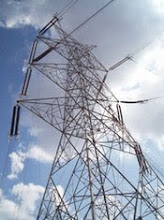
Separate from this planned massive power generation build-out, another way China is thinking big is its anticipated $100 billion investment in ultra high-voltage transmission lines (Read more about that here). The State Grid Corp. of China, which according to some estimates is the world's biggest utility, has either approved or is already building 20 such transmission projects.
These 20 high-voltage lines will form a massive network that will link up the densely populated and heavily industrialized southern and eastern parts of China with the west, where the country's hydropower potential is already better realized than just about anywhere else in the Eastern Hemisphere. China has already built the world's most massive and powerful dams in its eastern provinces, including Three Gorges, which at 22,500 MW generates as much electricity as 15 nuclear power plants.
Linking up the country's east and west with high-voltage power transmission is a smart way for China to make effective use of low- or no-carbon generation. Over the long term, this will help China's overall power portfolio become less polluting. Focusing on a well-built power grid with plenty of storm-hardening countermeasures and redundancies will prevent a scenario like we see in Brazil, which also uses massive dams to power far-flung population centers, but which suffers from regular outages when transmission lines are damaged or cut off.
As I write this, Brazilian authorities are working to restore power to eight states and tens of millions of people because a fire in northeast Brazil damaged transmission lines that link huge hydro assets from cities (See that story here). As China grows, it would do well to keep an eye on Brazil and remember what happens when you build out your cities and power plants, but neglect your transmission infrastructure.
Showing posts with label decarbonization. Show all posts
Showing posts with label decarbonization. Show all posts
Friday, August 30, 2013

Thursday, July 11, 2013
Blackouts on the way in Britain?
It's seldom that there's much drama in the energy world, however, in the U.K., a report by that country's government electricity regulator touched off a swarm of responses, defensive statements and condemnations — in short, genuine electricity drama.
It started with a report from the Office of Gas and Electricity Market (Ofgem) that warned of power shortages in the coming few years. Since 2012, Ofgem reported in its June 2013 capacity assessment, the risk of blackouts in the U.K. has doubled. Energy margins could shrink to as low as 2 percent in 2015 and 2016, according to Ofgem.
Ofgem said power outages are by no means guaranteed, but the risk is growing and the government needs to act swiftly to address the problem. Ofgem is calling for more government investment in power generation, as it places the blame for the potential power shortfalls mostly on the power generation sector.
Some factors that could increase the risk of power interruptions include a particularly cold winter or a higher than expected level of industrial activity.
Also at issue is the size and speed of Britain's decarbonization efforts. To comply with E.U. carbon-cutting goals, the U.K. is shutting down coal-fired power plants.
Some numbers: Since last year, more than 2 GW in installed capacity has gone offline in the U.K., and further shut-offs and retirements are expected. The economic situation in Britain and the E.U. is making new investment in new generation sources difficult. No new power plants are expected to be built until 2016.
The same economic downturn that is making power plants difficult to build is also making power plants less necessary — because of the downturn and investments in energy efficiency, peak demand has fallen an estimated 5 GW.
With such few new power sources in the pipeline, Ofgem is working with transmission authority National Grid and the Department of Energy and Climate Change (DECC) to come up with ways to depress demand. National Grid has a scenario that anticipates power demand to fall an additional 3 to 4 GW by the end of the decade in part due to demand-side management.
This puts the U.K. government in the awkward position of having to root against an economic recovery. Because if factories start humming again, the country's power grid and its generation capacity will be that much more strained.
In 2008, the U.K. set its own greenhouse gas emissions limits and agreed to cut emissions by 80 percent by 2050. The U.K. is also a signatory to the E.U.'s 20/20/20 plan, which calls for a 20 percent reduction in E.U. greenhouse gas emissions from 1990 levels.
This month, members of Parliament debated the creation of quantitative targets for cutting carbon in the energy sector, effectively speeding up the country's decarbonization process. The proposal (an amendment to a wider energy policy reform bill) was struck down following a close vote, pushing energy policy into the headlines of U.K. news outlets.
Given the country's shrinking energy margins, rapidly approaching decarbonization goals, aging power generation fleet and the looming threat of power outages hanging over it all, the U.K. has some serious thinking to do on energy policy.
The country cannot expect to shut down multiple gigawatts of coal power and just expect the lights to stay on without a plan to maintain reliability. It's one thing to sign on to carbon-cutting treaties, but actually making a low-carbon power grid work is a more difficult trick.
An energy reform bill has passed through Parliament's lower house and is now being debated in the House of Lords. One hopes the debate will not have to be carried out by candlelight.
It started with a report from the Office of Gas and Electricity Market (Ofgem) that warned of power shortages in the coming few years. Since 2012, Ofgem reported in its June 2013 capacity assessment, the risk of blackouts in the U.K. has doubled. Energy margins could shrink to as low as 2 percent in 2015 and 2016, according to Ofgem.
Ofgem said power outages are by no means guaranteed, but the risk is growing and the government needs to act swiftly to address the problem. Ofgem is calling for more government investment in power generation, as it places the blame for the potential power shortfalls mostly on the power generation sector.
Some factors that could increase the risk of power interruptions include a particularly cold winter or a higher than expected level of industrial activity.
Also at issue is the size and speed of Britain's decarbonization efforts. To comply with E.U. carbon-cutting goals, the U.K. is shutting down coal-fired power plants.
Some numbers: Since last year, more than 2 GW in installed capacity has gone offline in the U.K., and further shut-offs and retirements are expected. The economic situation in Britain and the E.U. is making new investment in new generation sources difficult. No new power plants are expected to be built until 2016.
The same economic downturn that is making power plants difficult to build is also making power plants less necessary — because of the downturn and investments in energy efficiency, peak demand has fallen an estimated 5 GW.
With such few new power sources in the pipeline, Ofgem is working with transmission authority National Grid and the Department of Energy and Climate Change (DECC) to come up with ways to depress demand. National Grid has a scenario that anticipates power demand to fall an additional 3 to 4 GW by the end of the decade in part due to demand-side management.
This puts the U.K. government in the awkward position of having to root against an economic recovery. Because if factories start humming again, the country's power grid and its generation capacity will be that much more strained.
In 2008, the U.K. set its own greenhouse gas emissions limits and agreed to cut emissions by 80 percent by 2050. The U.K. is also a signatory to the E.U.'s 20/20/20 plan, which calls for a 20 percent reduction in E.U. greenhouse gas emissions from 1990 levels.
This month, members of Parliament debated the creation of quantitative targets for cutting carbon in the energy sector, effectively speeding up the country's decarbonization process. The proposal (an amendment to a wider energy policy reform bill) was struck down following a close vote, pushing energy policy into the headlines of U.K. news outlets.
Given the country's shrinking energy margins, rapidly approaching decarbonization goals, aging power generation fleet and the looming threat of power outages hanging over it all, the U.K. has some serious thinking to do on energy policy.
The country cannot expect to shut down multiple gigawatts of coal power and just expect the lights to stay on without a plan to maintain reliability. It's one thing to sign on to carbon-cutting treaties, but actually making a low-carbon power grid work is a more difficult trick.
An energy reform bill has passed through Parliament's lower house and is now being debated in the House of Lords. One hopes the debate will not have to be carried out by candlelight.
Subscribe to:
Posts (Atom)