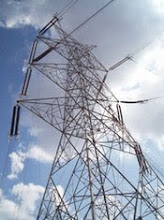
The world's second-biggest economy, China, is setting its sights on a massive expansion of its electric power sector. The country is growing increasingly energy hungry as its already massive manufacturing sector expands — and the smog haze around populated areas grow indisputably denser.
Some power sector expansion scenarios laid out by Bloomberg New Energy Finance could address both power reliability and environmental concerns, however at least one scenario would require 88 GW in new power generation capacity every year from now until 2030.
That would mean a build-out equal to the entire generation capacity of the United Kingdom every single year. Still, if any country can accomplish this, it's probably China.
China, which by the way is already the world's largest single source of carbon dioxide emissions and the most powerful generator of electric power in the world, could add more than 1,500 GW of new power generation in the next two decades, according to Bloomberg's surveys.
In a scenario called "The New Normal," a reasonably progressive yet
still conservative estimate of what China might do with its energy
sector, this would require an investment just shy of $4 trillion.
At the same time, though, cuts in overall emissions could still be achieved as soon as 2027 through the adoption and integration of more renewable energy capacity and the phase-out of coal-fired power. Large hydropower would constitute more than half of new capacity. China is already home to the world's biggest and most powerful hydropower projects, and even more are being planned.
The New Normal plan also calls for an expansion of China's natural gas-fired fleet that would push down coal-fired generation from 67 percent of China's energy mix to 44 percent by 2030. Coal-fired power would still expand in this scenario by nearly 40 GW per year, it should be noted.
Separate from this planned massive power generation build-out, another way China is thinking big is its anticipated $100 billion investment in ultra high-voltage transmission lines (Read more about that here). The State Grid Corp. of China, which according to some estimates is the world's biggest utility, has either approved or is already building 20 such transmission projects.
These 20 high-voltage lines will form a massive network that will link up the densely populated and heavily industrialized southern and eastern parts of China with the west, where the country's hydropower potential is already better realized than just about anywhere else in the Eastern Hemisphere. China has already built the world's most massive and powerful dams in its eastern provinces, including Three Gorges, which at 22,500 MW generates as much electricity as 15 nuclear power plants.
Linking up the country's east and west with high-voltage power transmission is a smart way for China to make effective use of low- or no-carbon generation. Over the long term, this will help China's overall power portfolio become less polluting. Focusing on a well-built power grid with plenty of storm-hardening countermeasures and redundancies will prevent a scenario like we see in Brazil, which also uses massive dams to power far-flung population centers, but which suffers from regular outages when transmission lines are damaged or cut off.
As I write this, Brazilian authorities are working to restore power to eight states and tens of millions of people because a fire in northeast Brazil damaged transmission lines that link huge hydro assets from cities (See that story here). As China grows, it would do well to keep an eye on Brazil and remember what happens when you build out your cities and power plants, but neglect your transmission infrastructure.
Showing posts with label generation. Show all posts
Showing posts with label generation. Show all posts
Friday, August 30, 2013

Tuesday, June 11, 2013
How much of a setback is San Onofre's closure?
The word "uncertainty" has become quite a buzzword in business and financial reporting, but it's perhaps nowhere more aptly used than it is when talking about the state of the U.S. nuclear power industry. Uncertainty is the stated reason why Edison International's Southern California Edison decided to permanently retire its already shut down San Onofre Nuclear Generating Station (SONGS).
This uncertainty stems from low natural gas prices, the lingering memory of Fukushima, cheaper alternatives, nervous investors and capital costs that seem to start out high only to be revised higher — as is the case with both the SCANA Corp.'s V.C. Summer Nuclear Station expansion and Southern Co.'s Plant Vogtle expansion.
The uncertain environment is in no way helped by the spate of awful headlines that is plaguing the industry as of late — everything from cracked equipment and plant closures to the strange case of how two goldfish wound up in a juice pitcher in a restricted area of FirstEnergy's Perry nuclear plant.
Headlines such as these (and others, as the parade of bad news for the nuclear industry has been almost too overwhelming to keep track of lately) have a cumulative negative impact on public opinion, and the nuclear sector has always had to be more concerned about public goodwill than most other businesses.
So call it navel gazing, soul searching or just a much-needed conversation, but people are wondering about the long-term future of this industry. Proponents of nuclear generation are hoping the technology didn't peak in 2001 when it produced more than 20 percent of all power in the U.S., though that figure has since fallen to 19 percent.
What are the bright spots for nuclear? Well, one advantage that will never go away is the technology's superior carbon emissions profile — namely, it releases none. However, there are alternatives to nuclear that release no pollution, are easier to install, suffer from less of a NIMBY effect and are generally better-liked by the public.
Another area where nuclear proponents are holding out hope for is small modular reactors. The Department of Energy is backing R&D for SMR technology, and several big-name companies are looking into getting involved or are already involved. The benefit of the SMR is safety and scalability, but developers still need to prove they can get an SMR up and running. The advantages of SMRs don't mean much if they prove every bit as hard to get deployed and operating as conventional reactors are.
For California, the permanent loss of SONGS' nuclear generation capacity means a less diverse generation portfolio overall, to be sure, however, all is not lost on that score. Around the same time SCE announced they were throwing in the towel on SONGS, the California ISO announced that the Golden State was now capable of producing more than 2 GW of solar energy.
Normally when nuclear power plants are taken offline, for whatever reason, the only feasible solution is to replace the lost baseload with coal-fired power or natural gas power. California, though, is one of the top 10 economies in the world and in possession of an incredible variety of natural resources and geological variety. The potential for developing geothermal assets, hydropower facilities and solar and wind farms is more promising in California than in many other areas of the world. The state already generates more than 23 percent of its power from renewable sources, including hydropower.
What California does or doesn't do about its generation mix, though, is cold comfort to the nuclear industry at large. The economics of power generation is changing as fuel prices fluctuate and new regulations kick in. Coal as well as nuclear energy — both proven ways to generate baseload power — are becoming liabilities to their owners instead of assets.
Given the economics of the situation, it's hard to blame Southern California Edison's for its decision on San Onofre. The plant had become a money pit. However, even now that the decision to close it has been made, the plant itself will continue to cost its owners a significant sum. Safely disassembling the facility will take decades — perhaps even a half century. You have to wonder what things will look like for the American nuclear power industry by the time the plant has been completely taken apart.
This uncertainty stems from low natural gas prices, the lingering memory of Fukushima, cheaper alternatives, nervous investors and capital costs that seem to start out high only to be revised higher — as is the case with both the SCANA Corp.'s V.C. Summer Nuclear Station expansion and Southern Co.'s Plant Vogtle expansion.
The uncertain environment is in no way helped by the spate of awful headlines that is plaguing the industry as of late — everything from cracked equipment and plant closures to the strange case of how two goldfish wound up in a juice pitcher in a restricted area of FirstEnergy's Perry nuclear plant.
Headlines such as these (and others, as the parade of bad news for the nuclear industry has been almost too overwhelming to keep track of lately) have a cumulative negative impact on public opinion, and the nuclear sector has always had to be more concerned about public goodwill than most other businesses.
So call it navel gazing, soul searching or just a much-needed conversation, but people are wondering about the long-term future of this industry. Proponents of nuclear generation are hoping the technology didn't peak in 2001 when it produced more than 20 percent of all power in the U.S., though that figure has since fallen to 19 percent.
What are the bright spots for nuclear? Well, one advantage that will never go away is the technology's superior carbon emissions profile — namely, it releases none. However, there are alternatives to nuclear that release no pollution, are easier to install, suffer from less of a NIMBY effect and are generally better-liked by the public.
Another area where nuclear proponents are holding out hope for is small modular reactors. The Department of Energy is backing R&D for SMR technology, and several big-name companies are looking into getting involved or are already involved. The benefit of the SMR is safety and scalability, but developers still need to prove they can get an SMR up and running. The advantages of SMRs don't mean much if they prove every bit as hard to get deployed and operating as conventional reactors are.
For California, the permanent loss of SONGS' nuclear generation capacity means a less diverse generation portfolio overall, to be sure, however, all is not lost on that score. Around the same time SCE announced they were throwing in the towel on SONGS, the California ISO announced that the Golden State was now capable of producing more than 2 GW of solar energy.
Normally when nuclear power plants are taken offline, for whatever reason, the only feasible solution is to replace the lost baseload with coal-fired power or natural gas power. California, though, is one of the top 10 economies in the world and in possession of an incredible variety of natural resources and geological variety. The potential for developing geothermal assets, hydropower facilities and solar and wind farms is more promising in California than in many other areas of the world. The state already generates more than 23 percent of its power from renewable sources, including hydropower.
What California does or doesn't do about its generation mix, though, is cold comfort to the nuclear industry at large. The economics of power generation is changing as fuel prices fluctuate and new regulations kick in. Coal as well as nuclear energy — both proven ways to generate baseload power — are becoming liabilities to their owners instead of assets.
Given the economics of the situation, it's hard to blame Southern California Edison's for its decision on San Onofre. The plant had become a money pit. However, even now that the decision to close it has been made, the plant itself will continue to cost its owners a significant sum. Safely disassembling the facility will take decades — perhaps even a half century. You have to wonder what things will look like for the American nuclear power industry by the time the plant has been completely taken apart.
Thursday, August 2, 2012
Fixing the world's biggest blackout
About 10 percent of the world's population lost power recently as a blackout swept across northern India. As many as 700 million people, or twice the population of the U.S., were affected. Fortunately there have been no reports of deaths connected to the blackout, but the loss of power did result in traffic snarls, stranded train passengers and a group of trapped coal miners.
So what can the world's biggest democracy do to help stave off such wide-sweeping outages in the future? To find out, I spoke with Jason Black, a research leader in grid systems with Battelle's Energy, Environment and Material Sciences Global Business.
Black characterized India's power grid as reasonably good on the transmission side, but a bit dodgy on the distribution side. Furthermore, the country has struggled with power shortages as its current generation mix often can't meet the demands of the population.
"In many sections of the country, they use rolling blackouts regularly," Black said. "But I don't think it's as simple as an excessive load. There are protection schemes in place to deal with that."
In recent years, India has worked to encourage investment in new power generation of just about every type, including distributed renewable generation like solar energy, of which India now has about 1 GW.
"Traditionally they have used coal, and they have some hydro as well. They have made some legislation that was meant to increase their renewable capacity — just as a way to try to correct some of their power shortages," he said.
In addition to bringing more generation online, India's grid operators have attempted to interconnect their grid more thoroughly — an approach not without its dangers.
"[Interconnection is] good from one perspective, because the redundancies can address an interruption in one area. But from another perspective, it can increase the risk of cascading power outages, which it appears this one is."
Though its transmission grid is reasonably well developed, India's rapid development and population growth have left it with a distribution system that often falls short of the task of delivering power to those that need it.
"They have had some ongoing problems with electricity theft, which has become a local political problem and leads to losses, making the pull on the system unpredictable. Cleaning up the distribution system would help them a lot," he said.
For one thing, India's grid could implement underfrequency load shedding as is done in the U.S.
"In the U.S., we operate our system at 60 Hertz. This keeps the power flowing in sync, so generators don't trip offline. Imbalances in demand and supply are what cause these kinds of outages — when the generators can't handle the imbalances. That's one way to get these cascading power outages," he said.
To prevent further outages during the restoration process, India's grid operators need to be careful how they manage the grid in the coming days.
"If you're a steam plant and the system has tripped off to protect itself, your steam cools off. It can take many hours to return to service. Depending on how many of their generators have black start capability, that process can take a while," he said.
As generators start spinning again, grid operators have important choices to make.
"There's a trade off. Do I bring on all my generators, or do I bring on a certain subset of customers that I can get to faster?" he said. "If there isn't enough slack in the system when you start up these plants, it can bring the system offline again."
Furthermore, there might be physical damage to the grid that needs fixing — delaying restoration even more.
"There could be parts of the grid that broke... Some transformers that exploded or some circuit breakers that opened. They have to deal with those things before bringing the grid back online," he said.
Black said this blackout is likely one of the worst in history, in terms of the number of people affected. While Indian officials are still investigating the causes, it bears all the telltale signs of a cascading power outage, like the Northeast blackout of 2003, which began in Ohio, ran through New York and into Canada. But even in a blackout so widespread in North America, only 55 million people were affected. It's almost unthinkable to most of us to imagine 700 million people without power.
But that's pretty much how it always goes with power outages, as people in the utility industry know. People don't think about it at all until the lights go out. Then the next day (hopefully) when they come back on, the finger-wagging starts.
So what can the world's biggest democracy do to help stave off such wide-sweeping outages in the future? To find out, I spoke with Jason Black, a research leader in grid systems with Battelle's Energy, Environment and Material Sciences Global Business.
Black characterized India's power grid as reasonably good on the transmission side, but a bit dodgy on the distribution side. Furthermore, the country has struggled with power shortages as its current generation mix often can't meet the demands of the population.
"In many sections of the country, they use rolling blackouts regularly," Black said. "But I don't think it's as simple as an excessive load. There are protection schemes in place to deal with that."
In recent years, India has worked to encourage investment in new power generation of just about every type, including distributed renewable generation like solar energy, of which India now has about 1 GW.
"Traditionally they have used coal, and they have some hydro as well. They have made some legislation that was meant to increase their renewable capacity — just as a way to try to correct some of their power shortages," he said.
In addition to bringing more generation online, India's grid operators have attempted to interconnect their grid more thoroughly — an approach not without its dangers.
"[Interconnection is] good from one perspective, because the redundancies can address an interruption in one area. But from another perspective, it can increase the risk of cascading power outages, which it appears this one is."
Though its transmission grid is reasonably well developed, India's rapid development and population growth have left it with a distribution system that often falls short of the task of delivering power to those that need it.
"They have had some ongoing problems with electricity theft, which has become a local political problem and leads to losses, making the pull on the system unpredictable. Cleaning up the distribution system would help them a lot," he said.
For one thing, India's grid could implement underfrequency load shedding as is done in the U.S.
"In the U.S., we operate our system at 60 Hertz. This keeps the power flowing in sync, so generators don't trip offline. Imbalances in demand and supply are what cause these kinds of outages — when the generators can't handle the imbalances. That's one way to get these cascading power outages," he said.
To prevent further outages during the restoration process, India's grid operators need to be careful how they manage the grid in the coming days.
"If you're a steam plant and the system has tripped off to protect itself, your steam cools off. It can take many hours to return to service. Depending on how many of their generators have black start capability, that process can take a while," he said.
As generators start spinning again, grid operators have important choices to make.
"There's a trade off. Do I bring on all my generators, or do I bring on a certain subset of customers that I can get to faster?" he said. "If there isn't enough slack in the system when you start up these plants, it can bring the system offline again."
Furthermore, there might be physical damage to the grid that needs fixing — delaying restoration even more.
"There could be parts of the grid that broke... Some transformers that exploded or some circuit breakers that opened. They have to deal with those things before bringing the grid back online," he said.
Black said this blackout is likely one of the worst in history, in terms of the number of people affected. While Indian officials are still investigating the causes, it bears all the telltale signs of a cascading power outage, like the Northeast blackout of 2003, which began in Ohio, ran through New York and into Canada. But even in a blackout so widespread in North America, only 55 million people were affected. It's almost unthinkable to most of us to imagine 700 million people without power.
But that's pretty much how it always goes with power outages, as people in the utility industry know. People don't think about it at all until the lights go out. Then the next day (hopefully) when they come back on, the finger-wagging starts.
Monday, April 30, 2012
Why is coal in a slump — really?
By Jeff Postelwait
Online Editor
Everyone knows that with enough time and pressure, coal can turn into diamonds. What will become of the coal industry with all the pressure it is currently under, nobody can say.
The Wall Street Journal took a look at two of the top three coal producers, Arch Coal and Alpha Natural Resources, both of which are experiencing lower demand and falling profits. Peabody Energy, another top coal miner, predicted that demand for coal could drop by as much as 10 percent this year. But why?
Given the fact that everyone has their own politics concerning using coal to make power, it's tempting to point the finger at either EPA regulations or some draconian piece of legislation that came from Congress, but I think blaming any one culprit for this trend is short sighted.
One factor the Journal neglects to get into, for example, is the other fossil fuel we use for energy. Natural gas recently hit a 10-year low in demand, some estimates have it. We're sitting on massive new reserves of the stuff because of new extraction techniques, and so many utilities would much rather build a natural-gas fired unit than a coal unit right now.

You could well argue that natural gas, being a finite resource, is also subject to price swings back and forth, but based on all the generation news I handle every day, I'm definitely seeing a big trend toward natural gas to the detriment of other forms of generation.
To explore another possible explanation for this problem, just open a window. It's beautiful out, and it has been for several financial quarters. The almost freakishly warm winter that the U.S. experienced had people eating up less energy — from coal or from any other source. While the EPA has been flexing its regulatory muscles in the direction of coal power lately, you can hardly blame the weather on government bureaucrats.
To be fair, we are seeing quite a few new and proposed regulations that appear to have the coal industry in their sights, whether you'd call it intentional or not. There's the proposed Clean Air Act standard for carbon dioxide pollution for new power plants. There's the Mercury and Air Toxics Standards rule issued in February, which could require coal plants to retrofit and reduce emissions of arsenic, acid gases, nickel, cyanide and other toxins. And finally there's the Cross-State Air Pollution Rule from earlier in 2012.
When the new carbon standards were proposed, more than a few were saying that this was regulation meant to kill coal for good. But at that time, the Energy Information Administration listed only a single coal-fired unit in the pipeline to be built. So if there is a piece of regulation out there threatening to kill coal, this one wasn't it.
If coal is dying off — still an alarmist thing to say for this multi-billion dollar a year industry — there isn't a single factor you can point to if you're looking for something to blame. The entire energy industry is changing, just as surely as the customers it serves are changing their minds and thinking more about how energy is produced. So while these may be challenging times, there is still time to make changes.
If these trends prove irreversible and it becomes impossible to sell coal in the same country where it is mined, then the U.S. coal industry needs to develop new markets. I can think of nowhere better to look than at China and India, the former of which is about to become the world's most coal-hungry nation. China generates nearly 70 percent of its energy from coal, but only has about 13 percent of the world's reserves. That's just one country that has "potential customer" written all over it.
Online Editor
Everyone knows that with enough time and pressure, coal can turn into diamonds. What will become of the coal industry with all the pressure it is currently under, nobody can say.
The Wall Street Journal took a look at two of the top three coal producers, Arch Coal and Alpha Natural Resources, both of which are experiencing lower demand and falling profits. Peabody Energy, another top coal miner, predicted that demand for coal could drop by as much as 10 percent this year. But why?
Given the fact that everyone has their own politics concerning using coal to make power, it's tempting to point the finger at either EPA regulations or some draconian piece of legislation that came from Congress, but I think blaming any one culprit for this trend is short sighted.
One factor the Journal neglects to get into, for example, is the other fossil fuel we use for energy. Natural gas recently hit a 10-year low in demand, some estimates have it. We're sitting on massive new reserves of the stuff because of new extraction techniques, and so many utilities would much rather build a natural-gas fired unit than a coal unit right now.

You could well argue that natural gas, being a finite resource, is also subject to price swings back and forth, but based on all the generation news I handle every day, I'm definitely seeing a big trend toward natural gas to the detriment of other forms of generation.
To explore another possible explanation for this problem, just open a window. It's beautiful out, and it has been for several financial quarters. The almost freakishly warm winter that the U.S. experienced had people eating up less energy — from coal or from any other source. While the EPA has been flexing its regulatory muscles in the direction of coal power lately, you can hardly blame the weather on government bureaucrats.
To be fair, we are seeing quite a few new and proposed regulations that appear to have the coal industry in their sights, whether you'd call it intentional or not. There's the proposed Clean Air Act standard for carbon dioxide pollution for new power plants. There's the Mercury and Air Toxics Standards rule issued in February, which could require coal plants to retrofit and reduce emissions of arsenic, acid gases, nickel, cyanide and other toxins. And finally there's the Cross-State Air Pollution Rule from earlier in 2012.
When the new carbon standards were proposed, more than a few were saying that this was regulation meant to kill coal for good. But at that time, the Energy Information Administration listed only a single coal-fired unit in the pipeline to be built. So if there is a piece of regulation out there threatening to kill coal, this one wasn't it.
If coal is dying off — still an alarmist thing to say for this multi-billion dollar a year industry — there isn't a single factor you can point to if you're looking for something to blame. The entire energy industry is changing, just as surely as the customers it serves are changing their minds and thinking more about how energy is produced. So while these may be challenging times, there is still time to make changes.
If these trends prove irreversible and it becomes impossible to sell coal in the same country where it is mined, then the U.S. coal industry needs to develop new markets. I can think of nowhere better to look than at China and India, the former of which is about to become the world's most coal-hungry nation. China generates nearly 70 percent of its energy from coal, but only has about 13 percent of the world's reserves. That's just one country that has "potential customer" written all over it.
Subscribe to:
Posts (Atom)