By Andy Bennett,
Senior vice president of infrastructure at Schneider Electric
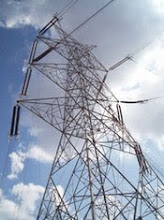
The Obama administration recently published a report that calls for increased spending on the nation's electric power system to increase power grid resilience. The report highlights the enormous economic risks that come with not addressing grid resilience, as power outages cost the economy billions of dollars per year and disrupt the lives of millions of Americans.
Severe weather is the No. 1 cause of power outages in the U.S. and also costs the economy billions of dollars per year in lost output and wages, spoiled inventory, delayed production, inconvenience and damage to grid infrastructure. The report estimates the average annual cost of power outages caused by severe weather to be between $18 billion and $33 billion per year. In a year of record-breaking storms, the costs can run much higher.
Creating a resilient electric grid is critical to reducing our nation's vulnerability to severe weather. Furthermore, as highlighted in the report, smart grid technology designed to increase resilience can improve the overall effectiveness of grid operations leading to great efficiencies in energy use and reduction in carbon emissions. As utilities look to modernize the grid, they not only have the opportunity to improve storm resiliency, drive greater energy efficiency and reduce carbon emissions, but also to support the integration of renewable energy.
In my experience as senior vice president of infrastructure at Schneider Electric, investing in resiliency doesn't have to be at the expense of efficiency or vice versa. Instead, savings from efficiency can actually help fund investments in resiliency. Furthermore, some activities actually increase resiliency and efficiency at the same time.
Examples include leveraging microgrids to smooth out the intermittency of renewable generation, allowing less efficient generators to shut down; or real-time analysis of power grids to determine optimal configuration to minimize electrical losses.
To move towards a more modernized grid and in turn reduce distribution network performance, investment should be made to replace aging infrastructure. As the demand for higher quality power increases, the evolving grid of the future will likely be upgraded to include self-healing capabilities designed to minimize outages from disasters and other natural events. In the near future, we foresee a movement toward multi-user, multi-site microgrids that will create an environment for a stronger and more self-sufficient power system.
In our view, modernizing the electric grid is the foundation for creating smarter, more resilient data centers, homes, buildings, cities and communities. Collaboration across all levels of government and the private sector will be key to enabling the development of the smart grid and ultimately to creating a more sustainable, resilient, energy efficient country.
Showing posts with label power outages. Show all posts
Showing posts with label power outages. Show all posts
Friday, October 4, 2013

Friday, February 8, 2013
Outages remind public of the grid's needs
By Teresa Hansen,
Editor-in-Chief, Electric Light & Power and POWERGRID International magazines
The past few months have been unkind to the electric utility industry. Disruptive weather events, especially Hurricane Sandy, and a blackout during the Super Bowl, have caused politicians, regulators, media and customers to questions U.S. utilities' ability to provide reliable service.
It's unfortunate that news about the 34-minute outage that occurred shortly after the second half began could become bigger than news about the Ravens' victory over the 49ers. One of the many headlines I saw after the story broke read, "Blackouts are on the rise across the United States."
The article didn't include statistics or sources to back up this headline, but at this point the facts are less important than the perception: That electric utilities are failing at their job of providing uninterrupted, reliable electricity. When more than 108 million people are watching a live event on television and the lights go out, headlines and stories such as this one should be expected.
Editor's Note: Since the time of this writing, Entergy New Orleans has traced the cause of the Super Bowl outages to an electrical relay device.
The outage's cause hasn't been determined. Entergy New Orleans, which provides power to the Superdome, is working with its management to determine what happened. Nondisclosure of their findings hasn't, however, kept the media from reporting on likely causes. A report from CBS Interactive Inc. (CBS online news source) said Philip Allison, a communications specialist at Entergy, said power had been flowing into the stadium before the lights failed and all the distribution and transmission feeds into the Superdome were operating "as expected." According to the CBS report, Allison said the outage appeared to have been caused by the failure of equipment maintained by stadium staff.
An Associated Press report said Superdome officials "warned just months before the Super Bowl that the venue's electrical system could suffer a power outage and rushed to replace some of the equipment ahead of the big game." It doesn't say who these officials warned, but who cares? Once again, perception trumps fact.
Even if Entergy and Superdome management discover the cause was simple and could be easily fixed to avoid similar events at the venue, most people won't care; the public relations damage has been done. The outage is at best a black eye for Entergy New Orleans, as well as reinforcement to a conclusion made by many Americans: U.S. electric utilities are unreliable.
Utilities in the Northeast have been criticized heavily since Hurricane Sandy caused major damage to grid infrastructure in New Jersey and New York. The hurricane knocked out power to almost all of Long Island Power Authority's 1.1. million customers and some were without power for more than three weeks. Mainstream media, government officials and customers relentlessly criticized the utilities, especially LIPA, as well as their management. The criticism led to the resignation of Michael Hervey, LIPA's chief operating officer, the formation of a commission to investigate LIPA's slow response and aged infrastructure, as well as a recommendation by New York Gov. Andrew Cuomo to replace the non-profit municipal utility with a privately owned power company. Never mind that the storm's winds and surge were much worse than experts predicted or imagined, the consensus is that electric utilities should have been better prepared and customers deserve better.
Maybe one good thing that has come from these recent disruptive events is that people from outside the industry are beginning to recognize that the current electricity deliver infrastructure needs attention and investment. Admitting that a problem exists is the first step to solving it. The next step, which is resolution, will be much more difficult.
Upgrading the current infrastructure won't be cheap or easy. It will require cooperation between utilities, utility shareholders, regulators, politicians, technology providers and customers. All of these parties want electricity at a reasonable cost, however their definition of reliable and reasonable can be vastly different. At least the first steps of a long infrastructure rehabilitation and modernization process have been taken.
Editor-in-Chief, Electric Light & Power and POWERGRID International magazines
The past few months have been unkind to the electric utility industry. Disruptive weather events, especially Hurricane Sandy, and a blackout during the Super Bowl, have caused politicians, regulators, media and customers to questions U.S. utilities' ability to provide reliable service.
It's unfortunate that news about the 34-minute outage that occurred shortly after the second half began could become bigger than news about the Ravens' victory over the 49ers. One of the many headlines I saw after the story broke read, "Blackouts are on the rise across the United States."
The article didn't include statistics or sources to back up this headline, but at this point the facts are less important than the perception: That electric utilities are failing at their job of providing uninterrupted, reliable electricity. When more than 108 million people are watching a live event on television and the lights go out, headlines and stories such as this one should be expected.
Editor's Note: Since the time of this writing, Entergy New Orleans has traced the cause of the Super Bowl outages to an electrical relay device.
The outage's cause hasn't been determined. Entergy New Orleans, which provides power to the Superdome, is working with its management to determine what happened. Nondisclosure of their findings hasn't, however, kept the media from reporting on likely causes. A report from CBS Interactive Inc. (CBS online news source) said Philip Allison, a communications specialist at Entergy, said power had been flowing into the stadium before the lights failed and all the distribution and transmission feeds into the Superdome were operating "as expected." According to the CBS report, Allison said the outage appeared to have been caused by the failure of equipment maintained by stadium staff.
An Associated Press report said Superdome officials "warned just months before the Super Bowl that the venue's electrical system could suffer a power outage and rushed to replace some of the equipment ahead of the big game." It doesn't say who these officials warned, but who cares? Once again, perception trumps fact.
Even if Entergy and Superdome management discover the cause was simple and could be easily fixed to avoid similar events at the venue, most people won't care; the public relations damage has been done. The outage is at best a black eye for Entergy New Orleans, as well as reinforcement to a conclusion made by many Americans: U.S. electric utilities are unreliable.
Utilities in the Northeast have been criticized heavily since Hurricane Sandy caused major damage to grid infrastructure in New Jersey and New York. The hurricane knocked out power to almost all of Long Island Power Authority's 1.1. million customers and some were without power for more than three weeks. Mainstream media, government officials and customers relentlessly criticized the utilities, especially LIPA, as well as their management. The criticism led to the resignation of Michael Hervey, LIPA's chief operating officer, the formation of a commission to investigate LIPA's slow response and aged infrastructure, as well as a recommendation by New York Gov. Andrew Cuomo to replace the non-profit municipal utility with a privately owned power company. Never mind that the storm's winds and surge were much worse than experts predicted or imagined, the consensus is that electric utilities should have been better prepared and customers deserve better.
Maybe one good thing that has come from these recent disruptive events is that people from outside the industry are beginning to recognize that the current electricity deliver infrastructure needs attention and investment. Admitting that a problem exists is the first step to solving it. The next step, which is resolution, will be much more difficult.
Upgrading the current infrastructure won't be cheap or easy. It will require cooperation between utilities, utility shareholders, regulators, politicians, technology providers and customers. All of these parties want electricity at a reasonable cost, however their definition of reliable and reasonable can be vastly different. At least the first steps of a long infrastructure rehabilitation and modernization process have been taken.
Wednesday, January 2, 2013
How smart grid helped New York weather Sandy
The sight of the island of Manhattan and its world-famous skyline going almost completely dark is a memory from 2012 that few will forget, but New York City did not lose power completely. Thanks to smart grid technology installed before Hurricane Sandy (2012's so-called "Frankenstorm"), there were buildings that did not darken the night the storm made landfall.
General Electric was in touch with at least a dozen utilities in Sandy's path and provided essential support before the hurricane came aground, said John McDonald, director of technical strategy and policy development with GE Digital Energy.
Because of the deployment of smart grid technology on site, GE's home base in New York City, the famous Rockefeller Center never lost power.
To keep the lights on at 30 Rock, power operators used technology similar to that used to channel continuous, uninterrupted power to data centers.
"It's similar to the technology that Google supplies to its very large data centers. It's a business called critical power. We look at the needs of the building. At 30 Rock we had an uninterruptable power supply and a series of batteries," McDonald said. "In a storm situation, the volts can bound around a lot in terms of power quality. But with this system, no mater what the volatility is, it is able to provide a steady stream of consistent voltage."

If power is interrupted completely, the batteries can kick in for the short term. If the battery energy storage system runs low on charge, then an on-site power generation system powered by diesel engines kicks in.
Using these systems, the building complex was able to compensate for dips in the grid with power from batteries and stayed lit until after gale-force winds calmed down. Thanks to the advent of this technology, 30 Rock stayed lit for the duration of the storm, he said.
Of course, a storm of Sandy's rarely-seen scale and power affected more than just New York City. During the storm's impact, GE was in touch with multiple utilities whose service areas were in the path of the storm.
Once the storm swept through, those in charge of the restoration had an easier time estimating the damage in areas that had deployed smart meters.
"Utilities like PPL had made recent investments in some key technologies. They had smart meters with two-way communications," he said.
The biggest advantage offered by smart meters in storm scenarios is that in the nanoseconds before a customer loses power, the smart meter contains a capacitor that stores enough energy for a "last gasp" communication to the grid operator telling them that power has just been cut off.
"That's key, because then the utility knows the exact time, the exact customer and how the customer is connected to the grid," he said. "Without that information, the utility would have to wait for the customer to call in, which could take many minutes, if they call at all."
GE also worked to increase production of new transformers that the company realized would be needed as part of the grid repair effort.
A geographical information system (GIS) that lists out all the assets owned by a utility (as well as their locations) also sped the power restoration process for utilities with large workforces to mobilize, he said.
"This GIS system is really the reference map for our outage management system. Its input, for many utilities, is from phone calls. The other source of input we have today is interfacing with the distribution management system," he said.
The distribution management system has an application called fault detection isolation restoration (FDIR). Once it isolates the disturbance, it enables all "healthy" parts of the grid to keep using power, he said.
Again, two-way communication is crucial for utilities dealing with a storm-battered grid and potentially angry or frightened customers. Functioning in such an environment was made easier after Sandy by the proliferation of Facebook and Twitter.
"Something we've been working on is bringing in social media. We can gather information from our customers from social media, particularly tweets," he said.
My thanks to John McDonald for his contributions to this post. McDonald provides strategic leadership and develops long-term plans to operate GE Digital Energy's position. He received his BSEE and MSEE (power engineering) degrees from Purdue University and an MBA in finance from the University of California at Berkeley. He is past president of IEEE PES and co-author of "Automating a Distribution Cooperative, From A to Z," published by the National Rural Electric Cooperative.
General Electric was in touch with at least a dozen utilities in Sandy's path and provided essential support before the hurricane came aground, said John McDonald, director of technical strategy and policy development with GE Digital Energy.
Because of the deployment of smart grid technology on site, GE's home base in New York City, the famous Rockefeller Center never lost power.
To keep the lights on at 30 Rock, power operators used technology similar to that used to channel continuous, uninterrupted power to data centers.
"It's similar to the technology that Google supplies to its very large data centers. It's a business called critical power. We look at the needs of the building. At 30 Rock we had an uninterruptable power supply and a series of batteries," McDonald said. "In a storm situation, the volts can bound around a lot in terms of power quality. But with this system, no mater what the volatility is, it is able to provide a steady stream of consistent voltage."

If power is interrupted completely, the batteries can kick in for the short term. If the battery energy storage system runs low on charge, then an on-site power generation system powered by diesel engines kicks in.
Using these systems, the building complex was able to compensate for dips in the grid with power from batteries and stayed lit until after gale-force winds calmed down. Thanks to the advent of this technology, 30 Rock stayed lit for the duration of the storm, he said.
Of course, a storm of Sandy's rarely-seen scale and power affected more than just New York City. During the storm's impact, GE was in touch with multiple utilities whose service areas were in the path of the storm.
Once the storm swept through, those in charge of the restoration had an easier time estimating the damage in areas that had deployed smart meters.
"Utilities like PPL had made recent investments in some key technologies. They had smart meters with two-way communications," he said.
The biggest advantage offered by smart meters in storm scenarios is that in the nanoseconds before a customer loses power, the smart meter contains a capacitor that stores enough energy for a "last gasp" communication to the grid operator telling them that power has just been cut off.
"That's key, because then the utility knows the exact time, the exact customer and how the customer is connected to the grid," he said. "Without that information, the utility would have to wait for the customer to call in, which could take many minutes, if they call at all."
GE also worked to increase production of new transformers that the company realized would be needed as part of the grid repair effort.
A geographical information system (GIS) that lists out all the assets owned by a utility (as well as their locations) also sped the power restoration process for utilities with large workforces to mobilize, he said.
"This GIS system is really the reference map for our outage management system. Its input, for many utilities, is from phone calls. The other source of input we have today is interfacing with the distribution management system," he said.
The distribution management system has an application called fault detection isolation restoration (FDIR). Once it isolates the disturbance, it enables all "healthy" parts of the grid to keep using power, he said.
Again, two-way communication is crucial for utilities dealing with a storm-battered grid and potentially angry or frightened customers. Functioning in such an environment was made easier after Sandy by the proliferation of Facebook and Twitter.
"Something we've been working on is bringing in social media. We can gather information from our customers from social media, particularly tweets," he said.
My thanks to John McDonald for his contributions to this post. McDonald provides strategic leadership and develops long-term plans to operate GE Digital Energy's position. He received his BSEE and MSEE (power engineering) degrees from Purdue University and an MBA in finance from the University of California at Berkeley. He is past president of IEEE PES and co-author of "Automating a Distribution Cooperative, From A to Z," published by the National Rural Electric Cooperative.
Tuesday, October 30, 2012
Sandy was everything they said she would be
This morning while watching news footage of Hurricane Sandy's aftermath, for some reason I thought of "Jurassic Park."
On CNN, I could see just about every prediction meteorologists made the day before come true, one by one. It made me think of the chaos theory-obsessed mathematician Ian Malcolm who predicted Jurassic Park's dinosaurs would be impossible to contain.
Later on, with a full-grown tyrannosaurus broken loose and stomping around, Malcolm says regretfully, "Boy, do I hate being right all the time."
The day the storm made landfall, I called into a webinar hosted by Earth Networks, a weather forecasting firm that makes the WeatherBug iPhone app that I use myself just about every morning.
The company's meteorologist, Mark Hoekzema, predicted storm surges around Long Island, flooding in New York, heavy rains in Maryland and Virginia, wind gusts throughout New England and blizzards in Appalachia.
If you want to see how accurate those predictions turned out to be, I recommend reading the story I wrote yesterday and comparing them with today's headlines.
All we have to go on in times of severe weather are the predictions of scientists and the mass media's transcription of those predictions. Sometimes predictions fall short of coming true — call it chaos theory. Sometimes this leads to people getting a little blase about how severe the storm could be — even if they live in or near its predicted path.
Sometimes the media over-hypes what the scientists are trying to say. Many people felt the warnings about Hurricane Irene in 2011 were exaggerated, even though the storm was the fifth costliest storm in U.S. history.
One group who can never assume that the worst won't happen, however, is electric utilities. It's a scary thing to lose power in the middle of a disaster — especially with frightening news stories coming in and people tweeting some pretty awful pictures of storm damage. And if utilities aren't completely on point with their recovery efforts — or even if the public merely doesn't think the lights are coming back on fast enough — they have to face an angry public.
This particular storm was everything they said it would be. Some 7.5 million people were left without electricity, multiple billions will have to be spent on repairs, thousands are likely homeless, hundreds of thousands are cut off from transportation and almost 40 Americans are now dead. And that's just what we know about now. There will certainly be stories in the coming days and weeks of other kinds of damage. Whether you're in a utility, working for the media or just some a bystander hunkering down and hoping for the best, pays to be careful.
NOTE: The Red Cross is seeking donations, preferably money, blood or volunteer time. Click here for more information.
On CNN, I could see just about every prediction meteorologists made the day before come true, one by one. It made me think of the chaos theory-obsessed mathematician Ian Malcolm who predicted Jurassic Park's dinosaurs would be impossible to contain.
Later on, with a full-grown tyrannosaurus broken loose and stomping around, Malcolm says regretfully, "Boy, do I hate being right all the time."
The day the storm made landfall, I called into a webinar hosted by Earth Networks, a weather forecasting firm that makes the WeatherBug iPhone app that I use myself just about every morning.
The company's meteorologist, Mark Hoekzema, predicted storm surges around Long Island, flooding in New York, heavy rains in Maryland and Virginia, wind gusts throughout New England and blizzards in Appalachia.
If you want to see how accurate those predictions turned out to be, I recommend reading the story I wrote yesterday and comparing them with today's headlines.
All we have to go on in times of severe weather are the predictions of scientists and the mass media's transcription of those predictions. Sometimes predictions fall short of coming true — call it chaos theory. Sometimes this leads to people getting a little blase about how severe the storm could be — even if they live in or near its predicted path.
Sometimes the media over-hypes what the scientists are trying to say. Many people felt the warnings about Hurricane Irene in 2011 were exaggerated, even though the storm was the fifth costliest storm in U.S. history.
One group who can never assume that the worst won't happen, however, is electric utilities. It's a scary thing to lose power in the middle of a disaster — especially with frightening news stories coming in and people tweeting some pretty awful pictures of storm damage. And if utilities aren't completely on point with their recovery efforts — or even if the public merely doesn't think the lights are coming back on fast enough — they have to face an angry public.
This particular storm was everything they said it would be. Some 7.5 million people were left without electricity, multiple billions will have to be spent on repairs, thousands are likely homeless, hundreds of thousands are cut off from transportation and almost 40 Americans are now dead. And that's just what we know about now. There will certainly be stories in the coming days and weeks of other kinds of damage. Whether you're in a utility, working for the media or just some a bystander hunkering down and hoping for the best, pays to be careful.
NOTE: The Red Cross is seeking donations, preferably money, blood or volunteer time. Click here for more information.
Wednesday, September 5, 2012
Utilities helping utilities
Following Hurricane Isaac life is getting back to normal for most residents all along the Gulf Coast. As with other major storm recovery efforts of years past, power utilities are looking out for each other through mutual assistance practices.
Isaac, which came aground in the U.S. as a Category 2 hurricane, arrived in time for the 7-year anniversary of Hurricane Katrina, the worst hurricane in American history in terms of dollars spent on damage recovery.
Some of these crew members worked 16-hour days to help families without power. To do that, they had to take open-ended commitments of their time and leave their hometowns for days or weeks at a time.
Eric Silagy, president of Florida Power & Light company told NBC's Today Show that these storm recovery crews are like an army on the move. Looking at some of the video, it's easy to see the truth in that comparison.
WLOX.com - The News for South Mississippi
Cleco Corp. managed a 2,400-member storm team to restore power to 95,000 customers. The utility secured workers from Oklahoma, Florida, North Carolina, South Carolina, Alabama, Kentucky, Texas, Tennessee, Arkansas, Georgia, Virginia and Maryland.
Alabama Power sent crews into Mississippi to help with recover efforts there. See video of that deployment here.
AEP's Southwestern Electric Power Co. served in Shreveport, Louisiana, booking hotel rooms for crews to sleep in, organized fleet vehicle fuel stops and planned out other logistics. The utility received help from AEP operating companies from Ohio, Oklahoma, Arkansas, Indiana, Kentucky and Virginia, as well as outside contractors.
Dominion Virginia Power sent 130 workers and contractors, plus bucket trucks. Dominion workers were returning a favor in a way, as crews from Louisiana came to Dominion's Virginia service area to assist with the June 2012 derecho.
Oklahoma Gas & Electric sent 71 employees to southern Louisiana. OG&E, a member of the Southeast Electric Exchange, served in the same area following Hurricane Gustav.
TECO Energy and Progress Energy Florida sent teams from Florida to help storm victims — about 290 workers total. Progress Energy's parent company, Duke Energy, sent 1,000 contractors total to help restore power.
These are just a few examples and this blog post is not meant to be comprehensive. Utilities maintain extensive networks of work crews, and some are participants of multiple assistance programs.
Mutual assistance is pretty cool to watch at work. When there's a big job to do, it's hard to imagine storm recovery going as smoothly any other way. It's especially cool when you hear about a utility returning the favor by assisting crews that once helped them.
Isaac, which came aground in the U.S. as a Category 2 hurricane, arrived in time for the 7-year anniversary of Hurricane Katrina, the worst hurricane in American history in terms of dollars spent on damage recovery.
Some of these crew members worked 16-hour days to help families without power. To do that, they had to take open-ended commitments of their time and leave their hometowns for days or weeks at a time.
Eric Silagy, president of Florida Power & Light company told NBC's Today Show that these storm recovery crews are like an army on the move. Looking at some of the video, it's easy to see the truth in that comparison.
WLOX.com - The News for South Mississippi
Cleco Corp. managed a 2,400-member storm team to restore power to 95,000 customers. The utility secured workers from Oklahoma, Florida, North Carolina, South Carolina, Alabama, Kentucky, Texas, Tennessee, Arkansas, Georgia, Virginia and Maryland.
Alabama Power sent crews into Mississippi to help with recover efforts there. See video of that deployment here.
AEP's Southwestern Electric Power Co. served in Shreveport, Louisiana, booking hotel rooms for crews to sleep in, organized fleet vehicle fuel stops and planned out other logistics. The utility received help from AEP operating companies from Ohio, Oklahoma, Arkansas, Indiana, Kentucky and Virginia, as well as outside contractors.
Dominion Virginia Power sent 130 workers and contractors, plus bucket trucks. Dominion workers were returning a favor in a way, as crews from Louisiana came to Dominion's Virginia service area to assist with the June 2012 derecho.
Oklahoma Gas & Electric sent 71 employees to southern Louisiana. OG&E, a member of the Southeast Electric Exchange, served in the same area following Hurricane Gustav.
TECO Energy and Progress Energy Florida sent teams from Florida to help storm victims — about 290 workers total. Progress Energy's parent company, Duke Energy, sent 1,000 contractors total to help restore power.
These are just a few examples and this blog post is not meant to be comprehensive. Utilities maintain extensive networks of work crews, and some are participants of multiple assistance programs.
Mutual assistance is pretty cool to watch at work. When there's a big job to do, it's hard to imagine storm recovery going as smoothly any other way. It's especially cool when you hear about a utility returning the favor by assisting crews that once helped them.
Thursday, August 2, 2012
Fixing the world's biggest blackout
About 10 percent of the world's population lost power recently as a blackout swept across northern India. As many as 700 million people, or twice the population of the U.S., were affected. Fortunately there have been no reports of deaths connected to the blackout, but the loss of power did result in traffic snarls, stranded train passengers and a group of trapped coal miners.
So what can the world's biggest democracy do to help stave off such wide-sweeping outages in the future? To find out, I spoke with Jason Black, a research leader in grid systems with Battelle's Energy, Environment and Material Sciences Global Business.
Black characterized India's power grid as reasonably good on the transmission side, but a bit dodgy on the distribution side. Furthermore, the country has struggled with power shortages as its current generation mix often can't meet the demands of the population.
"In many sections of the country, they use rolling blackouts regularly," Black said. "But I don't think it's as simple as an excessive load. There are protection schemes in place to deal with that."
In recent years, India has worked to encourage investment in new power generation of just about every type, including distributed renewable generation like solar energy, of which India now has about 1 GW.
"Traditionally they have used coal, and they have some hydro as well. They have made some legislation that was meant to increase their renewable capacity — just as a way to try to correct some of their power shortages," he said.
In addition to bringing more generation online, India's grid operators have attempted to interconnect their grid more thoroughly — an approach not without its dangers.
"[Interconnection is] good from one perspective, because the redundancies can address an interruption in one area. But from another perspective, it can increase the risk of cascading power outages, which it appears this one is."
Though its transmission grid is reasonably well developed, India's rapid development and population growth have left it with a distribution system that often falls short of the task of delivering power to those that need it.
"They have had some ongoing problems with electricity theft, which has become a local political problem and leads to losses, making the pull on the system unpredictable. Cleaning up the distribution system would help them a lot," he said.
For one thing, India's grid could implement underfrequency load shedding as is done in the U.S.
"In the U.S., we operate our system at 60 Hertz. This keeps the power flowing in sync, so generators don't trip offline. Imbalances in demand and supply are what cause these kinds of outages — when the generators can't handle the imbalances. That's one way to get these cascading power outages," he said.
To prevent further outages during the restoration process, India's grid operators need to be careful how they manage the grid in the coming days.
"If you're a steam plant and the system has tripped off to protect itself, your steam cools off. It can take many hours to return to service. Depending on how many of their generators have black start capability, that process can take a while," he said.
As generators start spinning again, grid operators have important choices to make.
"There's a trade off. Do I bring on all my generators, or do I bring on a certain subset of customers that I can get to faster?" he said. "If there isn't enough slack in the system when you start up these plants, it can bring the system offline again."
Furthermore, there might be physical damage to the grid that needs fixing — delaying restoration even more.
"There could be parts of the grid that broke... Some transformers that exploded or some circuit breakers that opened. They have to deal with those things before bringing the grid back online," he said.
Black said this blackout is likely one of the worst in history, in terms of the number of people affected. While Indian officials are still investigating the causes, it bears all the telltale signs of a cascading power outage, like the Northeast blackout of 2003, which began in Ohio, ran through New York and into Canada. But even in a blackout so widespread in North America, only 55 million people were affected. It's almost unthinkable to most of us to imagine 700 million people without power.
But that's pretty much how it always goes with power outages, as people in the utility industry know. People don't think about it at all until the lights go out. Then the next day (hopefully) when they come back on, the finger-wagging starts.
So what can the world's biggest democracy do to help stave off such wide-sweeping outages in the future? To find out, I spoke with Jason Black, a research leader in grid systems with Battelle's Energy, Environment and Material Sciences Global Business.
Black characterized India's power grid as reasonably good on the transmission side, but a bit dodgy on the distribution side. Furthermore, the country has struggled with power shortages as its current generation mix often can't meet the demands of the population.
"In many sections of the country, they use rolling blackouts regularly," Black said. "But I don't think it's as simple as an excessive load. There are protection schemes in place to deal with that."
In recent years, India has worked to encourage investment in new power generation of just about every type, including distributed renewable generation like solar energy, of which India now has about 1 GW.
"Traditionally they have used coal, and they have some hydro as well. They have made some legislation that was meant to increase their renewable capacity — just as a way to try to correct some of their power shortages," he said.
In addition to bringing more generation online, India's grid operators have attempted to interconnect their grid more thoroughly — an approach not without its dangers.
"[Interconnection is] good from one perspective, because the redundancies can address an interruption in one area. But from another perspective, it can increase the risk of cascading power outages, which it appears this one is."
Though its transmission grid is reasonably well developed, India's rapid development and population growth have left it with a distribution system that often falls short of the task of delivering power to those that need it.
"They have had some ongoing problems with electricity theft, which has become a local political problem and leads to losses, making the pull on the system unpredictable. Cleaning up the distribution system would help them a lot," he said.
For one thing, India's grid could implement underfrequency load shedding as is done in the U.S.
"In the U.S., we operate our system at 60 Hertz. This keeps the power flowing in sync, so generators don't trip offline. Imbalances in demand and supply are what cause these kinds of outages — when the generators can't handle the imbalances. That's one way to get these cascading power outages," he said.
To prevent further outages during the restoration process, India's grid operators need to be careful how they manage the grid in the coming days.
"If you're a steam plant and the system has tripped off to protect itself, your steam cools off. It can take many hours to return to service. Depending on how many of their generators have black start capability, that process can take a while," he said.
As generators start spinning again, grid operators have important choices to make.
"There's a trade off. Do I bring on all my generators, or do I bring on a certain subset of customers that I can get to faster?" he said. "If there isn't enough slack in the system when you start up these plants, it can bring the system offline again."
Furthermore, there might be physical damage to the grid that needs fixing — delaying restoration even more.
"There could be parts of the grid that broke... Some transformers that exploded or some circuit breakers that opened. They have to deal with those things before bringing the grid back online," he said.
Black said this blackout is likely one of the worst in history, in terms of the number of people affected. While Indian officials are still investigating the causes, it bears all the telltale signs of a cascading power outage, like the Northeast blackout of 2003, which began in Ohio, ran through New York and into Canada. But even in a blackout so widespread in North America, only 55 million people were affected. It's almost unthinkable to most of us to imagine 700 million people without power.
But that's pretty much how it always goes with power outages, as people in the utility industry know. People don't think about it at all until the lights go out. Then the next day (hopefully) when they come back on, the finger-wagging starts.
Monday, April 16, 2012
Unmanned drones could deploy in the fight against outages
By Jeff Postelwait
Online Editor
Maybe this is just the viewpoint of an American who grew up on "Terminator" movies, but I still find it incredibly weird and interesting that we live in a world where robots patrol the skies. Apparently the Electric Power Research Institute still thinks robots are cool too because they're researching ways for the technology to help out the electric power industry.
Unmanned Aerial Vehicles, or drones, of the same category of the Hellfire-carrying Predator, deployed around the world by the United States Armed Forces, could potentially be used by utilities to check on the status of distribution systems, according to an EPRI study. Instead of sporting Hellfire missiles, though, these units could carry cameras, sensors and global positioning capability.

It's easy to see why an all-seeing eye that can fly to a remote area and report data back to its operators might be of good use to an industry that frequently deals with icy roads, downed trees and other hazards at the very same time when the need for good communications has never been higher.
EPRI decided to take that idea and run with it with a series of tests of different types of UAVs at the New Mexico State University Flight Test Center, which is just a short distance away from the White Sands Missile Range in south-central New Mexico. These aircraft carried high-resolution video cameras and transmitted images of power lines from a useful distance of 7,000 feet in the air.
Footage shot like this could provide timely information to grid operators and their field crews, allowing them to better prioritize their outage restoration efforts and get accurate information sent off to affected customers.
"The tests indicated that unmanned airborne technologies equipped with sensors, cameras and GPS could be deployed quickly, allowing utilities to evaluate large areas more quickly than ground-based crews, then develop a repair strategy and mobilize repair crews more quickly and effectively," according to EPRI.
EPRI is also taking a look at the capabilities of drones for the inspection and assessment of overhead transmission lines. To make sure these findings are more practical for the utilities, EPRI is gathering data on UAV functional requirements, costs, inspection technologies, as well as testing several different types of UAVs.
Other sectors have taken a look at UAVs before, including the oil and gas industry, firefighting departments, meteorologists, forestry services and others. Still, I think that for utilities that have the resources to put these drones in the sky, it could dramatically boost response time — and utilities know that when customers are in the dark, every second counts.
Online Editor
Maybe this is just the viewpoint of an American who grew up on "Terminator" movies, but I still find it incredibly weird and interesting that we live in a world where robots patrol the skies. Apparently the Electric Power Research Institute still thinks robots are cool too because they're researching ways for the technology to help out the electric power industry.
Unmanned Aerial Vehicles, or drones, of the same category of the Hellfire-carrying Predator, deployed around the world by the United States Armed Forces, could potentially be used by utilities to check on the status of distribution systems, according to an EPRI study. Instead of sporting Hellfire missiles, though, these units could carry cameras, sensors and global positioning capability.
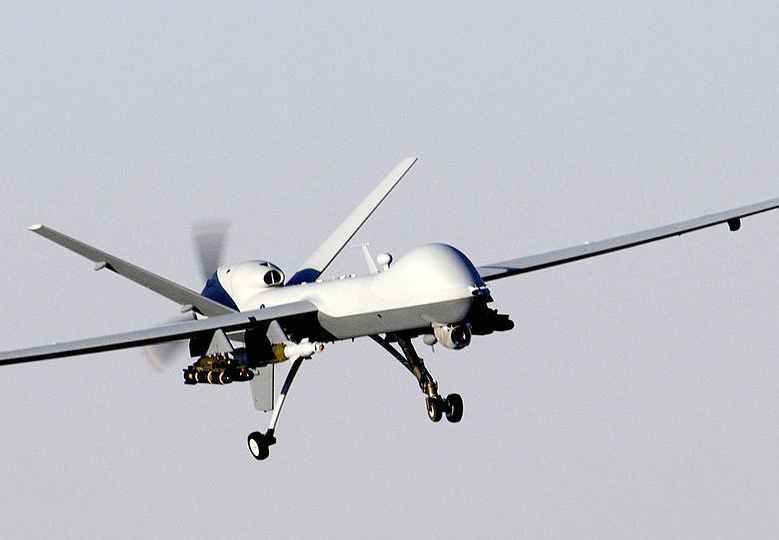
It's easy to see why an all-seeing eye that can fly to a remote area and report data back to its operators might be of good use to an industry that frequently deals with icy roads, downed trees and other hazards at the very same time when the need for good communications has never been higher.
EPRI decided to take that idea and run with it with a series of tests of different types of UAVs at the New Mexico State University Flight Test Center, which is just a short distance away from the White Sands Missile Range in south-central New Mexico. These aircraft carried high-resolution video cameras and transmitted images of power lines from a useful distance of 7,000 feet in the air.
Footage shot like this could provide timely information to grid operators and their field crews, allowing them to better prioritize their outage restoration efforts and get accurate information sent off to affected customers.
"The tests indicated that unmanned airborne technologies equipped with sensors, cameras and GPS could be deployed quickly, allowing utilities to evaluate large areas more quickly than ground-based crews, then develop a repair strategy and mobilize repair crews more quickly and effectively," according to EPRI.
EPRI is also taking a look at the capabilities of drones for the inspection and assessment of overhead transmission lines. To make sure these findings are more practical for the utilities, EPRI is gathering data on UAV functional requirements, costs, inspection technologies, as well as testing several different types of UAVs.
Other sectors have taken a look at UAVs before, including the oil and gas industry, firefighting departments, meteorologists, forestry services and others. Still, I think that for utilities that have the resources to put these drones in the sky, it could dramatically boost response time — and utilities know that when customers are in the dark, every second counts.
Wednesday, February 16, 2011
Study to electric utilities: Tell businesses the truth
J.D. Power and Associates released a report today on business customers’ reactions to power outages and outage management. While a bit happier and less emotional, overall, than their residential counterparts, there still seems to be a lesson in all these numbers: Dear utility, don’t shorten the outage time.
The J.D. Power and Associates 2011 Electric Utility Business Customer Satisfaction Study is based on interviews with people from 17,000 U.S. businesses that spend $500-$50,000 a month on those power bills. Those study Associates measured customer satisfaction looking at: power quality and reliability; billing and payment; corporate citizenship; price; communications; and, of course, customer service.
If the surveyed business had an outage, the average satisfaction rating was 729 out of 1,000 points---about a middling “C” grade for those of us still judging things based on old school report cards. And that “C” was only if the power clicked back on by the time told them. If the utility stretched the outage (for whatever reason, even those beyond their control) past the hour given by the utility, that grade plummeted to 576. (That’s a whopping 150-point plunge, and an “F” on the school report card scale.)
So, the lesson here: Be accurate. Tell the truth. Don’t give the best-guess estimate. The customer wants to know when it’s really going to be back up and making them money again. If it’s going to be a long time, be honest. And, let them know why.
The survey noted: Among business customers who contact their utility for information about an outage, satisfaction levels are highest among those who received at least three points of information. Satisfaction is lowest among customers who only received one piece of information.
“While causes of power outages may be outside the control of electric providers, they do have the ability to establish highly satisfying procedures for making adequate outage information available to customers,” said Jeff Conklin, senior director of the energy utility practice at J.D. Power and Associates. “Particularly for business customers, time is money. Providing accurate and comprehensive information about outages can help these customers make contingency plans and effectively plan resumption of their operations.”
The second lesson here: The customers expect you to know. True, you may not have the shiny smart grid intelligence to even get a bead on where the outage is without sending out some guys in a truck to just drive around the darkened spots. But, customers don’t know that. They hear a lot about the smart grid; they think you have one. They think there’s a robot or magic computer connection on that line. They believe that the very moment power goes out, you know. And they also believe you should know how long it takes to get that power back on. Whether or not you think that’s fair, that’s the business world you’re working in these days.
The study also noted a decline in overall satisfaction among business people with their power companies---not much, about four points, but that decline happened across a number of areas with the biggest dips in power quality and reliability (7 points) and customer service (5 points). Do you really have worse power than you did last year? Of course not. Do you have worse customer service? Perhaps. Either way, what’s important here is, again, what customers believe. They believe you know more than you are saying about outages. They believe your power is not as awesome as it was before, and they think your customer service isn’t so hot.
You can fix those beliefs with some extra time and extra communication, but the key is to be truthful and accurate---even letting them know when you don’t know. Sometimes honesty really is the best policy.
The J.D. Power and Associates 2011 Electric Utility Business Customer Satisfaction Study is based on interviews with people from 17,000 U.S. businesses that spend $500-$50,000 a month on those power bills. Those study Associates measured customer satisfaction looking at: power quality and reliability; billing and payment; corporate citizenship; price; communications; and, of course, customer service.
If the surveyed business had an outage, the average satisfaction rating was 729 out of 1,000 points---about a middling “C” grade for those of us still judging things based on old school report cards. And that “C” was only if the power clicked back on by the time told them. If the utility stretched the outage (for whatever reason, even those beyond their control) past the hour given by the utility, that grade plummeted to 576. (That’s a whopping 150-point plunge, and an “F” on the school report card scale.)
So, the lesson here: Be accurate. Tell the truth. Don’t give the best-guess estimate. The customer wants to know when it’s really going to be back up and making them money again. If it’s going to be a long time, be honest. And, let them know why.
The survey noted: Among business customers who contact their utility for information about an outage, satisfaction levels are highest among those who received at least three points of information. Satisfaction is lowest among customers who only received one piece of information.
“While causes of power outages may be outside the control of electric providers, they do have the ability to establish highly satisfying procedures for making adequate outage information available to customers,” said Jeff Conklin, senior director of the energy utility practice at J.D. Power and Associates. “Particularly for business customers, time is money. Providing accurate and comprehensive information about outages can help these customers make contingency plans and effectively plan resumption of their operations.”
The second lesson here: The customers expect you to know. True, you may not have the shiny smart grid intelligence to even get a bead on where the outage is without sending out some guys in a truck to just drive around the darkened spots. But, customers don’t know that. They hear a lot about the smart grid; they think you have one. They think there’s a robot or magic computer connection on that line. They believe that the very moment power goes out, you know. And they also believe you should know how long it takes to get that power back on. Whether or not you think that’s fair, that’s the business world you’re working in these days.
The study also noted a decline in overall satisfaction among business people with their power companies---not much, about four points, but that decline happened across a number of areas with the biggest dips in power quality and reliability (7 points) and customer service (5 points). Do you really have worse power than you did last year? Of course not. Do you have worse customer service? Perhaps. Either way, what’s important here is, again, what customers believe. They believe you know more than you are saying about outages. They believe your power is not as awesome as it was before, and they think your customer service isn’t so hot.
You can fix those beliefs with some extra time and extra communication, but the key is to be truthful and accurate---even letting them know when you don’t know. Sometimes honesty really is the best policy.
Wednesday, December 22, 2010
The electric joys of Christmas
What if, on the first day of Christmas, your true love gave to you the joy of uninterruptable power service? Wouldn’t that be the greatest gift ever? A Christmas miracle?
Granted, uninterruptable power service isn’t possible. I know that. Although, to be fair, utilities do a darn good job of making an outage a truly rare thing. They can’t really control Mother Nature, but they give it the good ol’ college try. I can say, actually, that I haven’t had any noticeable outages this year---maybe a flicker during a storm. But, everything came right back on quickly, including during the long ice storm in February where I spent a good hour whacking giant icicles off my house with a shovel. (It looked like my front porch had a scary mouth full of pointy monster teeth.)
Sadly, though, uninterruptable power wasn’t always the case at my abode.
As I finished wrapping my piles of Christmas presents this year, I was reminded of a time about three years ago, a day when I was running early on Christmas purchases and had just started wrapping when the lights went out. Darkness. Complete. I tried to remember where I stuck the flashlight. Then, there was a flicker of power hope. The TV recovered, then the lights. Then it was off again. Total. I did remember where the flashlight was, finally.
And the power was off for nine days.
A freak ice storm had taken down half of the city. Limbs were everywhere. I spent that night listening to sirens, to limbs fall and to the crackle of transformer explosions. And that night I hoped for a Christmas miracle. It was down near 20 degrees. I was buried under blankets with my clothes (including shoes) still on clinging to the last bits of battery in both my flashlight and cell phone.
And, all I wanted for Christmas was power. Not those awesome Hello Kitty slippers. Not some delicious summer sausage from Hickory Farms. Just power.
I got that wish, finally. In fact, I got it in a rather Scrooge moment. I’d been without power for nine days. After the flashlight went out and I realized the cell phone was near that point as well, I called my father who came and did what daddies do. He rescued me. (His house had power.) I returned to my place over the following weekend and had just gotten good and thoroughly chilled again when I noticed that my neighbors across the street had power.
In fact, they had so much power that they strung Christmas lights into the front yard to show it off. Or, perhaps, to show off their Christmas spirit. But, I wasn’t feeling the Christmas spirit at that moment. I was feeling irked. Their act of Christmas spirit was irksome.
And, I stood in the doorway, wrapped in blankets, contemplating a loud, primal “bah-humbug” and flinging myself across the street to rip down every last shiny strand like a madwoman.
Then, behind me in the dark, I heard the refrigerator kick on. It took a second for me to figure out the significance. When I did, I ran around the house turning on everything that required power: the lights, the televisions, the heater. I was giddy with the power of power. It was, for me, a Christmas miracle. (I even did a little dance. Don’t tell anyone.) There is no gift like the joys of modern life, the comfort of heat and light and those tiny people inside the TV.
So, as I finish wrapping these gifts three years later, I am still thankful of my greatest gift of all: a (mostly) uninterruptable flow of power.
To AEP-PSO: Thank you for a good year of good service. You’ve given me exactly what I want for Christmas.
Granted, uninterruptable power service isn’t possible. I know that. Although, to be fair, utilities do a darn good job of making an outage a truly rare thing. They can’t really control Mother Nature, but they give it the good ol’ college try. I can say, actually, that I haven’t had any noticeable outages this year---maybe a flicker during a storm. But, everything came right back on quickly, including during the long ice storm in February where I spent a good hour whacking giant icicles off my house with a shovel. (It looked like my front porch had a scary mouth full of pointy monster teeth.)
Sadly, though, uninterruptable power wasn’t always the case at my abode.
As I finished wrapping my piles of Christmas presents this year, I was reminded of a time about three years ago, a day when I was running early on Christmas purchases and had just started wrapping when the lights went out. Darkness. Complete. I tried to remember where I stuck the flashlight. Then, there was a flicker of power hope. The TV recovered, then the lights. Then it was off again. Total. I did remember where the flashlight was, finally.
And the power was off for nine days.
A freak ice storm had taken down half of the city. Limbs were everywhere. I spent that night listening to sirens, to limbs fall and to the crackle of transformer explosions. And that night I hoped for a Christmas miracle. It was down near 20 degrees. I was buried under blankets with my clothes (including shoes) still on clinging to the last bits of battery in both my flashlight and cell phone.
And, all I wanted for Christmas was power. Not those awesome Hello Kitty slippers. Not some delicious summer sausage from Hickory Farms. Just power.
I got that wish, finally. In fact, I got it in a rather Scrooge moment. I’d been without power for nine days. After the flashlight went out and I realized the cell phone was near that point as well, I called my father who came and did what daddies do. He rescued me. (His house had power.) I returned to my place over the following weekend and had just gotten good and thoroughly chilled again when I noticed that my neighbors across the street had power.
In fact, they had so much power that they strung Christmas lights into the front yard to show it off. Or, perhaps, to show off their Christmas spirit. But, I wasn’t feeling the Christmas spirit at that moment. I was feeling irked. Their act of Christmas spirit was irksome.
And, I stood in the doorway, wrapped in blankets, contemplating a loud, primal “bah-humbug” and flinging myself across the street to rip down every last shiny strand like a madwoman.
Then, behind me in the dark, I heard the refrigerator kick on. It took a second for me to figure out the significance. When I did, I ran around the house turning on everything that required power: the lights, the televisions, the heater. I was giddy with the power of power. It was, for me, a Christmas miracle. (I even did a little dance. Don’t tell anyone.) There is no gift like the joys of modern life, the comfort of heat and light and those tiny people inside the TV.
So, as I finish wrapping these gifts three years later, I am still thankful of my greatest gift of all: a (mostly) uninterruptable flow of power.
To AEP-PSO: Thank you for a good year of good service. You’ve given me exactly what I want for Christmas.
Subscribe to:
Posts (Atom)