By Andy Bennett,
Senior vice president of infrastructure at Schneider Electric
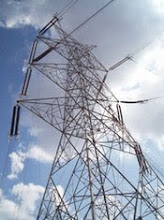
The Obama administration recently published a report that calls for increased spending on the nation's electric power system to increase power grid resilience. The report highlights the enormous economic risks that come with not addressing grid resilience, as power outages cost the economy billions of dollars per year and disrupt the lives of millions of Americans.
Severe weather is the No. 1 cause of power outages in the U.S. and also costs the economy billions of dollars per year in lost output and wages, spoiled inventory, delayed production, inconvenience and damage to grid infrastructure. The report estimates the average annual cost of power outages caused by severe weather to be between $18 billion and $33 billion per year. In a year of record-breaking storms, the costs can run much higher.
Creating a resilient electric grid is critical to reducing our nation's vulnerability to severe weather. Furthermore, as highlighted in the report, smart grid technology designed to increase resilience can improve the overall effectiveness of grid operations leading to great efficiencies in energy use and reduction in carbon emissions. As utilities look to modernize the grid, they not only have the opportunity to improve storm resiliency, drive greater energy efficiency and reduce carbon emissions, but also to support the integration of renewable energy.
In my experience as senior vice president of infrastructure at Schneider Electric, investing in resiliency doesn't have to be at the expense of efficiency or vice versa. Instead, savings from efficiency can actually help fund investments in resiliency. Furthermore, some activities actually increase resiliency and efficiency at the same time.
Examples include leveraging microgrids to smooth out the intermittency of renewable generation, allowing less efficient generators to shut down; or real-time analysis of power grids to determine optimal configuration to minimize electrical losses.
To move towards a more modernized grid and in turn reduce distribution network performance, investment should be made to replace aging infrastructure. As the demand for higher quality power increases, the evolving grid of the future will likely be upgraded to include self-healing capabilities designed to minimize outages from disasters and other natural events. In the near future, we foresee a movement toward multi-user, multi-site microgrids that will create an environment for a stronger and more self-sufficient power system.
In our view, modernizing the electric grid is the foundation for creating smarter, more resilient data centers, homes, buildings, cities and communities. Collaboration across all levels of government and the private sector will be key to enabling the development of the smart grid and ultimately to creating a more sustainable, resilient, energy efficient country.
Friday, October 4, 2013

Monday, September 9, 2013
Moody's puts Energy Future Holdings on bankruptcy watch
Moody's Investors Service, one of the Big Three credit rating agencies, has given Energy Futures Holdings Corp. until the end of the year before the energy company declares for bankruptcy protection and restructures itself.
In an analysis of its own call, Moody's says this would be one of the top 10 largest non-financial corporate bankruptcies in the U.S. since the 1980s. In terms of debt, it could be one of the biggest of all time, ranking with Enron, WorldCom, General Motors and Chrysler. The holding company reportedly has more than $41 billion in debt.
The electric utility company's assets include a power generation portfolio that consists mostly of nuclear energy and coal-fired power (through Luminant), a power transmission business (through Oncor Electric Delivery) and a retail power provider (through TXU Energy).
The company was bought out in 2007 in what was at the time one of the largest leveraged buy-outs in history when a group of Wall Streeters (including Goldman Sachs, KKR and TPG Capital) paid $45 billion for what was then known as TXU Energy.
The idea was that even though the private equity firms that bought up TXU would be taking on a significant amount of debt, the notoriously unstable price of natural gas would surely soon peak, helping the financiers turn a profit. As we now know, this hoped-for spike did not occur, and instead we saw sustained record-low prices for natural gas. The gamble also anticipated that coal-fired electricity would remain inexpensive and high-profit. Hindsight, as they say, is 20/20.
Energy Future Holdings has been carrying a large amount of debt for some time now, leading analysts to speculate about its future. Moody's downgraded the company's credit rating from Caa1 to B3 in August 2013.
From the end-user's perspective, should the worst happen for EFH, the power will continue to flow because of a survival blueprint already plotted out back in April 2013. One potential bankruptcy restructuring plan would forgive billions in debt owned by Luminant in exchange for a large share of the company. The investors, in this scenario, would get the short end of the stick — an estimated return of 50 percent or less. However, subsidiaries like Oncor and Luminant could be preserved.
You can read more about that debt restructuring plan in this story.
In an analysis of its own call, Moody's says this would be one of the top 10 largest non-financial corporate bankruptcies in the U.S. since the 1980s. In terms of debt, it could be one of the biggest of all time, ranking with Enron, WorldCom, General Motors and Chrysler. The holding company reportedly has more than $41 billion in debt.
The electric utility company's assets include a power generation portfolio that consists mostly of nuclear energy and coal-fired power (through Luminant), a power transmission business (through Oncor Electric Delivery) and a retail power provider (through TXU Energy).
The company was bought out in 2007 in what was at the time one of the largest leveraged buy-outs in history when a group of Wall Streeters (including Goldman Sachs, KKR and TPG Capital) paid $45 billion for what was then known as TXU Energy.
The idea was that even though the private equity firms that bought up TXU would be taking on a significant amount of debt, the notoriously unstable price of natural gas would surely soon peak, helping the financiers turn a profit. As we now know, this hoped-for spike did not occur, and instead we saw sustained record-low prices for natural gas. The gamble also anticipated that coal-fired electricity would remain inexpensive and high-profit. Hindsight, as they say, is 20/20.
Energy Future Holdings has been carrying a large amount of debt for some time now, leading analysts to speculate about its future. Moody's downgraded the company's credit rating from Caa1 to B3 in August 2013.
From the end-user's perspective, should the worst happen for EFH, the power will continue to flow because of a survival blueprint already plotted out back in April 2013. One potential bankruptcy restructuring plan would forgive billions in debt owned by Luminant in exchange for a large share of the company. The investors, in this scenario, would get the short end of the stick — an estimated return of 50 percent or less. However, subsidiaries like Oncor and Luminant could be preserved.
You can read more about that debt restructuring plan in this story.
Friday, August 30, 2013
China thinks big on power generation, delivery
The world's second-biggest economy, China, is setting its sights on a massive expansion of its electric power sector. The country is growing increasingly energy hungry as its already massive manufacturing sector expands — and the smog haze around populated areas grow indisputably denser.
Some power sector expansion scenarios laid out by Bloomberg New Energy Finance could address both power reliability and environmental concerns, however at least one scenario would require 88 GW in new power generation capacity every year from now until 2030.
That would mean a build-out equal to the entire generation capacity of the United Kingdom every single year. Still, if any country can accomplish this, it's probably China.
China, which by the way is already the world's largest single source of carbon dioxide emissions and the most powerful generator of electric power in the world, could add more than 1,500 GW of new power generation in the next two decades, according to Bloomberg's surveys.
In a scenario called "The New Normal," a reasonably progressive yet still conservative estimate of what China might do with its energy sector, this would require an investment just shy of $4 trillion.
At the same time, though, cuts in overall emissions could still be achieved as soon as 2027 through the adoption and integration of more renewable energy capacity and the phase-out of coal-fired power. Large hydropower would constitute more than half of new capacity. China is already home to the world's biggest and most powerful hydropower projects, and even more are being planned.
The New Normal plan also calls for an expansion of China's natural gas-fired fleet that would push down coal-fired generation from 67 percent of China's energy mix to 44 percent by 2030. Coal-fired power would still expand in this scenario by nearly 40 GW per year, it should be noted.
Separate from this planned massive power generation build-out, another way China is thinking big is its anticipated $100 billion investment in ultra high-voltage transmission lines (Read more about that here). The State Grid Corp. of China, which according to some estimates is the world's biggest utility, has either approved or is already building 20 such transmission projects.
These 20 high-voltage lines will form a massive network that will link up the densely populated and heavily industrialized southern and eastern parts of China with the west, where the country's hydropower potential is already better realized than just about anywhere else in the Eastern Hemisphere. China has already built the world's most massive and powerful dams in its eastern provinces, including Three Gorges, which at 22,500 MW generates as much electricity as 15 nuclear power plants.
Linking up the country's east and west with high-voltage power transmission is a smart way for China to make effective use of low- or no-carbon generation. Over the long term, this will help China's overall power portfolio become less polluting. Focusing on a well-built power grid with plenty of storm-hardening countermeasures and redundancies will prevent a scenario like we see in Brazil, which also uses massive dams to power far-flung population centers, but which suffers from regular outages when transmission lines are damaged or cut off.
As I write this, Brazilian authorities are working to restore power to eight states and tens of millions of people because a fire in northeast Brazil damaged transmission lines that link huge hydro assets from cities (See that story here). As China grows, it would do well to keep an eye on Brazil and remember what happens when you build out your cities and power plants, but neglect your transmission infrastructure.
Some power sector expansion scenarios laid out by Bloomberg New Energy Finance could address both power reliability and environmental concerns, however at least one scenario would require 88 GW in new power generation capacity every year from now until 2030.
That would mean a build-out equal to the entire generation capacity of the United Kingdom every single year. Still, if any country can accomplish this, it's probably China.
China, which by the way is already the world's largest single source of carbon dioxide emissions and the most powerful generator of electric power in the world, could add more than 1,500 GW of new power generation in the next two decades, according to Bloomberg's surveys.
In a scenario called "The New Normal," a reasonably progressive yet still conservative estimate of what China might do with its energy sector, this would require an investment just shy of $4 trillion.
At the same time, though, cuts in overall emissions could still be achieved as soon as 2027 through the adoption and integration of more renewable energy capacity and the phase-out of coal-fired power. Large hydropower would constitute more than half of new capacity. China is already home to the world's biggest and most powerful hydropower projects, and even more are being planned.
The New Normal plan also calls for an expansion of China's natural gas-fired fleet that would push down coal-fired generation from 67 percent of China's energy mix to 44 percent by 2030. Coal-fired power would still expand in this scenario by nearly 40 GW per year, it should be noted.
Separate from this planned massive power generation build-out, another way China is thinking big is its anticipated $100 billion investment in ultra high-voltage transmission lines (Read more about that here). The State Grid Corp. of China, which according to some estimates is the world's biggest utility, has either approved or is already building 20 such transmission projects.
These 20 high-voltage lines will form a massive network that will link up the densely populated and heavily industrialized southern and eastern parts of China with the west, where the country's hydropower potential is already better realized than just about anywhere else in the Eastern Hemisphere. China has already built the world's most massive and powerful dams in its eastern provinces, including Three Gorges, which at 22,500 MW generates as much electricity as 15 nuclear power plants.
Linking up the country's east and west with high-voltage power transmission is a smart way for China to make effective use of low- or no-carbon generation. Over the long term, this will help China's overall power portfolio become less polluting. Focusing on a well-built power grid with plenty of storm-hardening countermeasures and redundancies will prevent a scenario like we see in Brazil, which also uses massive dams to power far-flung population centers, but which suffers from regular outages when transmission lines are damaged or cut off.
As I write this, Brazilian authorities are working to restore power to eight states and tens of millions of people because a fire in northeast Brazil damaged transmission lines that link huge hydro assets from cities (See that story here). As China grows, it would do well to keep an eye on Brazil and remember what happens when you build out your cities and power plants, but neglect your transmission infrastructure.
Thursday, August 15, 2013
Connecting BEMS in smart buildings to smart grid
By Allan McHale, Memoori Business Intelligence
Just look down a listing of enterprise energy management suppliers and you will find a mixture of some of the world's leading IT organizations and start-up software companies fighting hard to get established in this burgeoning market.
The two major prongs of this business lie in making smart buildings much smarter and the smart grid fully ADR right across the transmission and distribution network by providing a real-time analysis of supply and demand. These two markets alone have the potential to spend upwards of $225 billion by 2030 with smart buildings looking the more attractive and robust business. Installing smart grid is highly dependent upon changes to the regulatory control procedures and the utility companies finding the $2 trillion investment needed to deliver a fully operational smart grid around the world.

In the meantime, the utilities are coming under increasing pressure to reduce carbon dioxide emissions and are being forced to phase out their fossil fueled generating plants. In the U.S. particularly, they are encouraging their major consumers, coincidentally smart building owners, to join demand response programs and are entering arrangements to take their distributed power.
This provides a ready an fast-growing market for all those companies that have the software products and skills to interface buinding energy management systems (BEMS) in smart buildings to deliver demand response and distributed energy. This is therefore becoming a niche market, not least because we can't wait for ADR to produce a fully operational smart grid.
This market is currently worth around $350 million but the technical market potential to retrofit these two functionalities to smart buildings has a potential value of $30 billion and we forecast it should reach $2.65 billion by 2017. This is therefore a sizable business, but it is made much more attractive by the fact that by far the biggest component is the unrealized potential in existing smart building stock. It may be a smaller market, but it delivers a solution to a problem that must be solved — it can't wait for smart grid to be in place or smart buildings to incorporate a comprehensive enterprise energy management.
So for all of the budding energy management suppliers, that's the good news. The bad news is that there are some other suppliers out there that are hungry for this business. These are BEMS suppliers and energy service companies (ESCOs). Although not particularly well-known for their energy management prowess, they have been acquiring companies with this expertise for the past half-decade. These companies include Johnson Controls, Honeywell, Schneider Electric, Siemens and ABB. They are the world's leading suppliers and the last four are also leading suppliers of smart grid products and services.
This puts them in a very strong position for two reasons:
It is a different matter for major energy management companies because most of their clients will be owners of large smart building real estates and they will have contact with sources that will influence buying decisions on energy management purchases. These companies will be targeting comprehensive energy management systems in smart buildings. However even here, the interest in forming partnerships with the major BEMS companies.
Schneider Electric has just signed a strategic technology agreement with one of the world's major software companies, OSIsoft. OSIsoft will provide their PI System, a leading infrastructure technology for the management of real-time data and events while Schneider Electric, a global specialist in energy management, will provide innovative energy management solutions.
Connecting BEMS in smart buildings to smart grid to deliver demand response is a niche market that is needed now. It could be provided through smart buildings installing comprehensive energy management or waiting 10 to 20 years before ADR is operational within smart grid in the developed countries of the world.
The cost of installing it is less than 1 percent of the investment needed to deliver smart grid. The return on investment is attractive and it reduces the carbon dioxide emissions and gets the utilities companies out of a hole.
Just look down a listing of enterprise energy management suppliers and you will find a mixture of some of the world's leading IT organizations and start-up software companies fighting hard to get established in this burgeoning market.
The two major prongs of this business lie in making smart buildings much smarter and the smart grid fully ADR right across the transmission and distribution network by providing a real-time analysis of supply and demand. These two markets alone have the potential to spend upwards of $225 billion by 2030 with smart buildings looking the more attractive and robust business. Installing smart grid is highly dependent upon changes to the regulatory control procedures and the utility companies finding the $2 trillion investment needed to deliver a fully operational smart grid around the world.

In the meantime, the utilities are coming under increasing pressure to reduce carbon dioxide emissions and are being forced to phase out their fossil fueled generating plants. In the U.S. particularly, they are encouraging their major consumers, coincidentally smart building owners, to join demand response programs and are entering arrangements to take their distributed power.
This provides a ready an fast-growing market for all those companies that have the software products and skills to interface buinding energy management systems (BEMS) in smart buildings to deliver demand response and distributed energy. This is therefore becoming a niche market, not least because we can't wait for ADR to produce a fully operational smart grid.
This market is currently worth around $350 million but the technical market potential to retrofit these two functionalities to smart buildings has a potential value of $30 billion and we forecast it should reach $2.65 billion by 2017. This is therefore a sizable business, but it is made much more attractive by the fact that by far the biggest component is the unrealized potential in existing smart building stock. It may be a smaller market, but it delivers a solution to a problem that must be solved — it can't wait for smart grid to be in place or smart buildings to incorporate a comprehensive enterprise energy management.
So for all of the budding energy management suppliers, that's the good news. The bad news is that there are some other suppliers out there that are hungry for this business. These are BEMS suppliers and energy service companies (ESCOs). Although not particularly well-known for their energy management prowess, they have been acquiring companies with this expertise for the past half-decade. These companies include Johnson Controls, Honeywell, Schneider Electric, Siemens and ABB. They are the world's leading suppliers and the last four are also leading suppliers of smart grid products and services.
This puts them in a very strong position for two reasons:
- They are in daily contact with the owners of smart buildings who are existing clients both through installing their BEMS and also taking their ESCO service. This gives them a massive heritage estate to work with.
- They have the practical ability to bring all the various electrical loads in the building together and not all are being controlled through BEMS. Both are important factors that will influence buying decisions.
It is a different matter for major energy management companies because most of their clients will be owners of large smart building real estates and they will have contact with sources that will influence buying decisions on energy management purchases. These companies will be targeting comprehensive energy management systems in smart buildings. However even here, the interest in forming partnerships with the major BEMS companies.
Schneider Electric has just signed a strategic technology agreement with one of the world's major software companies, OSIsoft. OSIsoft will provide their PI System, a leading infrastructure technology for the management of real-time data and events while Schneider Electric, a global specialist in energy management, will provide innovative energy management solutions.
Connecting BEMS in smart buildings to smart grid to deliver demand response is a niche market that is needed now. It could be provided through smart buildings installing comprehensive energy management or waiting 10 to 20 years before ADR is operational within smart grid in the developed countries of the world.
The cost of installing it is less than 1 percent of the investment needed to deliver smart grid. The return on investment is attractive and it reduces the carbon dioxide emissions and gets the utilities companies out of a hole.
Tuesday, August 6, 2013
U.S. wind takes off
The U.S. wind energy industry is continuing to pay off for those who have invested in it, both in terms of power generated as well as manufacturing and jobs. This is according to a pair of studies the DOE has made public.
More than 13 GW of wind energy capacity was added onto the U.S. grid last year. That's double what was added the year before. To boot, more of these wind turbines and their parts (towers, nacelles, blades, gearboxes, etc.) are being built in the U.S.
The DOE estimated that 72 percent of the wind turbine equipment used in the U.S. was manufactured domestically — up from about 25 percent in 2007.
Crucially, the report also reveals that the American wind energy sector now employs some 80,000 people who work at all levels — from building wind turbine blades to installing nacelles or performing needed wind farm maintenance.
Other factoids from the report that I thought were worth noting:
There was a time to wonder whether wind power could make it as a viable power generation technology. For the U.S., that time has passed. Now the question has become: What is the best way to integrate wind energy onto the power grid without causing too many disturbances due to intermittancy.
If you want to see how wind farms have spread across the U.S. over the years, the DOE has an interactive map at their website. Click here to see it.
More than 13 GW of wind energy capacity was added onto the U.S. grid last year. That's double what was added the year before. To boot, more of these wind turbines and their parts (towers, nacelles, blades, gearboxes, etc.) are being built in the U.S.
The DOE estimated that 72 percent of the wind turbine equipment used in the U.S. was manufactured domestically — up from about 25 percent in 2007.
Crucially, the report also reveals that the American wind energy sector now employs some 80,000 people who work at all levels — from building wind turbine blades to installing nacelles or performing needed wind farm maintenance.
Other factoids from the report that I thought were worth noting:
- Texas added 1,300 MW of new wind capacity last year, beating out California, an early adopter of the technology and home to some of the nation's oldest wind farms
- The country's cumulative installed wind capacity has jumped 22-fold since the turn of the century
- There are three states that get more than 20 percent of their power from the winds: Iowa, South Dakota and Kansas
- The price of a kilowatt hour of wind energy ran about 4 cents from 2011 to 2012
- There are now 69,000 distributed wind turbines operating in all 50 states
There was a time to wonder whether wind power could make it as a viable power generation technology. For the U.S., that time has passed. Now the question has become: What is the best way to integrate wind energy onto the power grid without causing too many disturbances due to intermittancy.
If you want to see how wind farms have spread across the U.S. over the years, the DOE has an interactive map at their website. Click here to see it.
Thursday, July 25, 2013
Are we trying to be too smart about smart metering?
By Craig Edge, chief consulting engineer, Wheatley Associates
With yet another delay announced in the U.K. government's proposed smart meter implementation plan, the time has come to take stock of the situation, reflect on the rollout and ask the question, "Are we trying to be too smart about smart metering in the U.K.?"
On May 10, 2013, the U.K.'s Department of Energy and Climate Change (DECC) announced that it was putting back the start of the full-scale U.K. smart meter rollout program by one year to fall 2015 with targeted completion for 50-plus million smart meters in 30-plus homes and businesses by the end of 2020. DECC said the main reason for this delay is to give suppliers more time to create the data communications network that will underpin the rollout.
There is no denying that the smart metering program has the potential to transform energy management and consumption in the U.K. if all goes to plan. Considerable cost savings are potentially available to suppliers and consumers alike. But are we really being overambitious and biting off more than we can chew?
It is a colossal undertaking. Although there is nothing wrong with grand plans, the U.K.'s track record on IT projects of this scope and scale is not good. Maybe this further slippage is just symptomatic of trying to implement a program that is both overcomplicated and overcontrolled. When it cones to technology-based projects, how realistic is it to expect the network infrastructure to have an extended life-span of 20 years, as mandated? Is a one-time solution really feasible?
Here in the U.K., with smart metering intended to cover both gas and power supplies, we have arguably embarked upon one of the most ambitious implementation programs yet conceived. Other countries, by contrast, are focusing solely on strategies for electricity. It also seems something of a paradox that, given the U.K. energy market's recent history of deregulation and competition, smart metering in the U.K. has indirectly led us to seek to develop a highly regulated, centralized communications infrastructure to manage the data and energy management requirements. Communication of data to and from smart meters in the domestic sector will be managed centrally by a new, country-wide function covering both the electricity and gas sectors, known as the central data and communications company.
As the program generalities give way to the detail of the high-level deliverables, there remain a small but significant number of the technical requirements that still do not have a proven solution on the table. The mechanism to make the smart metering accessible to almost all customers, un a non-discriminatory manner, is still searching for a capable and reliable technology. Rather than criticize the delay, Dr. Martyn Thomas, chairman of the IT policy panel at the Institution of Engineering and Technology, called for the government to take advantage of the time to formalize specifications for the system that are currently only expressed informally, leading to a danger of "inconsistency, ambiguity and contradiction."
But once specified, what chance is there that it will still be fit for purpose in twenty years, as required? Surely flexibility and openness to technology advances will be essential for ongoing success? Just look at the development of the mobile telecommunications industry as a comparative example.
The wireless nature of the proposed communications network needed to underpin the smart metering program also opens up a potential strategic vulnerability to the utility system as a whole. Industry commentators are increasingly expressing concern that this is not being properly addressed. Little consideration has apparently been given to how the proposed wireless network might be hacked and the suggestion is that it will be with ease. With the energy supply system until now largely protected by its invisibility, suddenly there will be a proliferation of potential access and consequently hacking points. The system compliant smart meters currently available are also coming in for criticism for their apparent lack of security.
Certainly, the objectives of reducing carbon dioxide output, improving competitiveness in the energy sector and increasing energy security are as laudable today as when the government first mandated the installation of smart meters by October 2008. But, nearly five years on, it is hard to argue that anything has yet changed for U.K. households or, indeed, that the future holds an abundance of promise.
There continues to be a distinct lack of public understanding about the smart metering proposals. Skepticism, disinterest and a simple lack of knowledge abound and rather than seeking to effect a substantial shift in attitudes, many of the key benefits messages are seemingly being diluted. Many of the benefits expounded on government and quasi-government websites seem alarmingly unambitious for the estimated program cost of $18 billion, a cost that is bound to rise. If you want to be super critical, many of the benefits that smart metering will deliver could be achieved at a fraction of the cost through the installation of simple prepayment meters!
Nevertheless, smart metering is undoubtedly the way forward. Constantly reviewing the project and slipping the timetable is no bad thing if it ensures that we get it right. But there remains an open question for us all: Should there be a broader and deeper review of the current approach? Having flirted with revolution, and probably rightly so, perhaps it is time to contemplate switching to a more evolutionary approach.
With yet another delay announced in the U.K. government's proposed smart meter implementation plan, the time has come to take stock of the situation, reflect on the rollout and ask the question, "Are we trying to be too smart about smart metering in the U.K.?"
On May 10, 2013, the U.K.'s Department of Energy and Climate Change (DECC) announced that it was putting back the start of the full-scale U.K. smart meter rollout program by one year to fall 2015 with targeted completion for 50-plus million smart meters in 30-plus homes and businesses by the end of 2020. DECC said the main reason for this delay is to give suppliers more time to create the data communications network that will underpin the rollout.
There is no denying that the smart metering program has the potential to transform energy management and consumption in the U.K. if all goes to plan. Considerable cost savings are potentially available to suppliers and consumers alike. But are we really being overambitious and biting off more than we can chew?
It is a colossal undertaking. Although there is nothing wrong with grand plans, the U.K.'s track record on IT projects of this scope and scale is not good. Maybe this further slippage is just symptomatic of trying to implement a program that is both overcomplicated and overcontrolled. When it cones to technology-based projects, how realistic is it to expect the network infrastructure to have an extended life-span of 20 years, as mandated? Is a one-time solution really feasible?
Here in the U.K., with smart metering intended to cover both gas and power supplies, we have arguably embarked upon one of the most ambitious implementation programs yet conceived. Other countries, by contrast, are focusing solely on strategies for electricity. It also seems something of a paradox that, given the U.K. energy market's recent history of deregulation and competition, smart metering in the U.K. has indirectly led us to seek to develop a highly regulated, centralized communications infrastructure to manage the data and energy management requirements. Communication of data to and from smart meters in the domestic sector will be managed centrally by a new, country-wide function covering both the electricity and gas sectors, known as the central data and communications company.
As the program generalities give way to the detail of the high-level deliverables, there remain a small but significant number of the technical requirements that still do not have a proven solution on the table. The mechanism to make the smart metering accessible to almost all customers, un a non-discriminatory manner, is still searching for a capable and reliable technology. Rather than criticize the delay, Dr. Martyn Thomas, chairman of the IT policy panel at the Institution of Engineering and Technology, called for the government to take advantage of the time to formalize specifications for the system that are currently only expressed informally, leading to a danger of "inconsistency, ambiguity and contradiction."
But once specified, what chance is there that it will still be fit for purpose in twenty years, as required? Surely flexibility and openness to technology advances will be essential for ongoing success? Just look at the development of the mobile telecommunications industry as a comparative example.
The wireless nature of the proposed communications network needed to underpin the smart metering program also opens up a potential strategic vulnerability to the utility system as a whole. Industry commentators are increasingly expressing concern that this is not being properly addressed. Little consideration has apparently been given to how the proposed wireless network might be hacked and the suggestion is that it will be with ease. With the energy supply system until now largely protected by its invisibility, suddenly there will be a proliferation of potential access and consequently hacking points. The system compliant smart meters currently available are also coming in for criticism for their apparent lack of security.
Certainly, the objectives of reducing carbon dioxide output, improving competitiveness in the energy sector and increasing energy security are as laudable today as when the government first mandated the installation of smart meters by October 2008. But, nearly five years on, it is hard to argue that anything has yet changed for U.K. households or, indeed, that the future holds an abundance of promise.
There continues to be a distinct lack of public understanding about the smart metering proposals. Skepticism, disinterest and a simple lack of knowledge abound and rather than seeking to effect a substantial shift in attitudes, many of the key benefits messages are seemingly being diluted. Many of the benefits expounded on government and quasi-government websites seem alarmingly unambitious for the estimated program cost of $18 billion, a cost that is bound to rise. If you want to be super critical, many of the benefits that smart metering will deliver could be achieved at a fraction of the cost through the installation of simple prepayment meters!
Nevertheless, smart metering is undoubtedly the way forward. Constantly reviewing the project and slipping the timetable is no bad thing if it ensures that we get it right. But there remains an open question for us all: Should there be a broader and deeper review of the current approach? Having flirted with revolution, and probably rightly so, perhaps it is time to contemplate switching to a more evolutionary approach.
Thursday, July 11, 2013
Blackouts on the way in Britain?
It's seldom that there's much drama in the energy world, however, in the U.K., a report by that country's government electricity regulator touched off a swarm of responses, defensive statements and condemnations — in short, genuine electricity drama.
It started with a report from the Office of Gas and Electricity Market (Ofgem) that warned of power shortages in the coming few years. Since 2012, Ofgem reported in its June 2013 capacity assessment, the risk of blackouts in the U.K. has doubled. Energy margins could shrink to as low as 2 percent in 2015 and 2016, according to Ofgem.
Ofgem said power outages are by no means guaranteed, but the risk is growing and the government needs to act swiftly to address the problem. Ofgem is calling for more government investment in power generation, as it places the blame for the potential power shortfalls mostly on the power generation sector.
Some factors that could increase the risk of power interruptions include a particularly cold winter or a higher than expected level of industrial activity.
Also at issue is the size and speed of Britain's decarbonization efforts. To comply with E.U. carbon-cutting goals, the U.K. is shutting down coal-fired power plants.
Some numbers: Since last year, more than 2 GW in installed capacity has gone offline in the U.K., and further shut-offs and retirements are expected. The economic situation in Britain and the E.U. is making new investment in new generation sources difficult. No new power plants are expected to be built until 2016.
The same economic downturn that is making power plants difficult to build is also making power plants less necessary — because of the downturn and investments in energy efficiency, peak demand has fallen an estimated 5 GW.
With such few new power sources in the pipeline, Ofgem is working with transmission authority National Grid and the Department of Energy and Climate Change (DECC) to come up with ways to depress demand. National Grid has a scenario that anticipates power demand to fall an additional 3 to 4 GW by the end of the decade in part due to demand-side management.
This puts the U.K. government in the awkward position of having to root against an economic recovery. Because if factories start humming again, the country's power grid and its generation capacity will be that much more strained.
In 2008, the U.K. set its own greenhouse gas emissions limits and agreed to cut emissions by 80 percent by 2050. The U.K. is also a signatory to the E.U.'s 20/20/20 plan, which calls for a 20 percent reduction in E.U. greenhouse gas emissions from 1990 levels.
This month, members of Parliament debated the creation of quantitative targets for cutting carbon in the energy sector, effectively speeding up the country's decarbonization process. The proposal (an amendment to a wider energy policy reform bill) was struck down following a close vote, pushing energy policy into the headlines of U.K. news outlets.
Given the country's shrinking energy margins, rapidly approaching decarbonization goals, aging power generation fleet and the looming threat of power outages hanging over it all, the U.K. has some serious thinking to do on energy policy.
The country cannot expect to shut down multiple gigawatts of coal power and just expect the lights to stay on without a plan to maintain reliability. It's one thing to sign on to carbon-cutting treaties, but actually making a low-carbon power grid work is a more difficult trick.
An energy reform bill has passed through Parliament's lower house and is now being debated in the House of Lords. One hopes the debate will not have to be carried out by candlelight.
It started with a report from the Office of Gas and Electricity Market (Ofgem) that warned of power shortages in the coming few years. Since 2012, Ofgem reported in its June 2013 capacity assessment, the risk of blackouts in the U.K. has doubled. Energy margins could shrink to as low as 2 percent in 2015 and 2016, according to Ofgem.
Ofgem said power outages are by no means guaranteed, but the risk is growing and the government needs to act swiftly to address the problem. Ofgem is calling for more government investment in power generation, as it places the blame for the potential power shortfalls mostly on the power generation sector.
Some factors that could increase the risk of power interruptions include a particularly cold winter or a higher than expected level of industrial activity.
Also at issue is the size and speed of Britain's decarbonization efforts. To comply with E.U. carbon-cutting goals, the U.K. is shutting down coal-fired power plants.
Some numbers: Since last year, more than 2 GW in installed capacity has gone offline in the U.K., and further shut-offs and retirements are expected. The economic situation in Britain and the E.U. is making new investment in new generation sources difficult. No new power plants are expected to be built until 2016.
The same economic downturn that is making power plants difficult to build is also making power plants less necessary — because of the downturn and investments in energy efficiency, peak demand has fallen an estimated 5 GW.
With such few new power sources in the pipeline, Ofgem is working with transmission authority National Grid and the Department of Energy and Climate Change (DECC) to come up with ways to depress demand. National Grid has a scenario that anticipates power demand to fall an additional 3 to 4 GW by the end of the decade in part due to demand-side management.
This puts the U.K. government in the awkward position of having to root against an economic recovery. Because if factories start humming again, the country's power grid and its generation capacity will be that much more strained.
In 2008, the U.K. set its own greenhouse gas emissions limits and agreed to cut emissions by 80 percent by 2050. The U.K. is also a signatory to the E.U.'s 20/20/20 plan, which calls for a 20 percent reduction in E.U. greenhouse gas emissions from 1990 levels.
This month, members of Parliament debated the creation of quantitative targets for cutting carbon in the energy sector, effectively speeding up the country's decarbonization process. The proposal (an amendment to a wider energy policy reform bill) was struck down following a close vote, pushing energy policy into the headlines of U.K. news outlets.
Given the country's shrinking energy margins, rapidly approaching decarbonization goals, aging power generation fleet and the looming threat of power outages hanging over it all, the U.K. has some serious thinking to do on energy policy.
The country cannot expect to shut down multiple gigawatts of coal power and just expect the lights to stay on without a plan to maintain reliability. It's one thing to sign on to carbon-cutting treaties, but actually making a low-carbon power grid work is a more difficult trick.
An energy reform bill has passed through Parliament's lower house and is now being debated in the House of Lords. One hopes the debate will not have to be carried out by candlelight.
Subscribe to:
Posts (Atom)